Category Archives: Fishing

Playing with Dollies

This is actually a post about fishing.  Specifically, the Dolly Varden Trout.

They are quite common to the inland streams and near-shore areas of Southeast Alaska and have a range that extends down the coast into Washington.  It’s such a peculiar name for a fish that I had to look it up.  Apparently it is named for a colorful style of women’s dress popular in the 1870’s when the species was first described scientifically and the dress itself derives its name from a character in a Charles Dickens novel.  I had assumed it was the name of some river somewhere, but the truth is way more interesting.

Dollies, as they call them up here, are close relatives of one of my favorite sport fish, the Brook Trout, along with the other species of char such as the Lake Trout and Arctic Char.  Inland Dollies look a heckuva lot like Brookies.

Dolly vs. Brookie

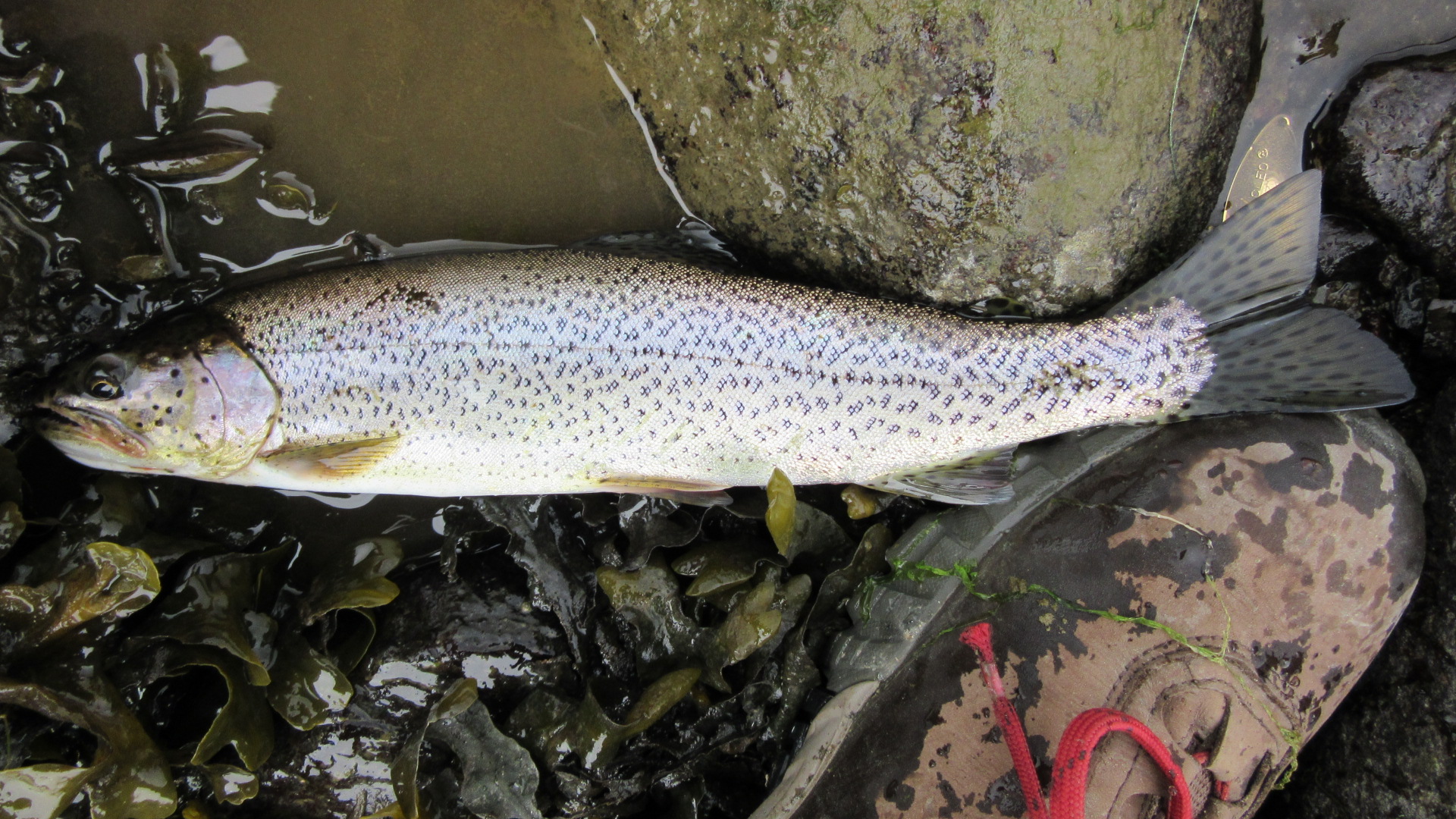
Very similar, aren’t they?  The top one is a Dolly Varden Trout I caught outside Ketchikan.  The bottom one is a Brook Trout I caught earlier this year in Wisconsin.  The main difference is the worm-like markings on the Brookie compared to only round spots on the Dolly.  Additionally, the inside of the Dolly’s mouth is white while the Brookie’s mouth is black.  Dollies tend to have a more slender body shape compared to the stockiness of the Brookie.

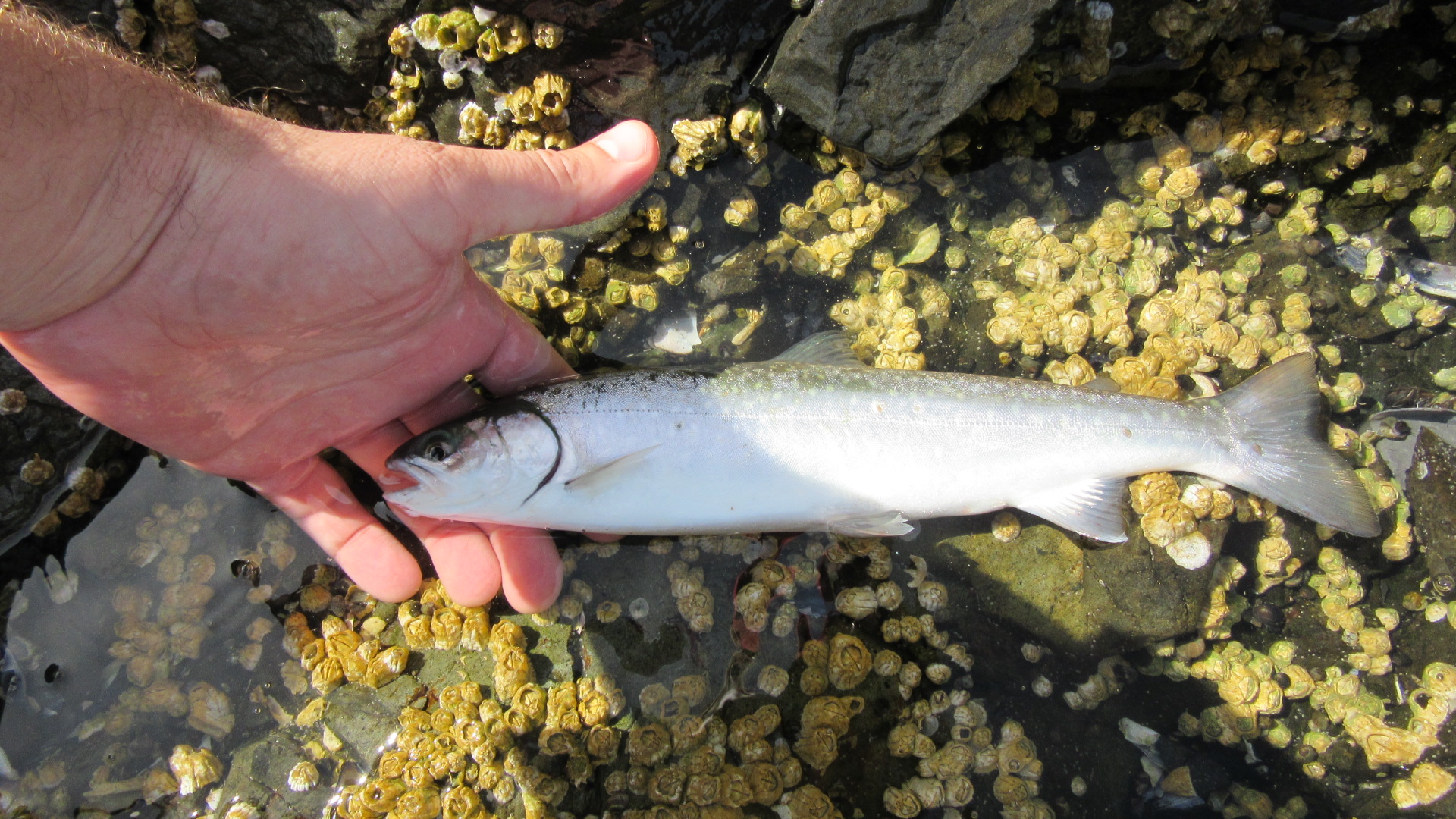
Much easier to tell the difference when you catch a Dolly from the ocean.

IMG_0282

Instead they start looking like every other salmon and trout in the ocean; silvery with spots.  Like most trout, Dollies strike a lure aggressively and fight better than their size might indicated.  They are pretty good at throwing a hook with their aerobatics above and below the water.  It has provided good entertainment while the salmon bide their time waiting for higher waters in the rivers around here.

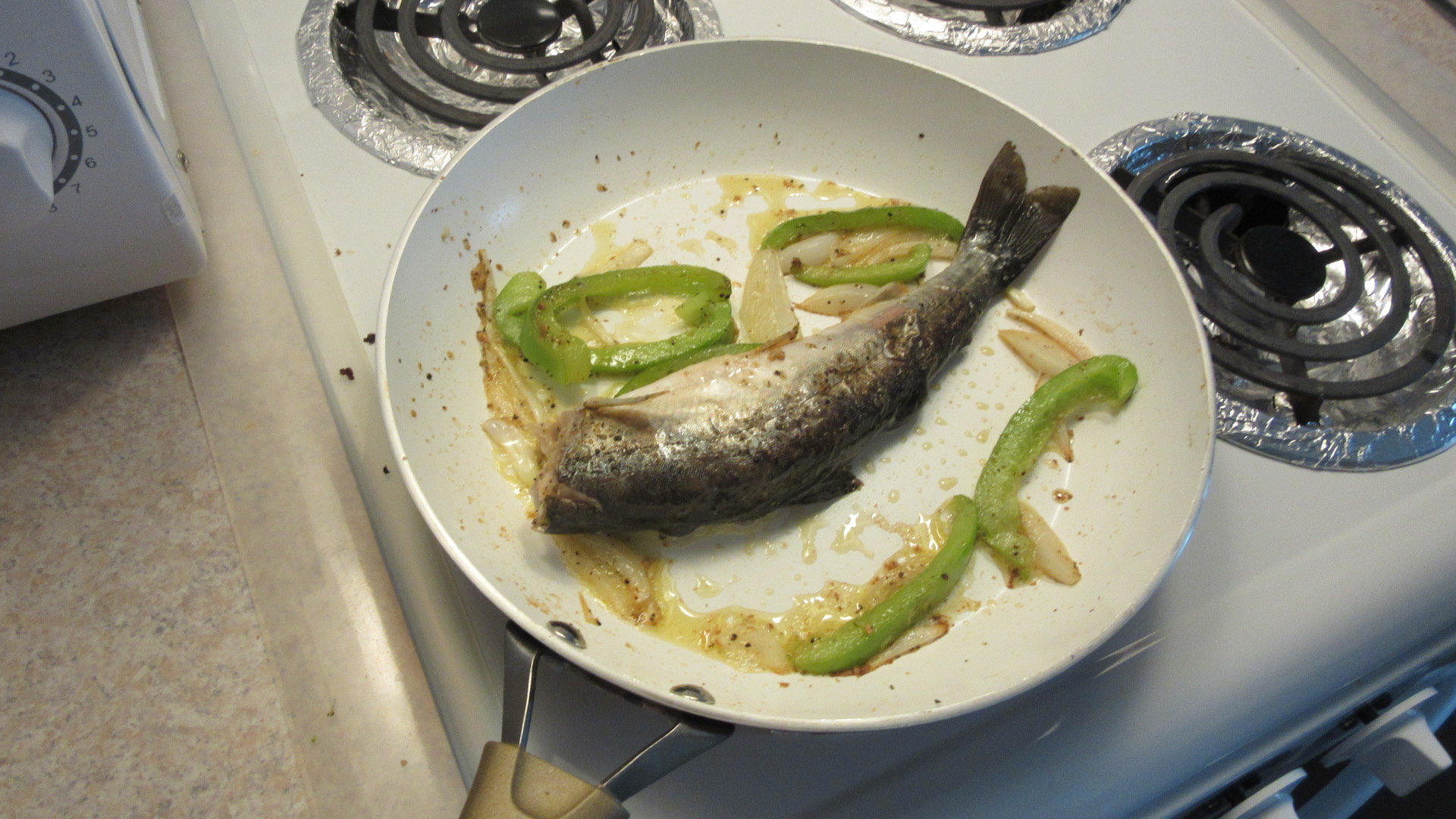
One final similarity between the Dolly Varden and Brook Trouts.  They are both delicious.

IMG_1467

One Last Cast

My time in Alaska has come to an end.  It’s off to the next assignment; which just so happens to be a return to Utah for a couple weeks.

Alaska has been amazing.  And getting paid to be up there wasn’t bad, either.  The day before I left, I wanted one more chance to catch some fish, so I headed a few miles outside of Ketchikan to a small lake about a mile upstream from the ocean.

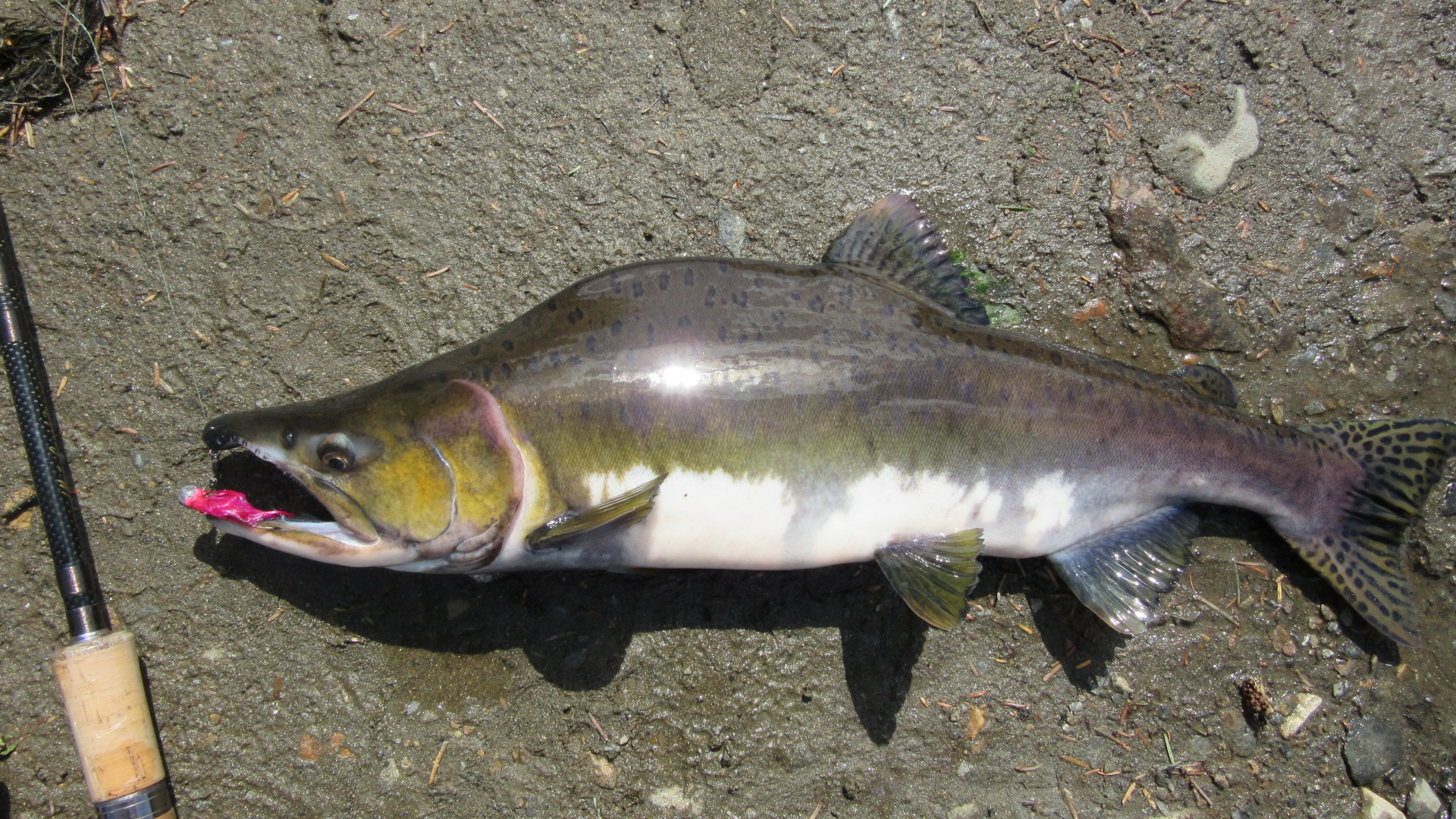
The lake was jammed with Pink Salmon.  After a bit of trial and error with different lures, I found one they liked and had a great time wrestling a few of them to the shore.  Pink Salmon are also called “Humpback Salmon” and it’s easy to see why.

IMG_0589

I eventually lost that lure and packed it in.  The lakeside trail took me back to the van through monstrous old-growth Sitka Spruce.  The entire area has a real “Forest Moon of Endor” vibe.  It was a great way to wrap up an outstanding trip filled with unbelievable scenery, awesome wildlife and fantastic fishing.  And we managed to complete everything we needed to on the business end, but who’s going to remember that?

On to the next adventure!

Chinook: King of the Salmon

As the largest of the salmon species, the Chinook or King Salmon is a prized catch for anglers the world over.  Alaskans call them Kings and in recent decades, have taken measures to ensure they will continue to test future anglers.  Stocking programs, closely monitored catch limits and protection of vital spawning habitat are some of the important steps they have taken to keep the population viable in the long term.

A few miles south of its only town, Mitkof Island, where I am currently staying, has a wonderful tidal estuary called Blind Slough.  At high tide, it’s a long, narrow, saltwater bay extending miles inland.  At low tide, it’s a rocky, freshwater river with riffles and pools.  It’s an ideal place for salmon to acclimate to freshwater before proceeding upstream to spawn.  Further inland, the Alaska Department of Fish & Game operates a fish hatchery to supplement natural populations.

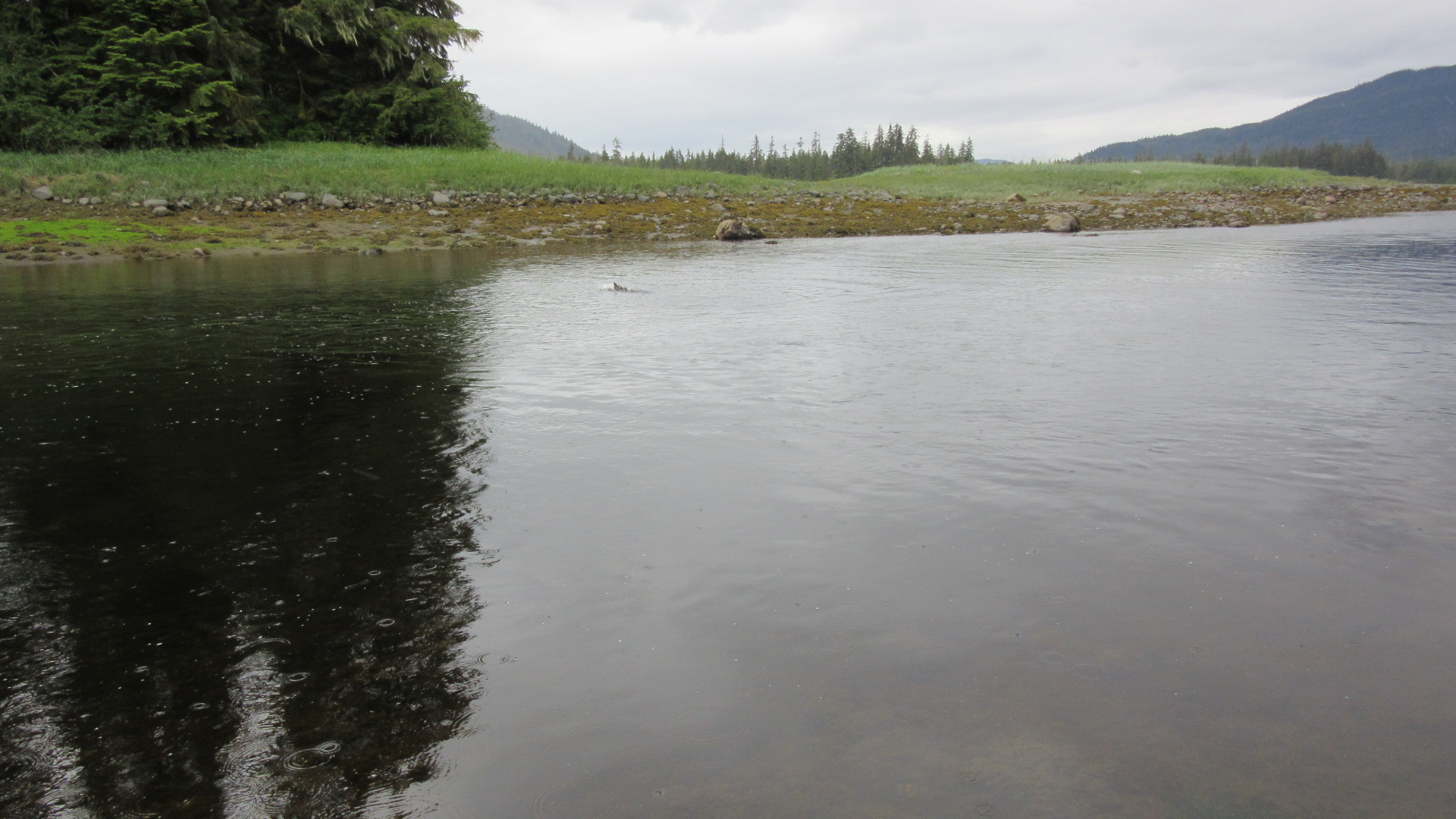
The tide was low when I visited Blind Slough with my tackle.  The area around the access point was being used by other anglers or was too shallow, so I started trekking downstream.  A few riffles later, there was a long, wide pool that looked okay.  That’s when I started to see them jumping.
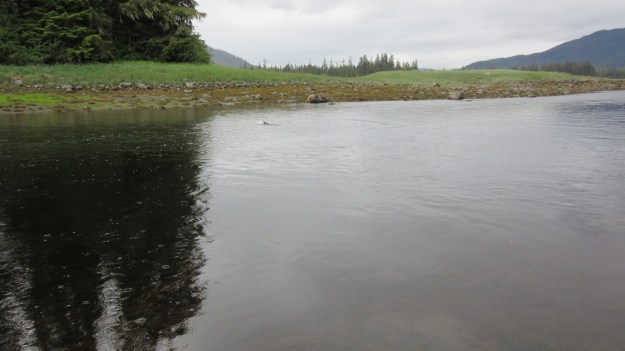
this, every minute or so

this, every minute or so

Fish that swim up rivers from the ocean to spawn can often be observed leaping out of the water where it doesn’t seem necessary.  If you ask why, you’ll get a jokey answer more often than not.  The most plausible explanation, though, is related to the fact that fish use different combinations of muscle movements for rapid bursts of speed than they do for swimming at a leisurely pace.  They’ve spent years mostly doing the latter in the ocean and now that they need to swim against strong currents and leap over obstacles, the fish need to build up the strength in their ‘turbo’ muscles.  Regardless of the reason, its a fantastic display to see large fish randomly erupting out of the water.  And a little frustrating when they don’t care about your lure.

Generally speaking, salmon do not feed once they enter freshwater during their spawning runs.  This can make it frustratingly difficult to catch them in rivers; especially when you can see so many of them scooting around and leaping about you.  A common tactic is to use flashy lures like spinners and spoons to goad them into aggression strikes.  As they work their way upstream, the salmon are constantly jockeying for position; especially the males.  There’s a lot of pushing and shoving and assertions of dominance.  It’s the reason the male salmon develop the hooked jaw; it’s a weapon to use against other males.  The fish see the flash of the lure and snap at it as a way to say, “Hey, back off, dude.”

This is the tactic I was using in Blind Slough.  I had some initial success with this nice coastal cutthroat trout.  They’re a lot like steelhead in that they are a sea-faring version of an inland trout species.
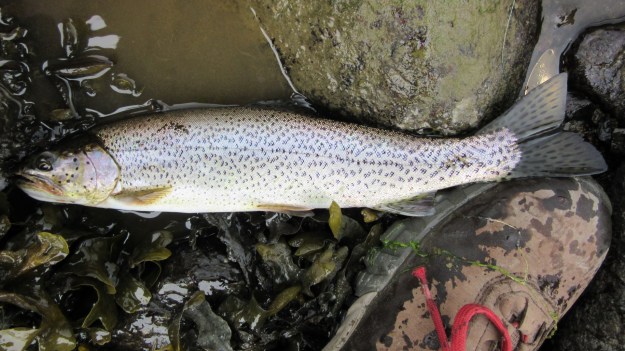
IMG_0237

After that it was a lot of casting without any catching.  Meanwhile, fish of all sizes were breaching right in front of me.  I was starting to entertain the idea of packing it in, so of course that’s when I finally hooked into a salmon.

And it was a big one.  After bumping into rocks and weeds all afternoon, I instantly knew this was a fish.  The rod arced and the battle was on.  First, he took off against the current to my left.  Several other fish leaped out of the water as the one I hooked streaked toward them.  The line scraped some algae off a rock and as the fish broke the surface, the green goop was flung from the line.  It was my first look at my opponent.  It was at least as big as any that I had seen leaping throughout the day.  And I could make out the hook in it’s upper jaw, indicating it was a big male.

A few moments later, that bad boy took off downstream peeling line from my reel while I held on for dear life.  When that big run was over, I tightened the drag a little and started to work the fish back toward me.  There was a lot of weight to try and pull against the current and I was ready to start walking down the rocky bank when the fish started coming back toward me.  I quickly reeled in to keep tension on the line.  It wasn’t long before the fish turned away and gave a brief surge toward the sea.  The tighter drag countered this move and he started slowly getting closer to the bank some 40 yards downstream.

Time to move.  In a heroic display of coordination, I moved along the bank across slippery rocks and the shallow water between them while holding tension on the line.  Getting slack in the line after such a long fight might allow the hook an opportunity to slip out.  Once I was even with the fish, it was pretty much over.  I drew him into the shallow rocky bank and breathed easy.  I got him.
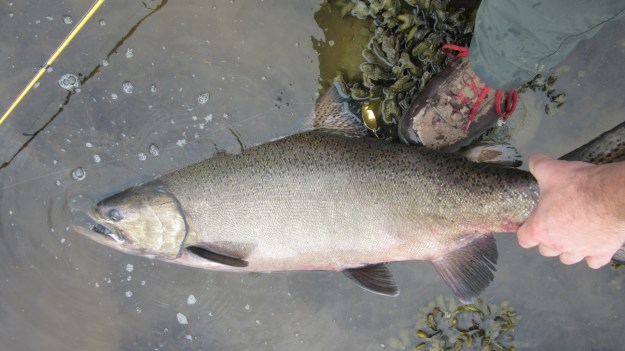
IMG_0241

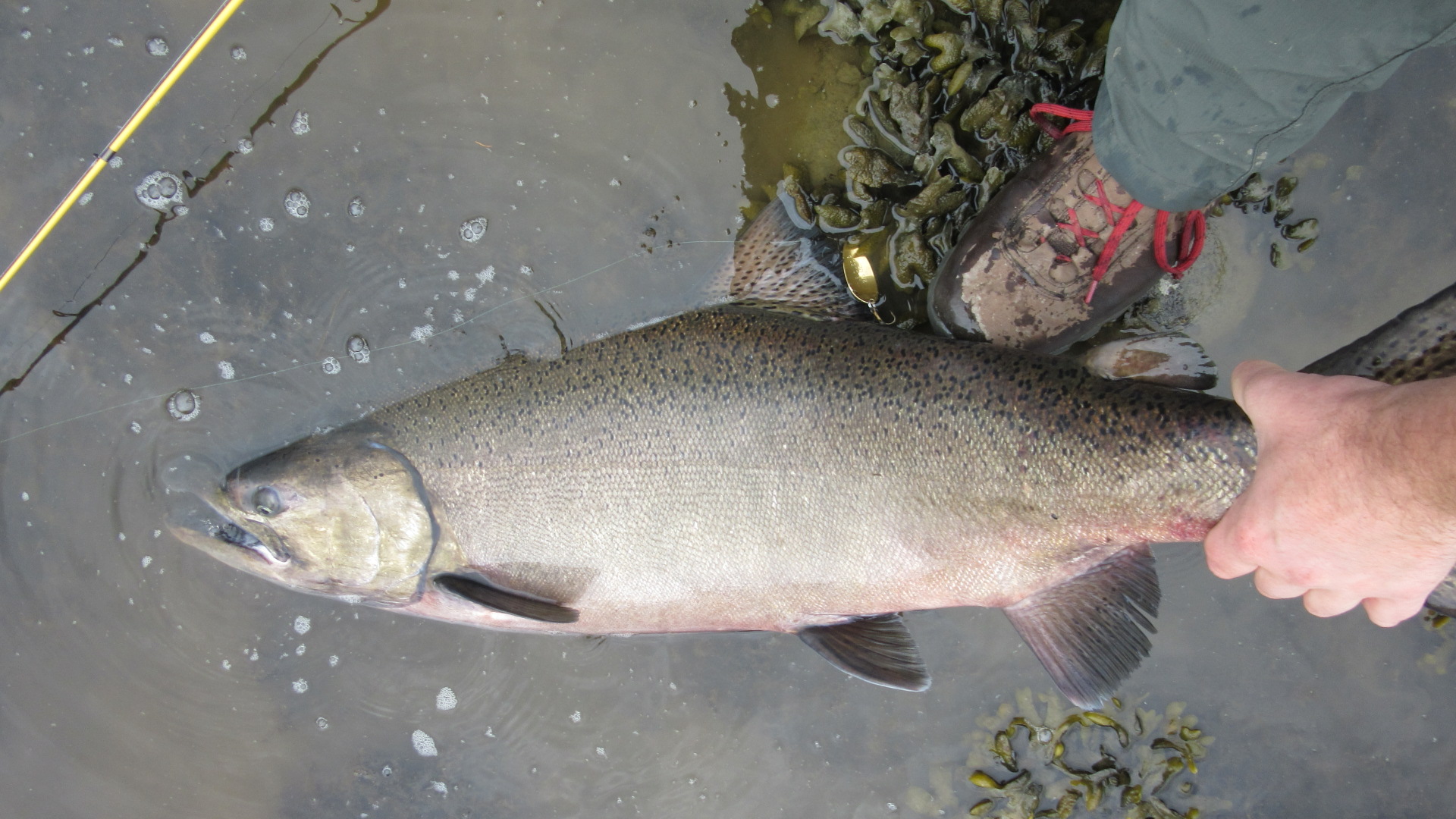
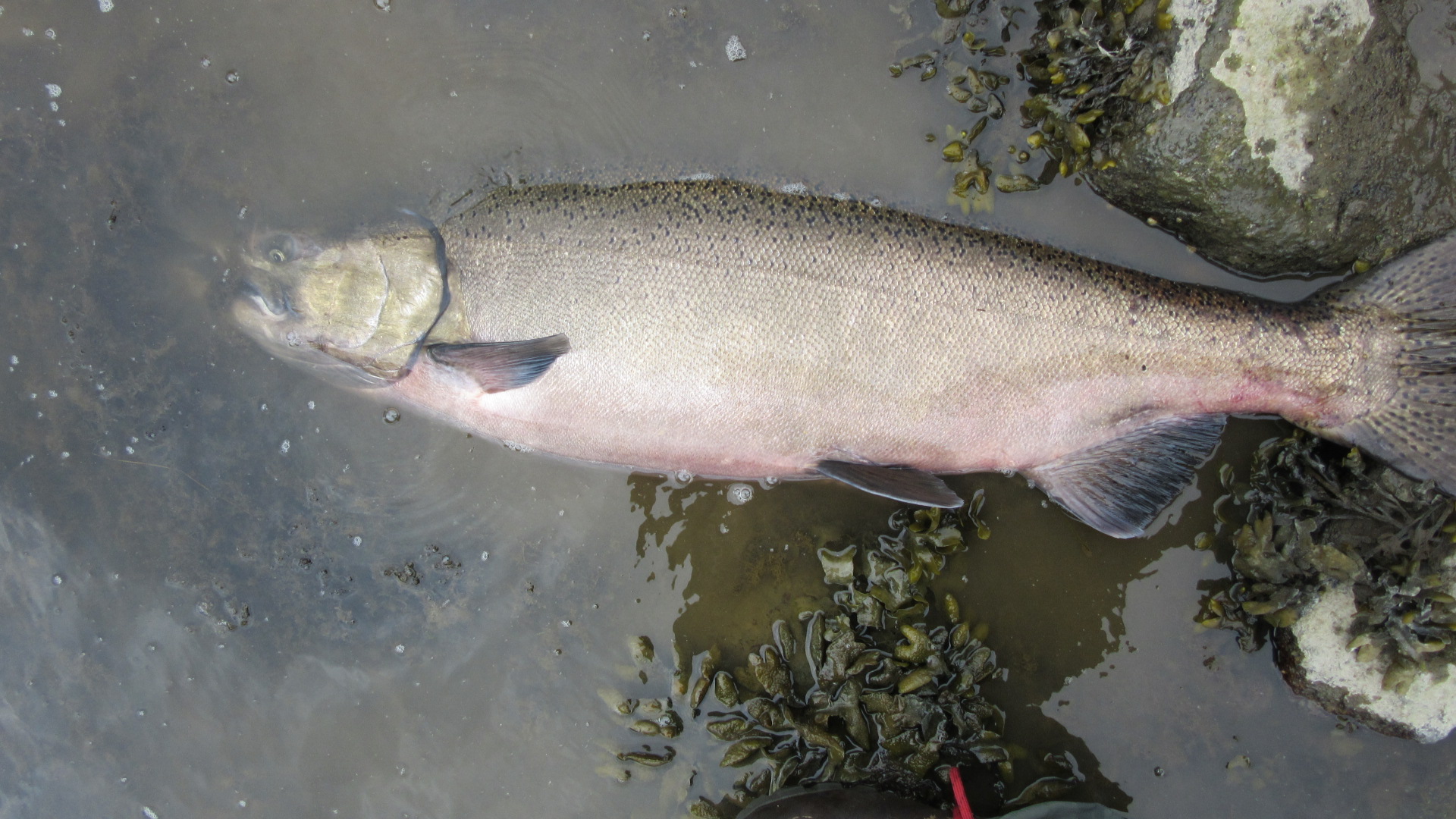
I had no accurate measuring device, but this King Salmon was around 40 inches, I figure, and had to weigh like 30 pounds.  Compare my boot (size 13) to the fish in both images.  Especially this second one since I’m holding up the tail in the first one.
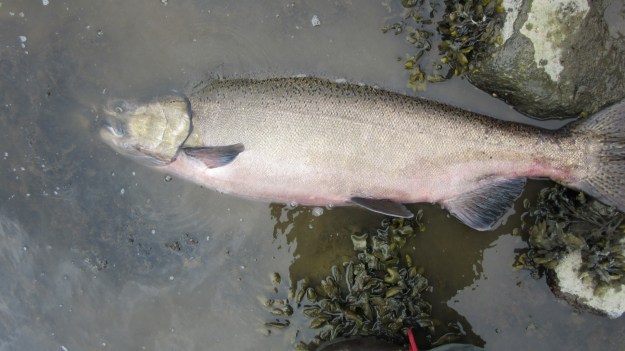
IMG_0242

Long before I landed the fish, I was worried that I had snagged it.  Snagging is when you hit the fish with your lure as you’re retrieving rather than the fish biting it.  It can happen when you’re trying to catch large fish in relatively confined areas.  Doing this intentionally is illegal in most places as it is an unfair advantage to the angler and can lead to over harvest in addition to wounding fish that don’t get caught.  There are certain places in Alaska where snagging is legal for a limited time.  But Blind Slough is not one of those places.  If you do this accidentally, the fish must be released.

As it turns out, that is exactly what happened with this big King.  In the first image, the lure is still hooked into the fish behind the dorsal fin.  I could tell long before I landed it, too.  When they get hooked in the middle like this one is, they tend to go sideways once they tire and it makes them really heavy on the end of the line.  Any thoughts about having my next several meals taken care of faded with the realization that he was foul hooked.

This King of the Salmon would have to be returned to the water.  Once he was unhooked and photographed, I pointed him towards deeper water and held him upright until he was ready to go.  It was a really awesome fight and I was thrilled to examine one of these beasts up close.  But I will always feel like this catch is tainted because of the snagging.  It’s an asterisk that means I didn’t outwit this animal with a clever rouse.  It was the fishing equivalent of hitting it with your car.  Technically you got ’em, but “how” matters.  It’s less impressive.  I need to catch another one.  This time, hooking it the right way.  You better believe I’m gonna try!

Let Them Eat Kake

Kake is a tiny town on the northwestern coast of Kupreanof Island.  With very few roads, we had all of our work done by early afternoon.  I decided to fill my time on one of the streams I noted earlier along a road into the island’s interior.

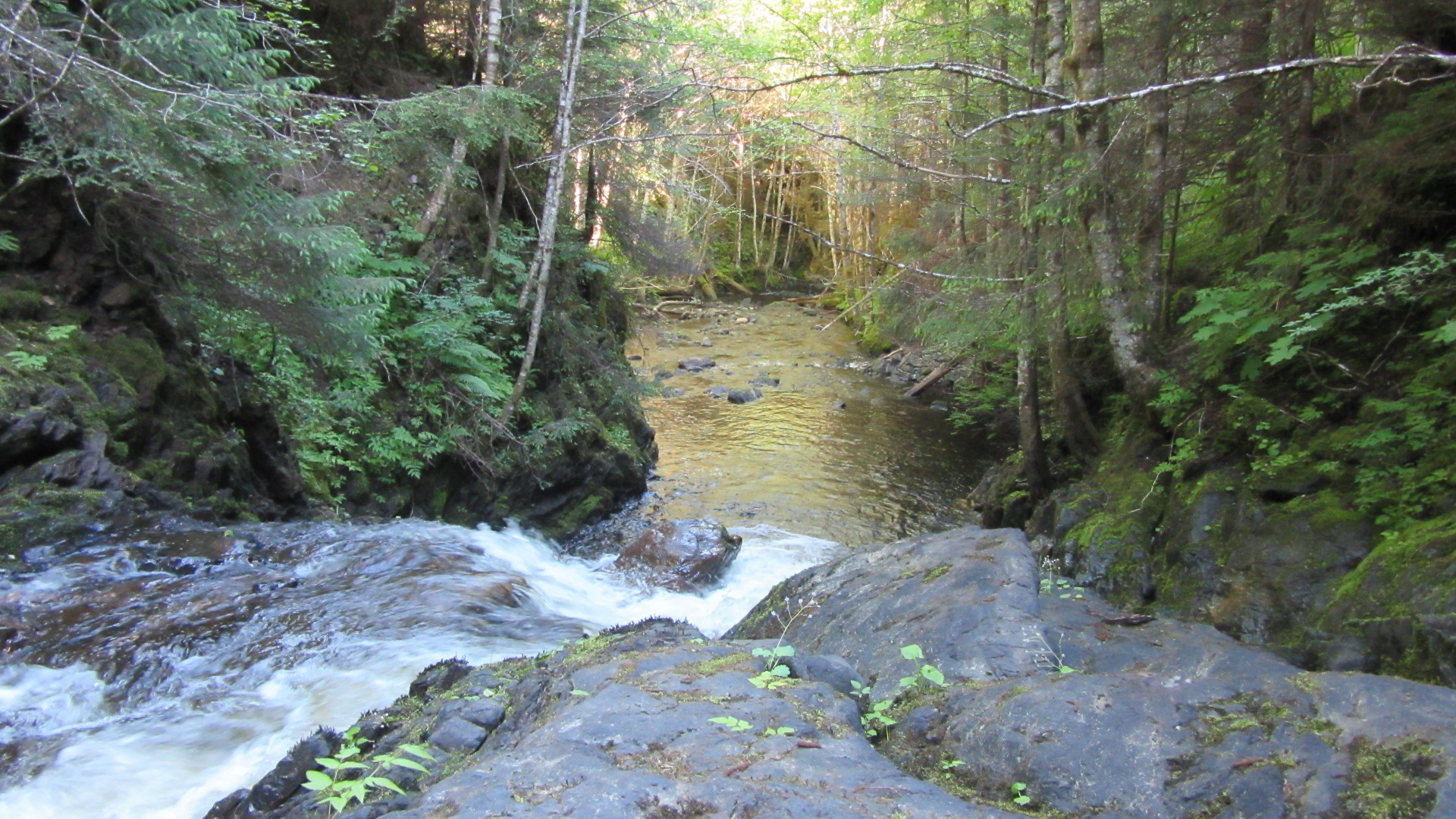
Jenny Creek is comparable in volume to the Spirit River, up in my neck of the woods.  But its morphology is more similar to something you might see tumbling toward Lake Superior; bedrock outcrops, steep gradients and small waterfalls all surrounded by moss-draped forest.  The water was a bit low and long, shallow riffles connected the deeper pools.  Though it was mid-afternoon, the steepness of the valley and the dense forest made for low light levels.  While respectable by Midwest standards, this forest was clearly second growth.  Stumps and remnant logs 8 feet and more across were scattered among younger trees already 3-4 feet in diameter.

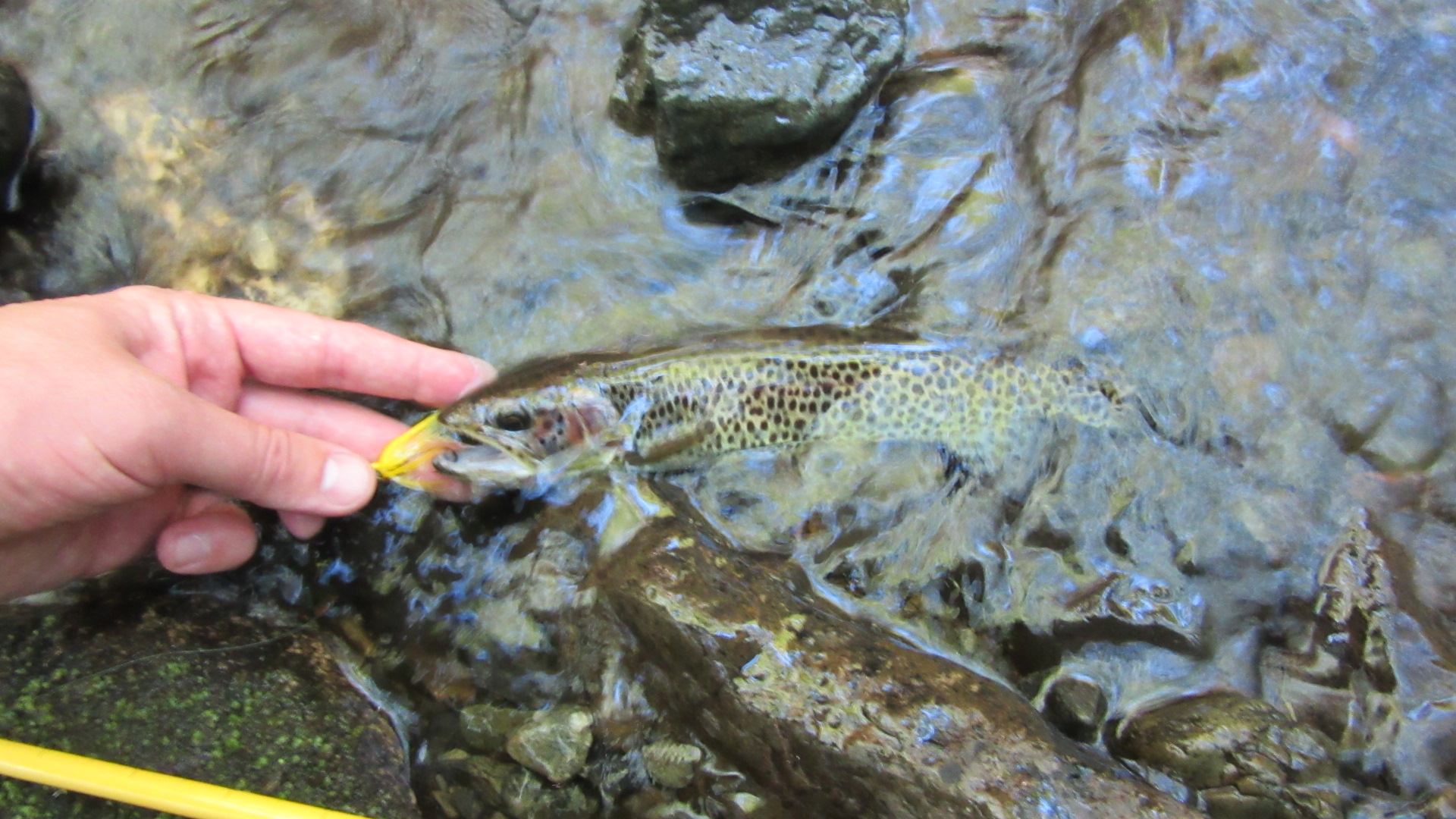
The first couple of pools yielded nothing.  But a little further downstream, a sudden tug on the line meant something found my 1/8 oz yellow spinner interesting.  It was this 10 inch cutthroat trout.

IMG_0137

It was the first of half a dozen small cutts.  For a time I thought some of them were rainbow trout because the parr markings on the smaller ones accentuated the irrendescence behind the spots.  But after further review, they were all cutthroats.  I kept none as there is an 11 inch size limit and that 10-incher was the largest of the lot.

I fished my way downstream for almost 2 hours until I came upon this 10-12 foot waterfall.  Not wanting to Bear Grylls my way down the “slippy” rocks, I started my return trek back upstream to the bridge.

IMG_0142

I was very much aware I was in the woods in bear country.  We saw a small black bear on the edge of town earlier that day and I passed another on my way to go fishing.  Bears have good hearing and an excellent sense of smell, but their vision is relatively poor.  As such, when hiking in bear country it’s adviseable to make a lot of noise so as not to surprise one.  An occasional shout of “Heeyyy bear!” is good.  So is singing out loud.  Anything that pitches your voice through a range of octaves is best as it makes it more likely you will be heard over the normal sounds of nature; especially along a stream.  Black bears are generally timid around humans, but around garbage dumps and other sloppy human activity, they might need encouragement to skeedattle.  In the woods, I’ve only ever seen them running away from me.

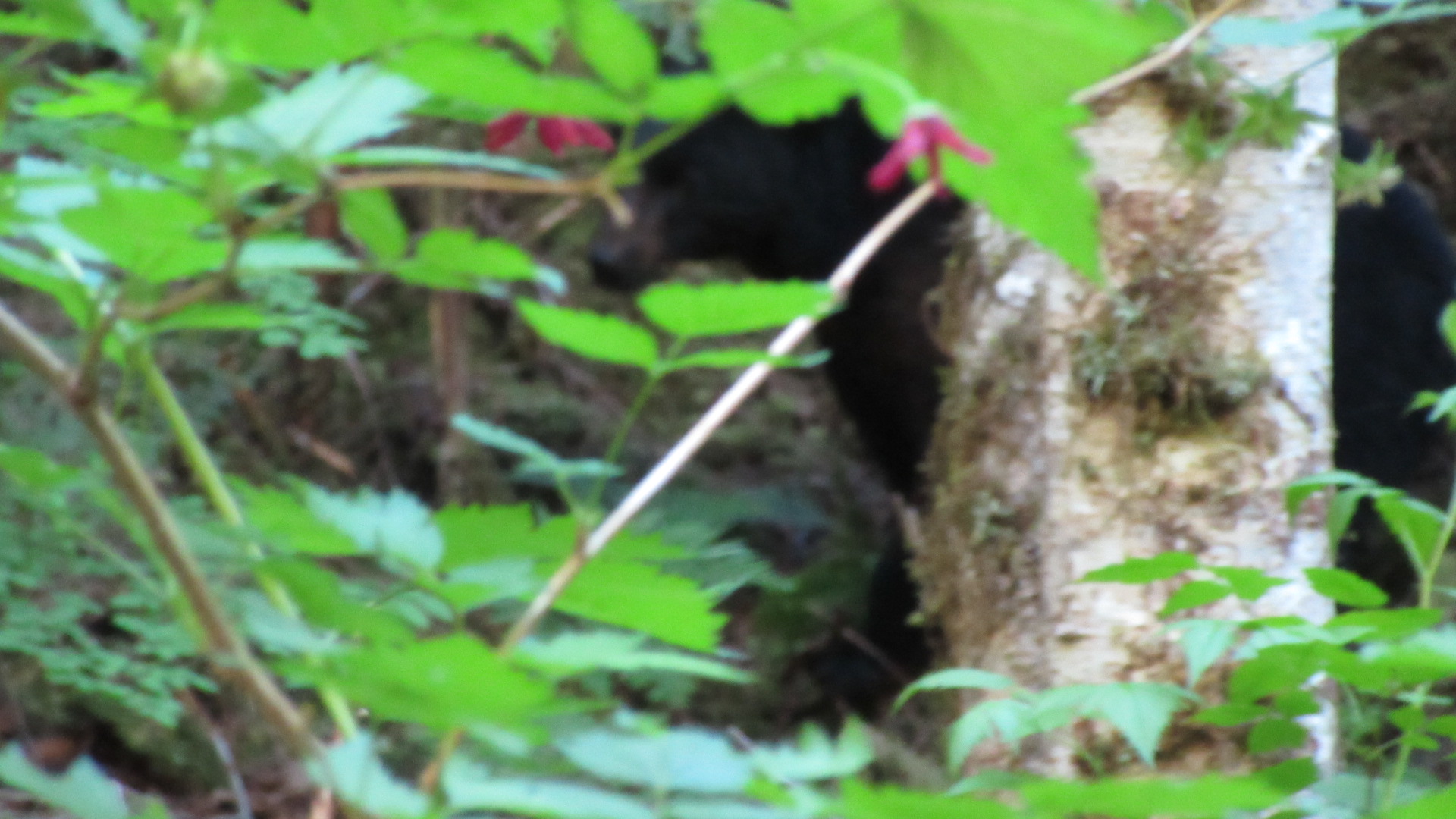
I’m a little over half way back to the road, when I hear a twig snap up ahead a little on the same side of the stream as me.  This gets my attention and I listen for anything else.  Another snap; this time a little closer.  Instantly I give a loud whistle and kick some rocks around, just in case.  Sure enough, about 30 yards away, an adult black bear appears at the base of the valley slope among the brush.  It was a heck of a lot closer than I was comfortable with.  I found it remarkable how well it was hidden by the vegetation; if that bear had been standing still instead of walking toward me, it would have been impossible to see.  I shouted at the bear, “Go on, get outta here!” and he scrambled up the steep slope several dozen yards before stopping to look at me.  Another word of encouragement and the bear disappeared into the dense forest.  I continued my hike back to the road on the other side of the stream.

IMG_0145

It was an exhilerating experience.  The twinge of danger and subsequent fight or flight decision was very raw and primitive.  The relization that it was ‘just’ a black bear is darkly humorous to me.  “Phew, the probability of mauling dropped from ‘slightly possible’ to ‘extremely unlikely’; what a relief!”
It’s been a long time since I’ve seen a bear while hiking in the woods.  It’s a much different experience when you are in their element, rather than spotting one from a car.  There’s always a tiny rush of fear because these creatures have the hardware to mess you up, but not usually the desire.  So when they immediately high-tail it away from you, the relief is very satisfying.  “Okay, we understand each other, bear.  You go that way; I’m going this way.”

A rescue in Gardner

Yesterday, I had the opportunity to save a bird.

My associate and I stopped by this pond in Gardner, IL to have a little lunch; a spot I selected because I figured I could take a few casts.

http://mapper.acme.com/?ll=41.18169,-88.32025&z=15&t=S

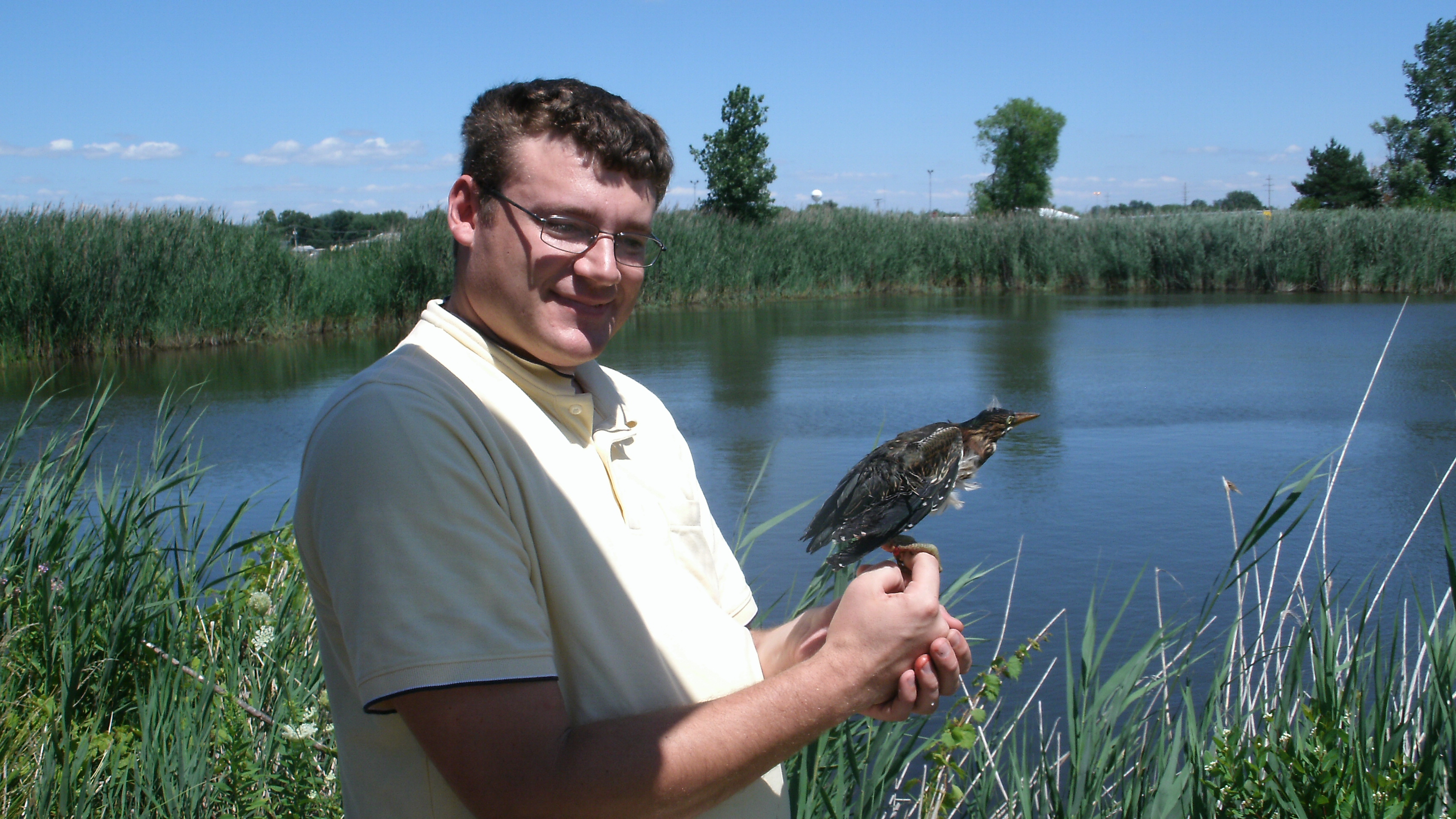
As I fished, I noticed this bird sitting on a dead branch fairly close to me; close enough that it seemed odd it hadn’t flown away.  The bird was a juvenile green heron and it sure looked like it wanted to leave, but didn’t.  That’s when I noticed a fishing lure was also stuck to the branch.

http://en.wikipedia.org/wiki/Green_heron

Immediately I figured the young bird was tangled in the line or something.  Upon closer inspection, it was worse than that; a hook from the bait was sticking into its leg.  It was stuck to the bait which was stuck to the branch; there was no way he was going to get out of that mess.

My associate and I quickly hatched a plan.  I pulled off my shoes and socks and got out my multi-tool.  I’d wade out to see if I could free the little guy.  The water was warm and the bottom was mucky as I made my way toward the branch and its captive.  Lots of weeds, too and it was deep enough that my shorts were dipping into the water.

As I closed in, the heron gave out a few squawks and tried to fly away. I was able to gather him up and snap off the dead branch so I could bring him up to the shore where the two of us could work on the problem.

Using the pliers on the multi-tool, I was able to cut off the hooks and work the embedded one out as gingerly as I could with the barb working against me.  The job complete, I let the little guy stand on my hand and recover for a bit.  He seemed to be supporting his own weight and was alert and responsive.  We speculated that the little heron wasn’t stuck for too terribly long given his relatively decent condition.  After a few minutes he tried to fly away and made to back to the edge of the pond.

Image

When I last saw him, the heron was sitting on another, decidedly less dangerous branch at the water’s edge.  He was in the shade so he wasn’t going to overheat and had easy access to the water so he won’t dehydrate and might even get a meal or two.  He stands a pretty good chance of living now, but even if he doesn’t, it will be far more dignified than being hung up on a branch like that.

It’s somewhat ironic that this bird was put in peril because of a careless fisherman and then another fisherman comes along and frees him.

The Quad

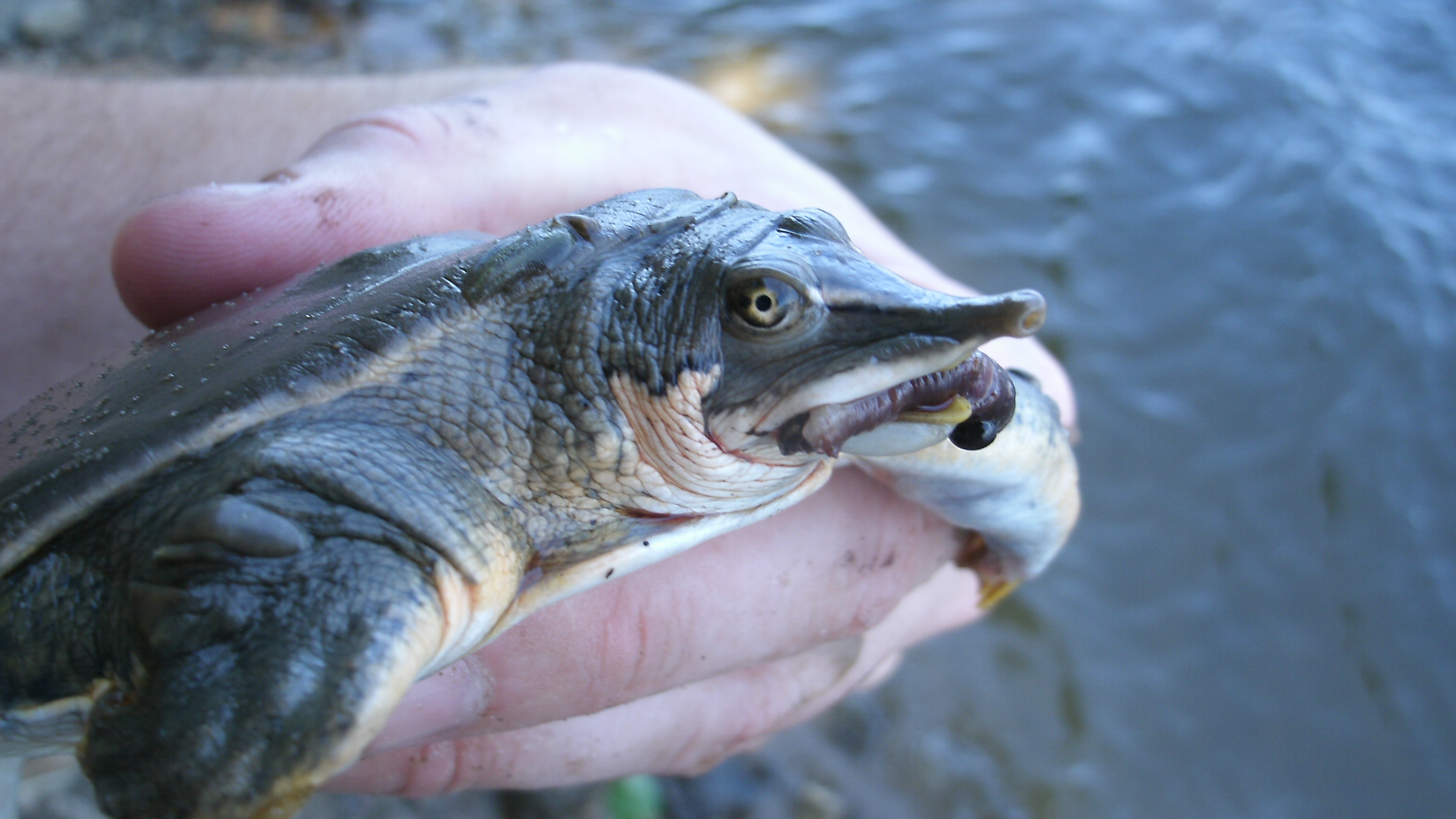
I’ve got a couple off days in this quartet of river towns straddling the Mississippi.  Spent much of today doing some fishing in the Rock River.   Lots of activity there!  Pelicans, cormorants, herons, hoards of little minnows that would nibble on your feet if you waded in.  I caught one drum, half a dozen wee catfish and this feisty little guy:Image

That’s a softshell turtle.  I was able to unhook it, but he got to keep my worm.  There were dozens of these things scooting around.

I was disappointed to see the local minor league baseball team is on the road this week.  It looks like a nice little stadium there in Davenport.  It’s a Midwest League team called the River Rats.  I may see about procuring some swag tomorrow.

My hotel room has a nice view of the cloverleaf interchange between I-74 and I-280 by the airport.  It’s one of only a handful of places where one needs to navigate a loop to follow the ‘mainline’ of an interstate highway.  (One of the other ones is the next interchange east!)

I expect to be in this area for the next several days so I have plenty of time to explore.