Folks on the island of Hawaii live in a dynamic environment. Sometimes, though, that environment gets a little too dynamic for comfort. They are living with the most active volcano in the world. Since 1983, Kilauea and its associated vents and craters have been in a continuous state of eruption, piling new material onto the island and transforming the landscape. The eruption has been docile by the standards of volcanology; a steady stream of slow moving lava flows periodically switching among any number of openings in the Earth. At present, the main crater of Kilauea is in the 7th year of venting mostly gasses while some 20 miles east, lava is flowing from a peak known as Pu’u O’o. For most of the last 30 years, the bulk of the lava has been sent southeast toward the sea.
In June of last year, a surge of lava from the Pu’u O’o Crater worked its way down the northeast flank taking a more inland route than ever before during the modern eruption. The lava was making a bee-line for the town of Pahoa. Pahoa is the nearest community to where I have been staying on the Big Island. It’s the last town one passes through on State Highway 130 before heading off to the various subdivisions and shore accesses on the east end of the Big Island.
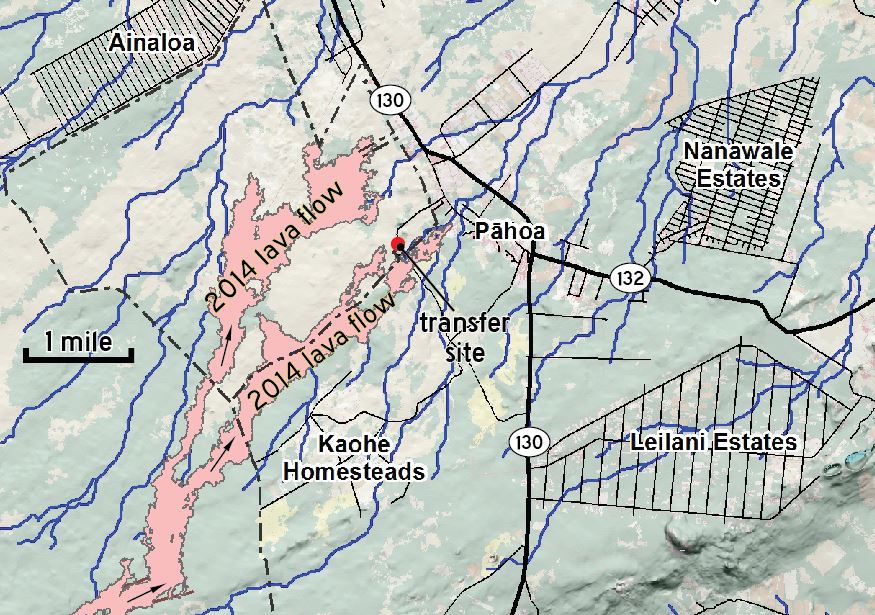
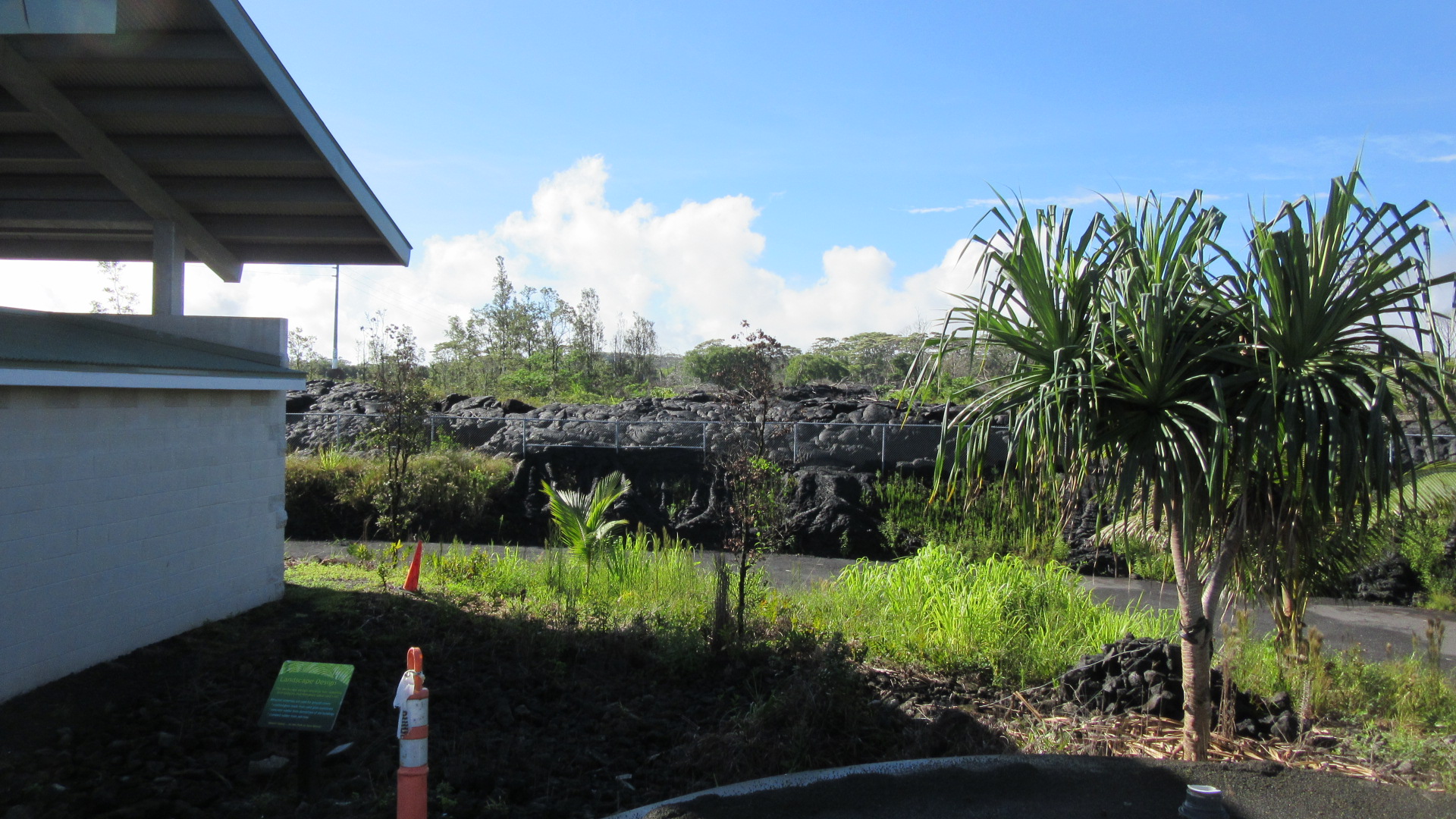
As the lava flow approached the edge of town, it not only threatened the community itself, but everyone was worried it would push across the only road in to and out of the east end of the island. To prepare for this possibility, a road was hastily constructed east from Hawaii Volcanoes National Park in the summer of 2014. Fortunately for Pahoa and everyone living east of there, the lava’s advance toward the town came to a halt before it swallowed the town’s garbage transfer station; the first of many buildings it would have engulfed.
The emergency road stands ready however, should the volcano send more new land toward Pahoa and State Highway 130. Until then, it is closed to the public. Both locals and the National Park Service don’t want the extra traffic.
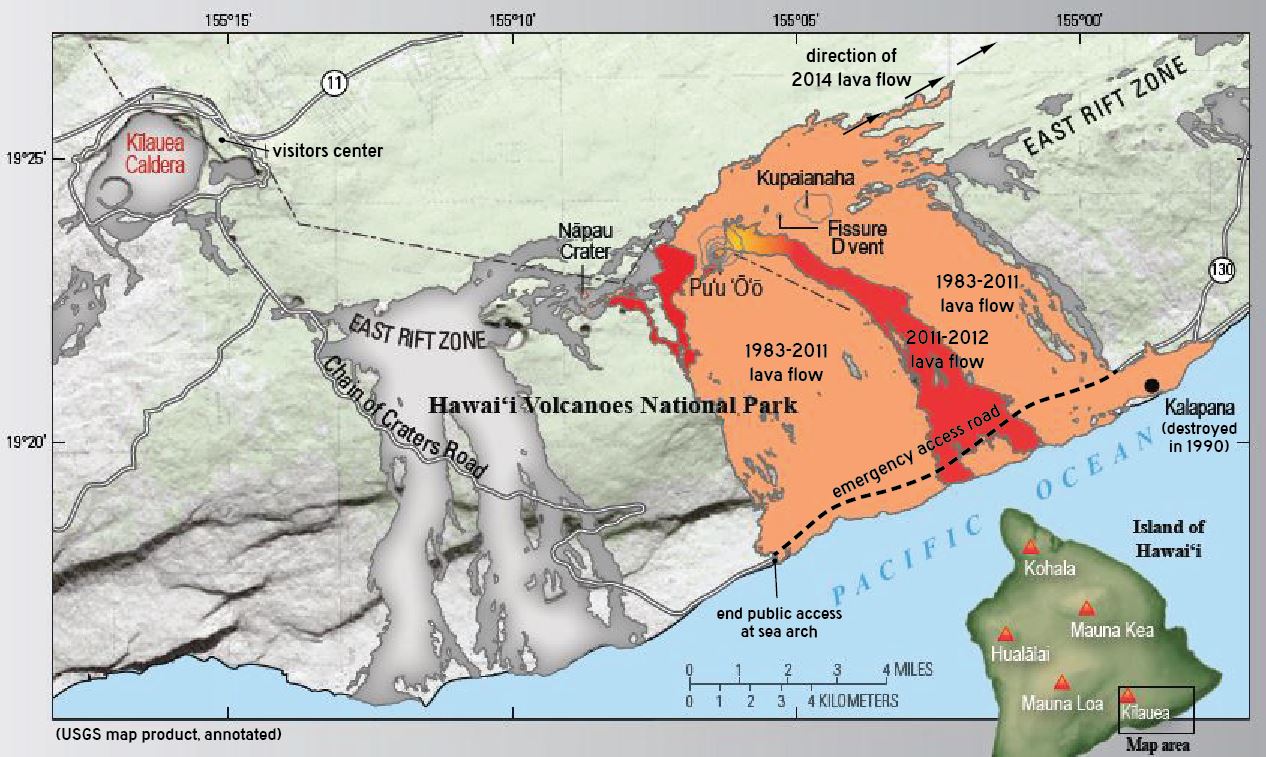
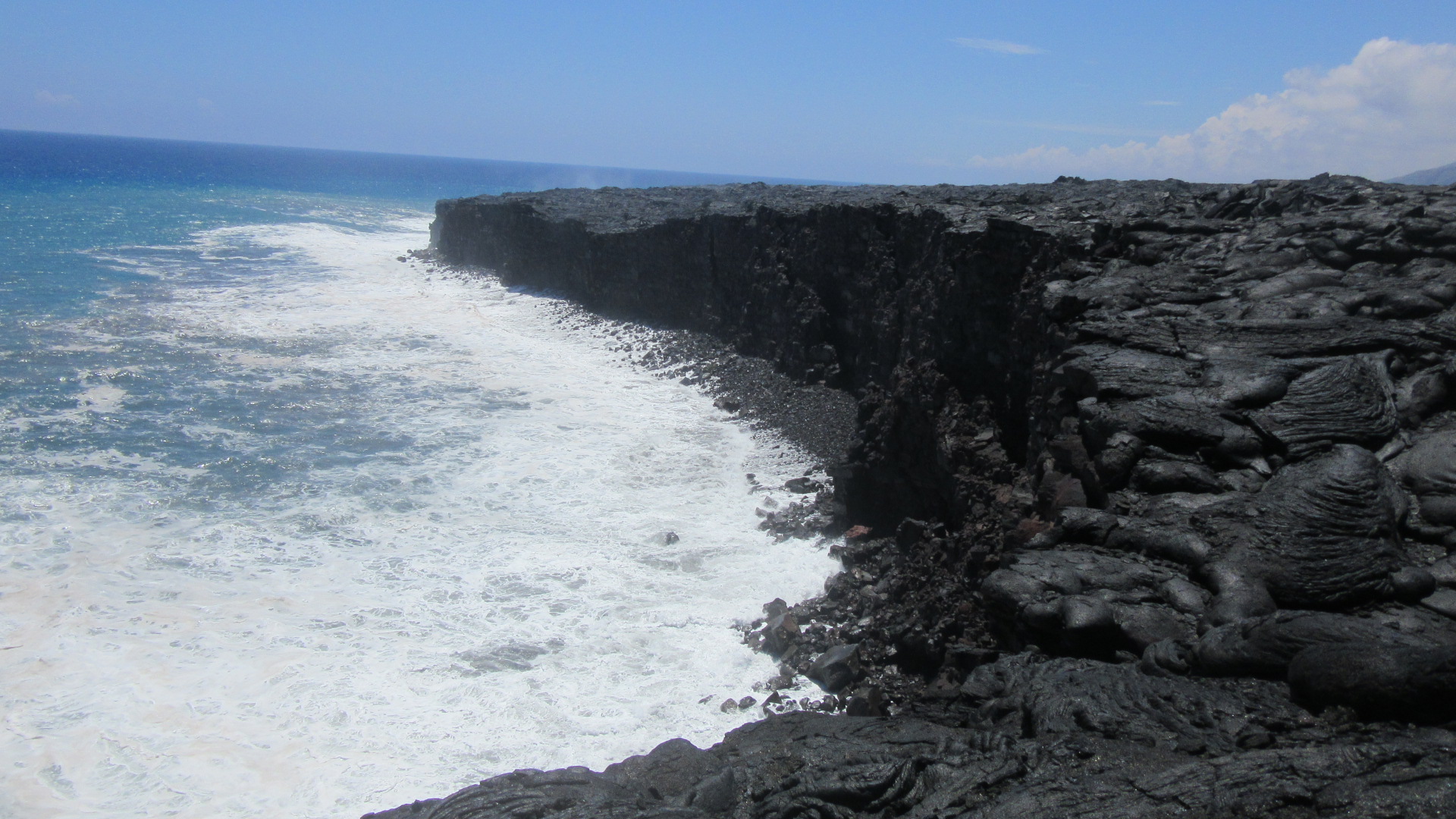
Due to the nature of my job, however, I had an opportunity to drive this unique road. A modest gravel path that hugs the undulations of recently cooled lava. And I do mean recent. Some of this rock was molten during the last Presidential election.
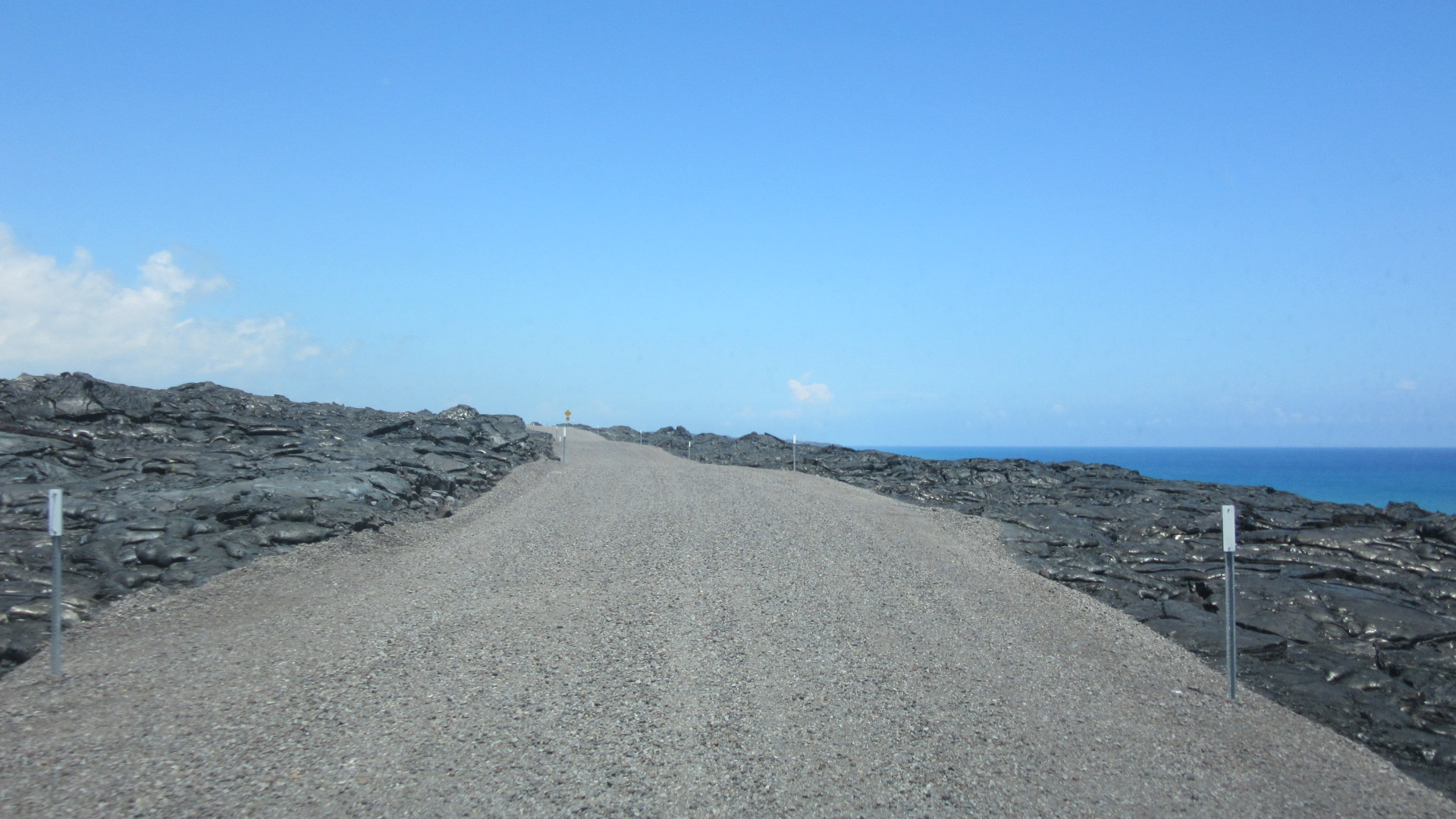
It was a really cool opportunity to stand on the newest piece of American real estate a few feet closer to California than just a couple years ago. At present, there is no lava dumping into the sea anywhere on the island, so for now, this is as new as it gets. But given the history of the islands and Kilauea especially, it won’t be long before the flows shift back toward the Pacific and the volcano’s construction resumes. It may turn out that I was one of the few people to drive this road before the next surge of lava once again makes it impassible.
 Triplemultiplex.com