This is actually a post about fishing. Specifically, the Dolly Varden Trout.
They are quite common to the inland streams and near-shore areas of Southeast Alaska and have a range that extends down the coast into Washington. It’s such a peculiar name for a fish that I had to look it up. Apparently it is named for a colorful style of women’s dress popular in the 1870’s when the species was first described scientifically and the dress itself derives its name from a character in a Charles Dickens novel. I had assumed it was the name of some river somewhere, but the truth is way more interesting.
Dollies, as they call them up here, are close relatives of one of my favorite sport fish, the Brook Trout, along with the other species of char such as the Lake Trout and Arctic Char. Inland Dollies look a heckuva lot like Brookies.

Very similar, aren’t they? The top one is a Dolly Varden Trout I caught outside Ketchikan. The bottom one is a Brook Trout I caught earlier this year in Wisconsin. The main difference is the worm-like markings on the Brookie compared to only round spots on the Dolly. Additionally, the inside of the Dolly’s mouth is white while the Brookie’s mouth is black. Dollies tend to have a more slender body shape compared to the stockiness of the Brookie.
Much easier to tell the difference when you catch a Dolly from the ocean.
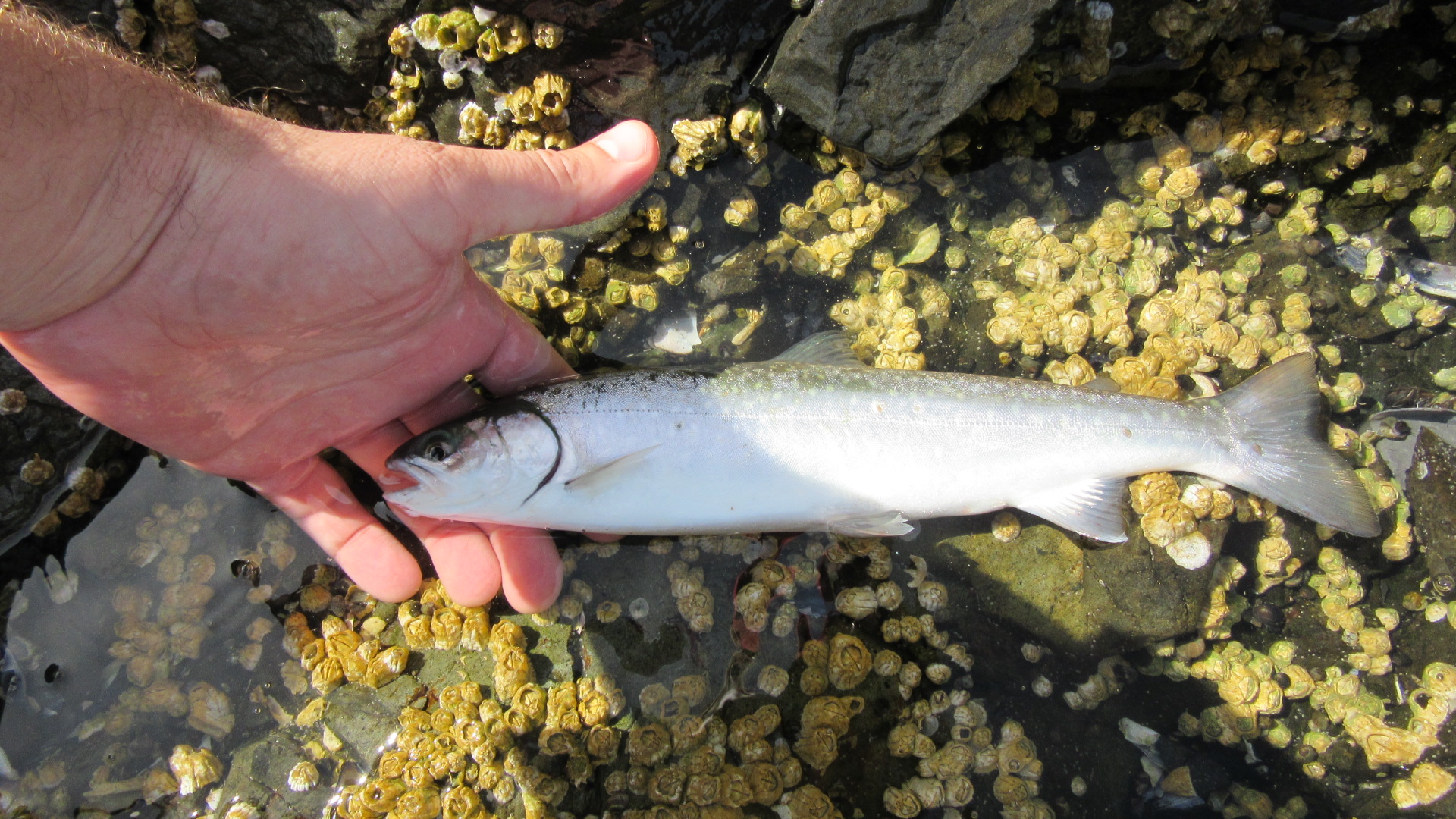
Instead they start looking like every other salmon and trout in the ocean; silvery with spots. Like most trout, Dollies strike a lure aggressively and fight better than their size might indicated. They are pretty good at throwing a hook with their aerobatics above and below the water. It has provided good entertainment while the salmon bide their time waiting for higher waters in the rivers around here.
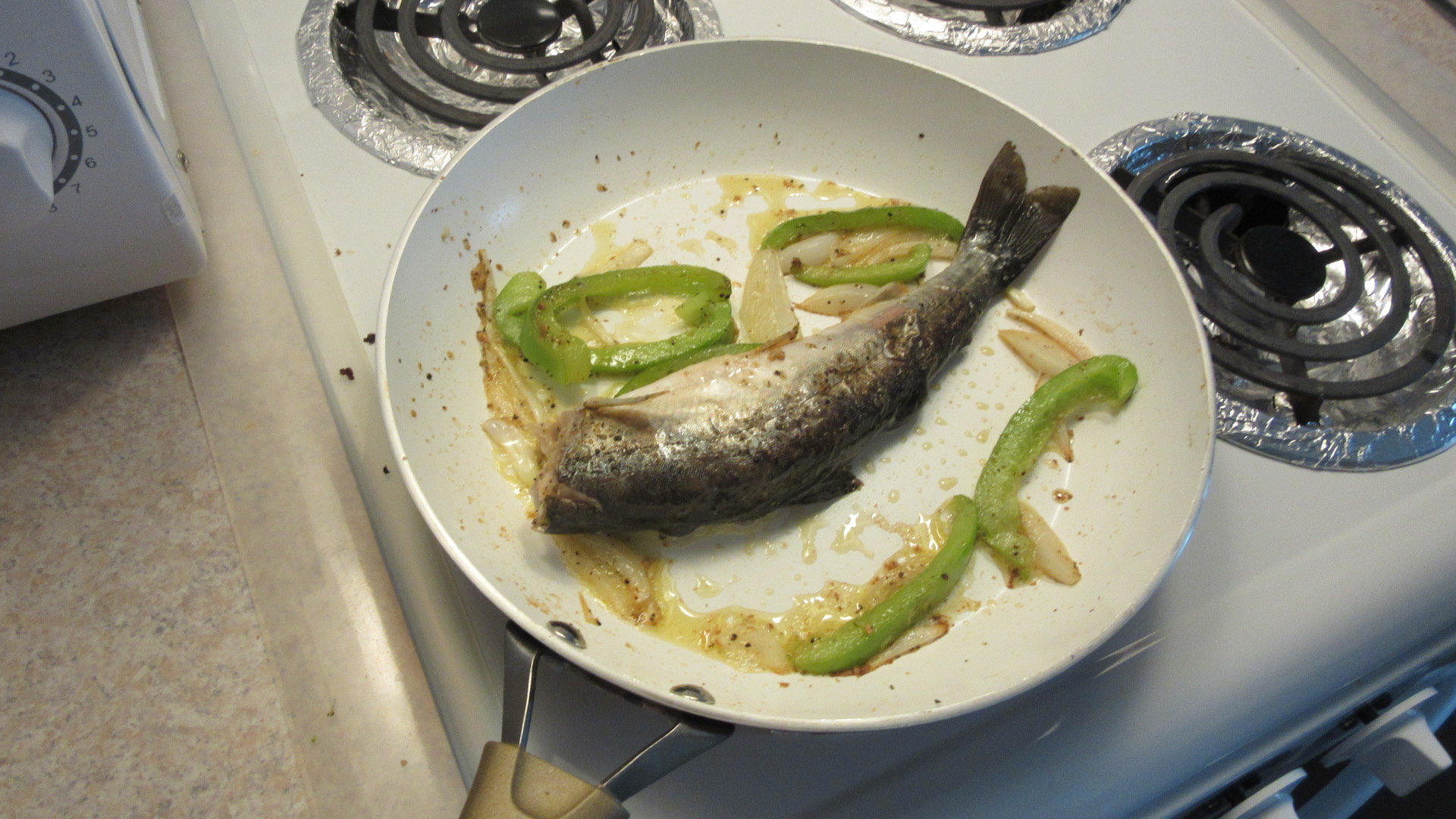
One final similarity between the Dolly Varden and Brook Trouts. They are both delicious.
 Triplemultiplex.com