Another day, another river joining the ocean in a tidal estuary. This one is the is the Chilkoot River and it’s the river to the east of Haines. Haines sits on the eastern shore of a long peninsula that separates two long fjords fed by glacial-charged rivers. Back in the paddle-power days, Haines served as a shortcut between the two river mouths, a two mile portage over level terrain being preferable to a 30 mile paddle. These days, Haines is the quiet alternative to tourist-heavy Skagway as a place to transition from the Marine Highway to the more conventional highway.
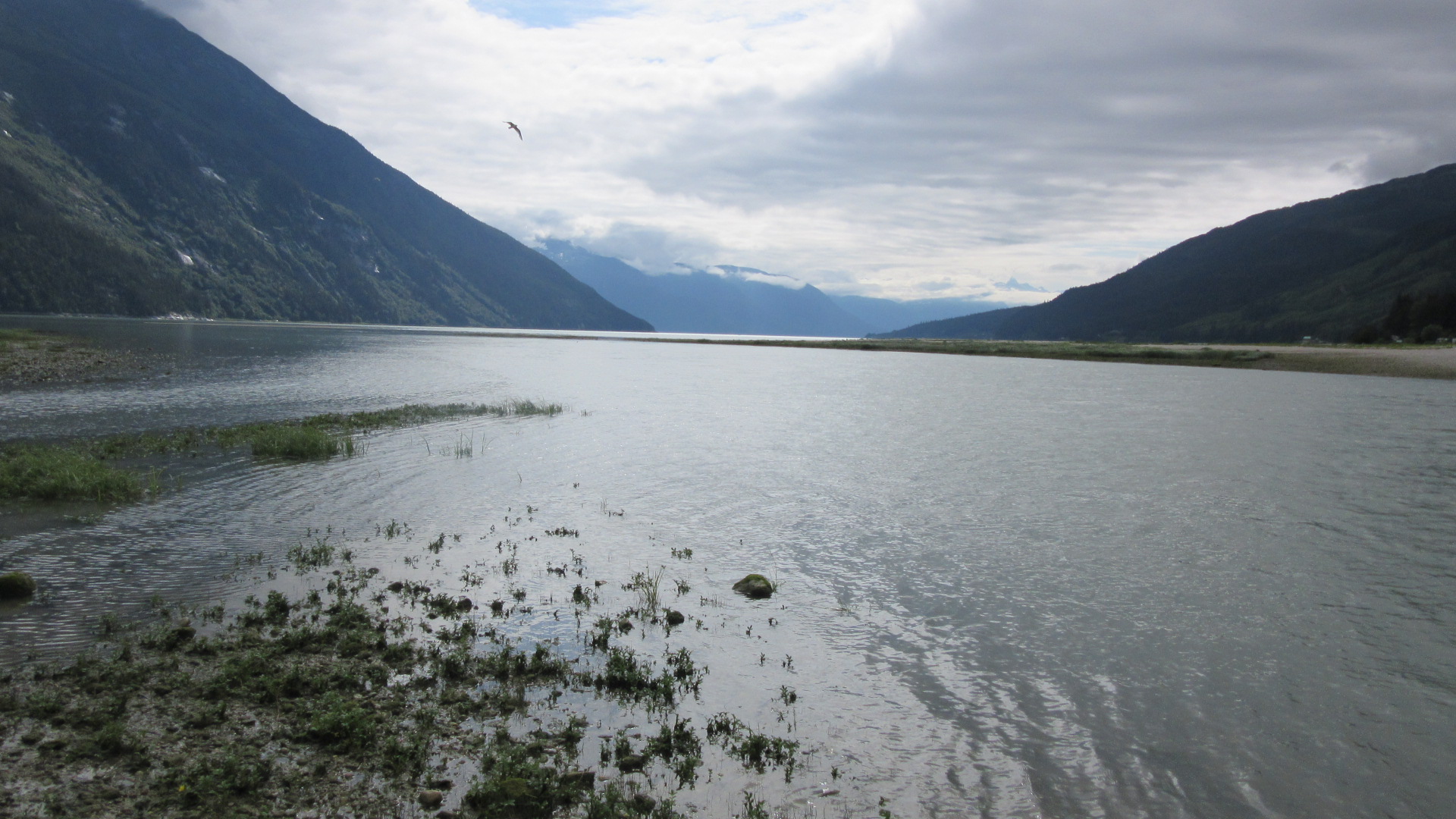
On this day, I selected the Chilkoot, to the east, over the Chilkat, to the west, because it had a lake just a mile upstream. I didn’t wind up fishing the lake, but it looked cool on a map. Instead I followed the receding tide downstream throughout the morning and into early afternoon.
Tides are an interesting phenomenon for this Midwest boy. I’m not used this dramatic, short-term change in water level. At the heads of these long inlets and channels far from the open ocean, the tide can shift the water 20 feet or more up and down in just 12 hours. At a shallow estuary like the one at the mouth of the Chilkat River, this can mean the shore at low tide is a mile away from the shore at high tide. I stand at the water’s edge and three casts later, I can take another two steps forward.
The creatures that live here are used to the tides, though. During their spawning runs, each rising tide brings another wave of salmon upstream into the river. Each receding tide forces the stragglers to retreat from the shallowing water. Predators of the salmon know this. Everyone is familiar with photogenic congregations of eagles and bears at opportune places up and down the northwestern coast of the continent.
But the nature has a three-pronged attack in store for the salmon. The bear comes from the land, the eagle comes from the sky, and from the water comes the harbor seal.
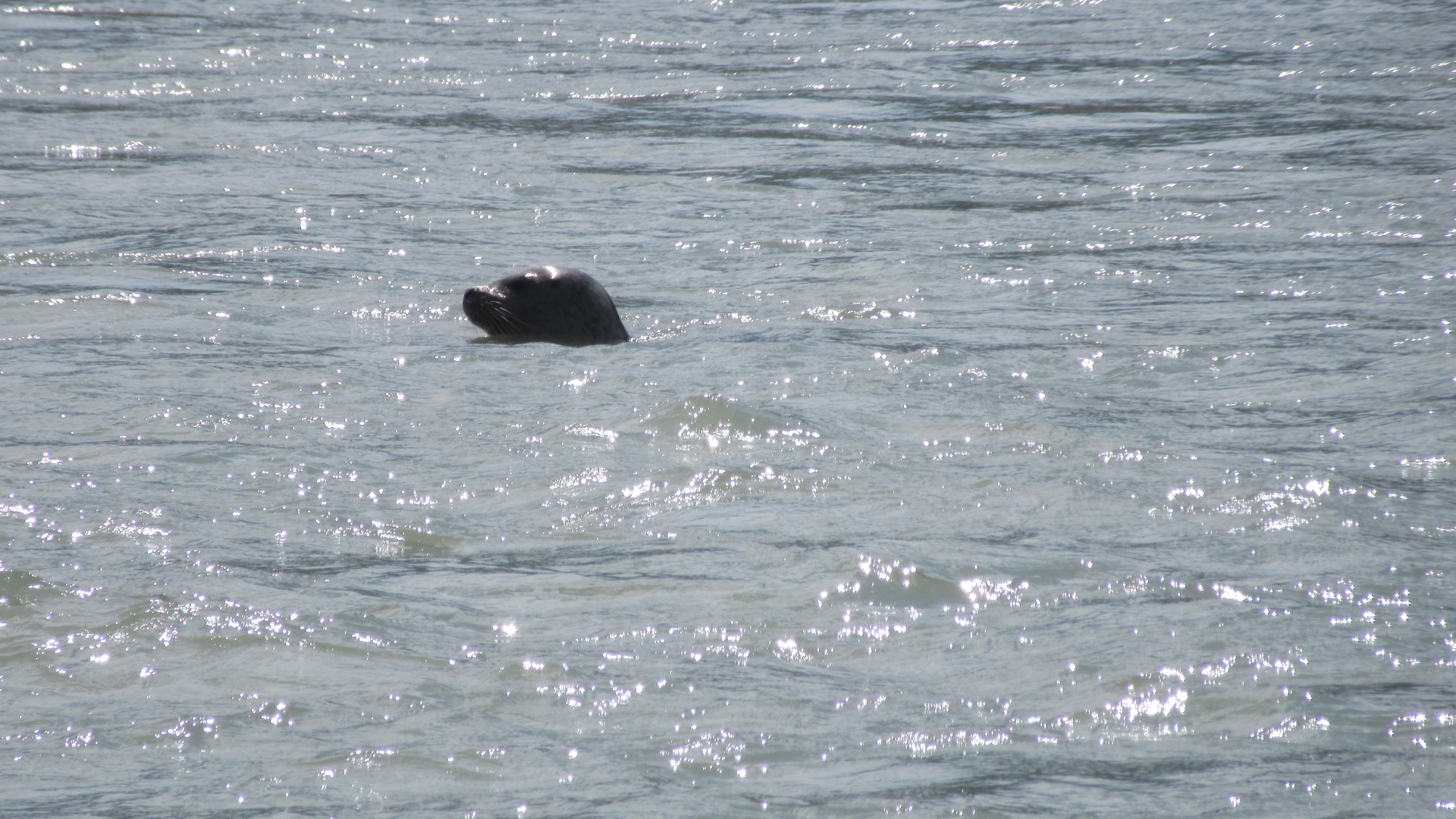
As I fished, I noticed one seal swimming around way downstream from me and it was pretty neat. Then I saw it was actually two different seals. I moved further downstream, following the receding tide, and two seals had become four. Then it was more like 10. By the time I had moved a quarter mile toward the ocean, I realized there were dozens of seals patrolling the mouth of the Chilkoot.
I had to wait more than once for a seal to move out of the way so I could cast. At first when they surfaced near me, they bolted back underwater. But as time passed, they were less threatened. Instead they just wanted to make sure they knew where I was. A seal would pop up within casting distance and it would boost it’s head higher in the water to see over the standing waves created by the current and get a clear view of me, then let the current float them away from me. I can only describe that behavior as adorable.
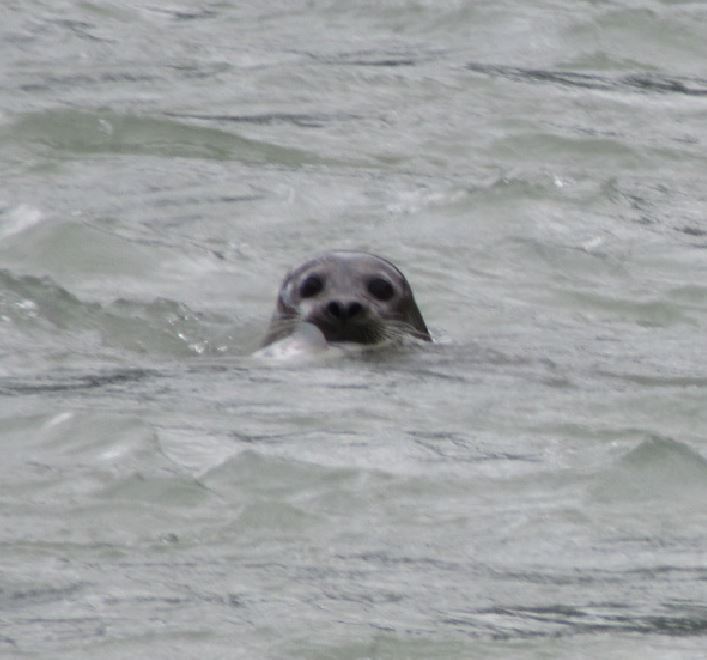
Frustratingly, the seals were having much better luck fishing that I was. Multiple times a seal would appear with a freshly caught salmon in its mouth. As before, they would look to me to verify I was still a non-threat, but in doing so created the illusion that they were mocking me. “Oh hey, is this what you’re looking for? Yeah there’s a whole bunch down there. And they’re delicious.”
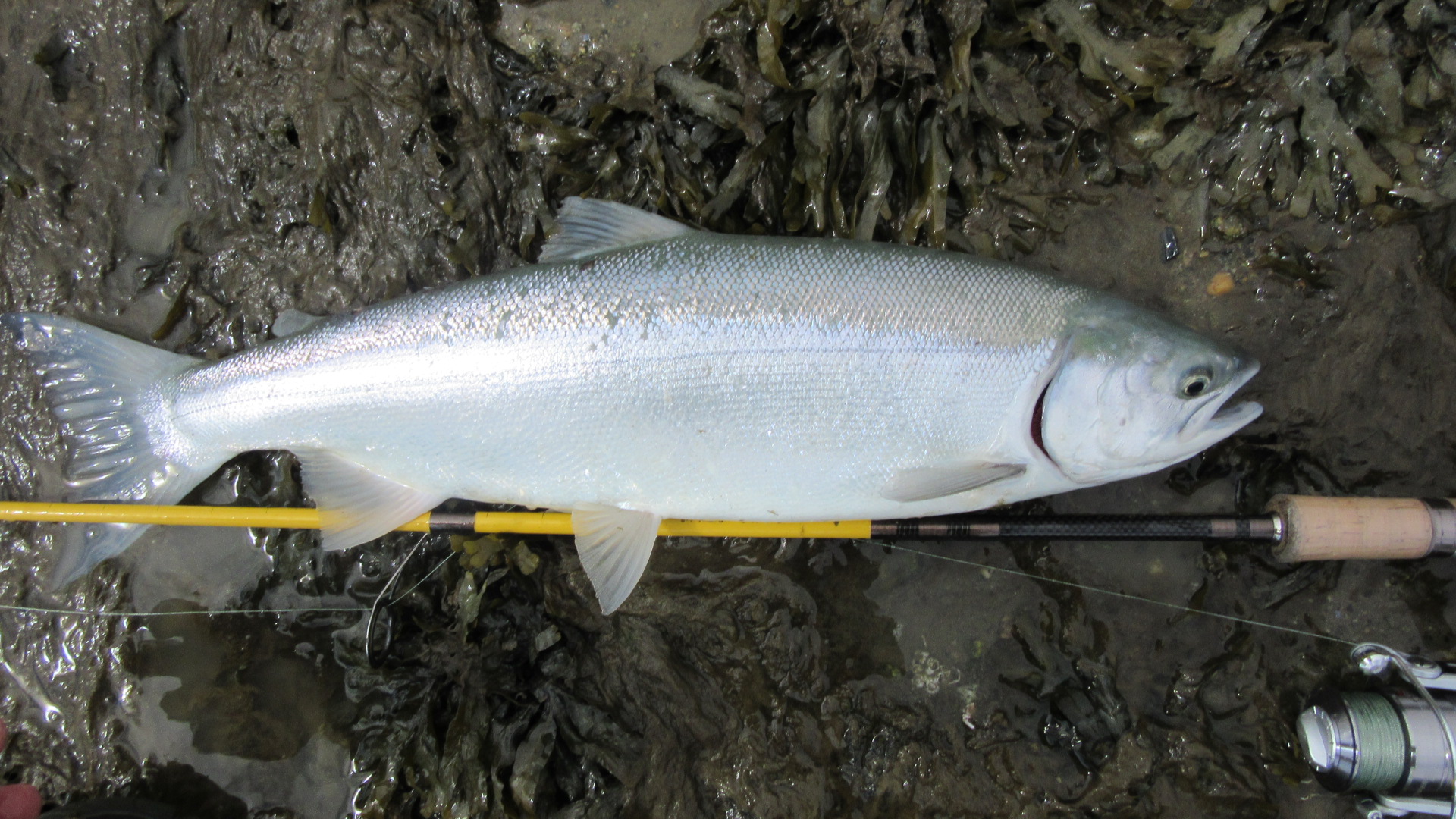
I eventually caught this female Sockeye Salmon. But the seals definitely out-fished me.
Talk about a unique experience. Fishing along side a dozen seals with massive, cloud-draped, avalanche-scarred mountains above me. Alaska is pretty awesome.
 Triplemultiplex.com
That must have been a great experience. I think the Seals were taunting you! Oh, Nice Fish!!
Nice fish. How is it different from a coho (Silver, as they call ’em) salmon?
White mouth, no teeth and they are entirely spotless. Once they get into freshwater, they turn deep red. They don’t have teeth because they eat krill while at sea.