Monthly Archives: July 2014

What’s that rattle?

I woke up a few minutes before 3 a.m. last night and my hotel room in Juneau was bumping around.  In my grogginess, it took a few seconds to realize it was an earthquake.  First one I’ve ever experienced.  Couldn’t have been much longer than 30 seconds in duration.

http://earthquake.usgs.gov/earthquakes/eventpage/usb000rx5i#summary

It was a 5.9 about one hundred miles to my west, which places it along the main fault between the North American & Pacific Plates.  This is a transform plate boundary, same as exists in California.  The ocean floor is moving north relative to North America in southeast Alaska.

Nothing’s damaged or broken except the internet.  The work phone is getting through, but barely.  I can’t even send a text on my own phone right now.  But I’m probably a few millimeters closer to western California now! 😉

Fishing With The Seals

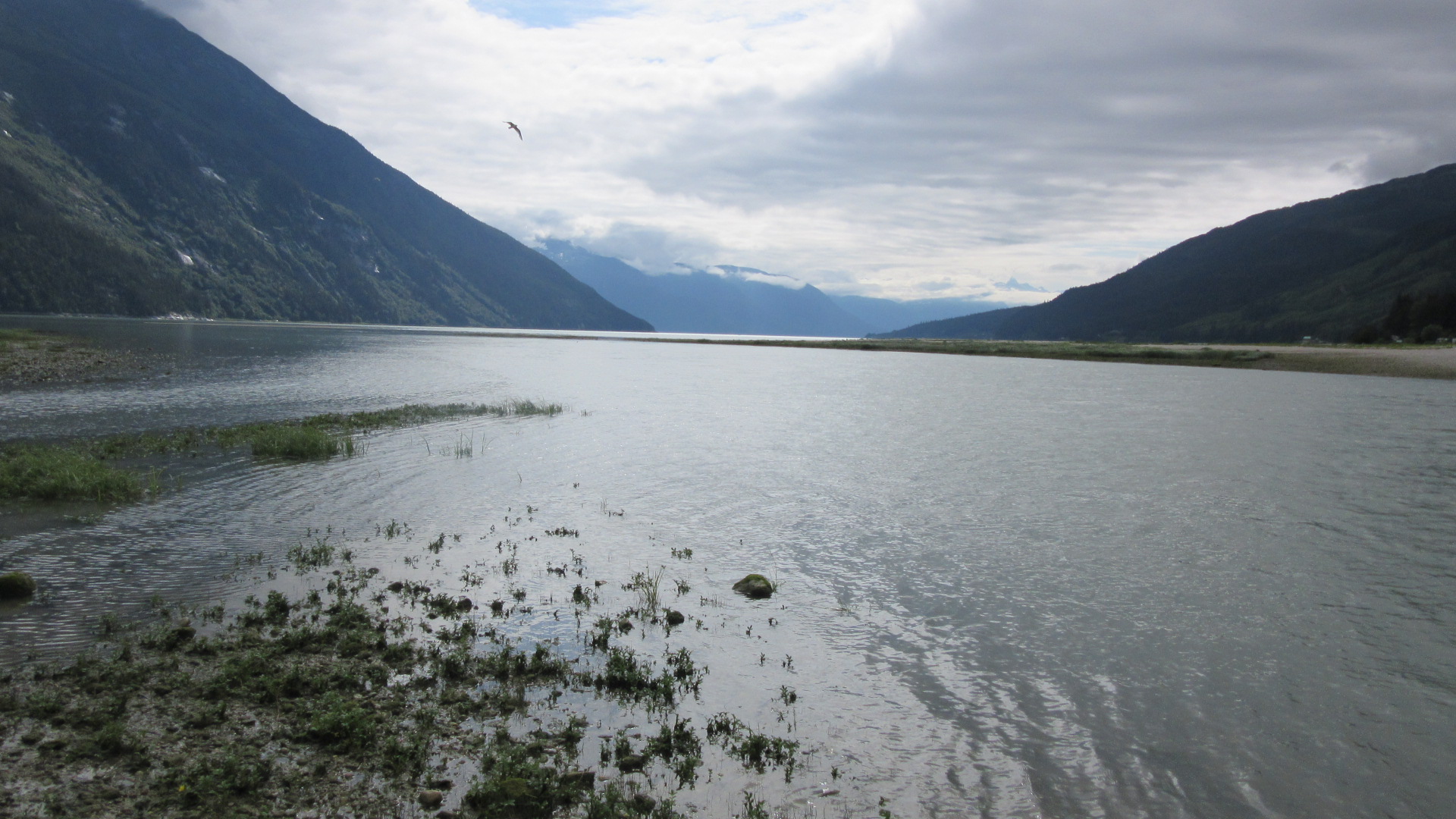
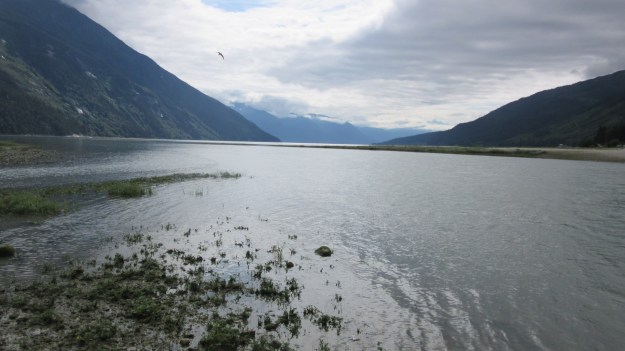
Another day, another river joining the ocean in a tidal estuary.  This one is the is the Chilkoot River and it’s the river to the east of Haines.  Haines sits on the eastern shore of a long peninsula that separates two long fjords fed by glacial-charged rivers.  Back in the paddle-power days, Haines served as a shortcut between the two river mouths, a two mile portage over level terrain being preferable to a 30 mile paddle.  These days, Haines is the quiet alternative to tourist-heavy Skagway as a place to transition from the Marine Highway to the more conventional highway.
IMG_0444

On this day, I selected the Chilkoot, to the east, over the Chilkat, to the west, because it had a lake just a mile upstream.  I didn’t wind up fishing the lake, but it looked cool on a map.  Instead I followed the receding tide downstream throughout the morning and into early afternoon.

Tides are an interesting phenomenon for this Midwest boy.  I’m not used this dramatic, short-term change in water level.  At the heads of these long inlets and channels far from the open ocean, the tide can shift the water 20 feet or more up and down in just 12 hours.  At a shallow estuary like the one at the mouth of the Chilkat River, this can mean the shore at low tide is a mile away from the shore at high tide.  I stand at the water’s edge and three casts later, I can take another two steps forward.

The creatures that live here are used to the tides, though.  During their spawning runs, each rising tide brings another wave of salmon upstream into the river.  Each receding tide forces the stragglers to retreat from the shallowing water.  Predators of the salmon know this.  Everyone is familiar with photogenic congregations of eagles and bears at opportune places up and down the northwestern coast of the continent.

But the nature has a three-pronged attack in store for the salmon.  The bear comes from the land, the eagle comes from the sky, and from the water comes the harbor seal.
IMG_0480

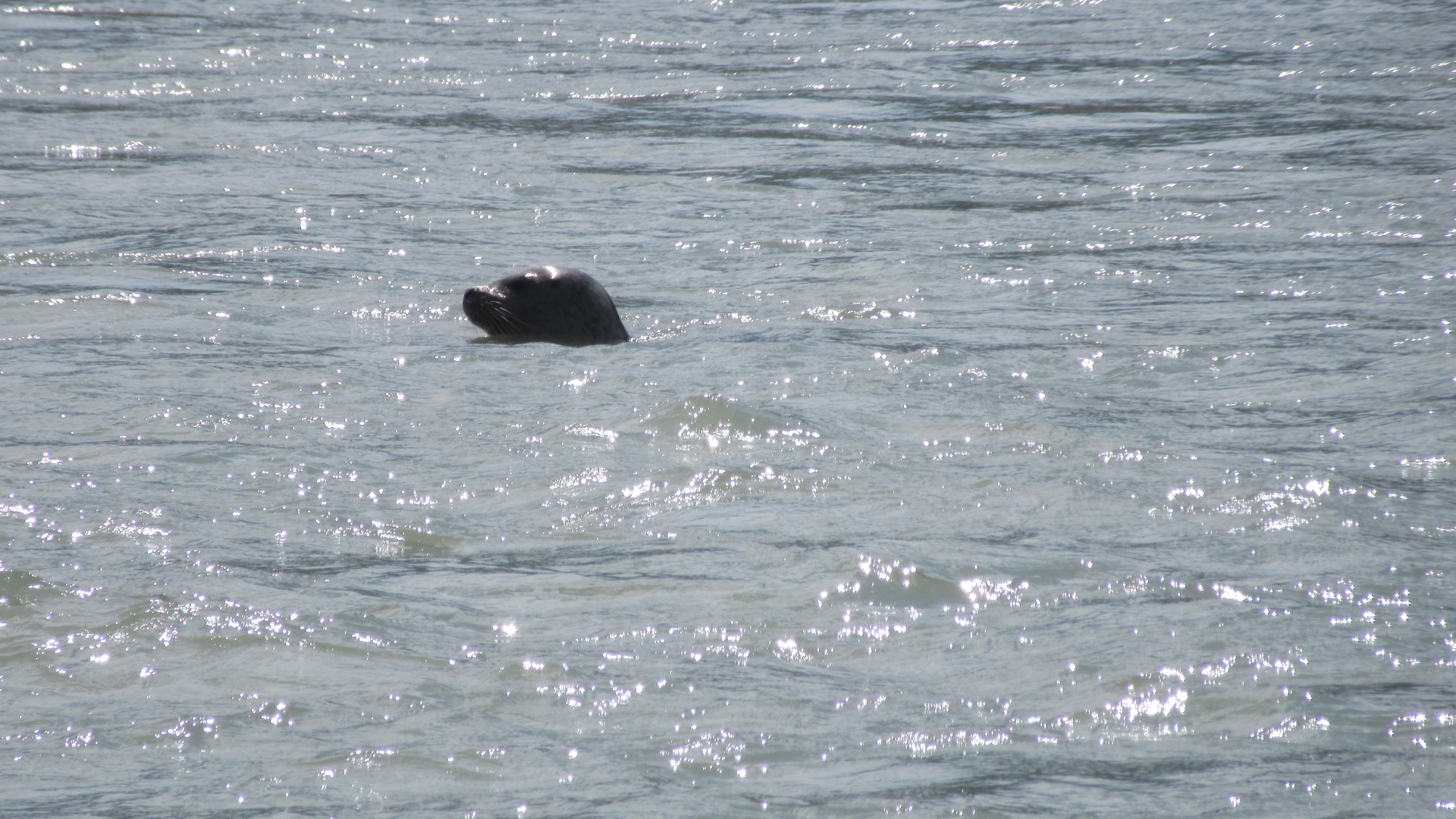
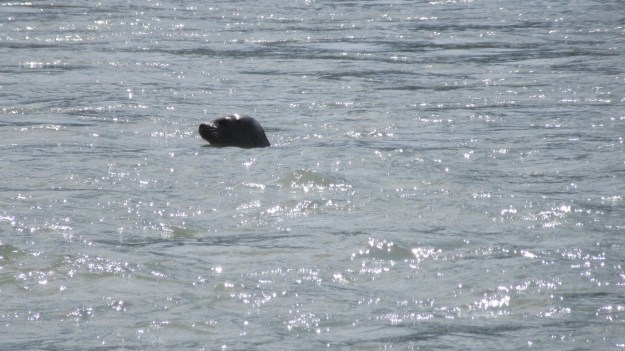
As I fished, I noticed one seal swimming around way downstream from me and it was pretty neat.  Then I saw it was actually two different seals.  I moved further downstream, following the receding tide, and two seals had become four.  Then it was more like 10.  By the time I had moved a quarter mile toward the ocean, I realized there were dozens of seals patrolling the mouth of the Chilkoot.

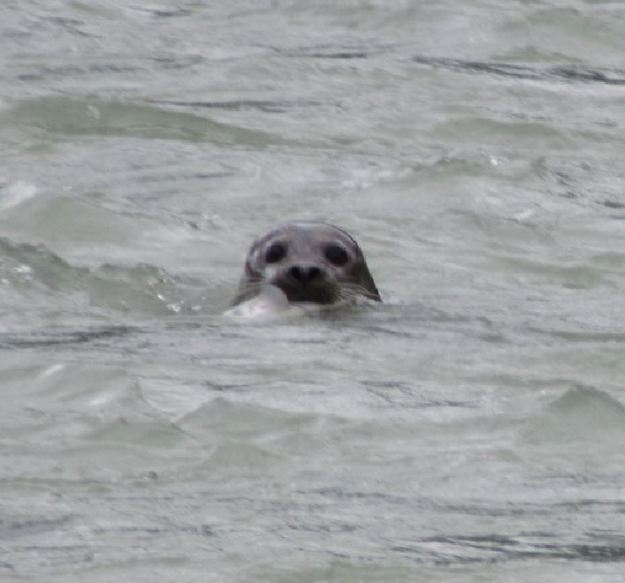
I had to wait more than once for a seal to move out of the way so I could cast.  At first when they surfaced near me, they bolted back underwater.  But as time passed, they were less threatened.  Instead they just wanted to make sure they knew where I was.  A seal would pop up within casting distance and it would boost it’s head higher in the water to see over the standing waves created by the current and get a clear view of me, then let the current float them away from me.  I can only describe that behavior as adorable.

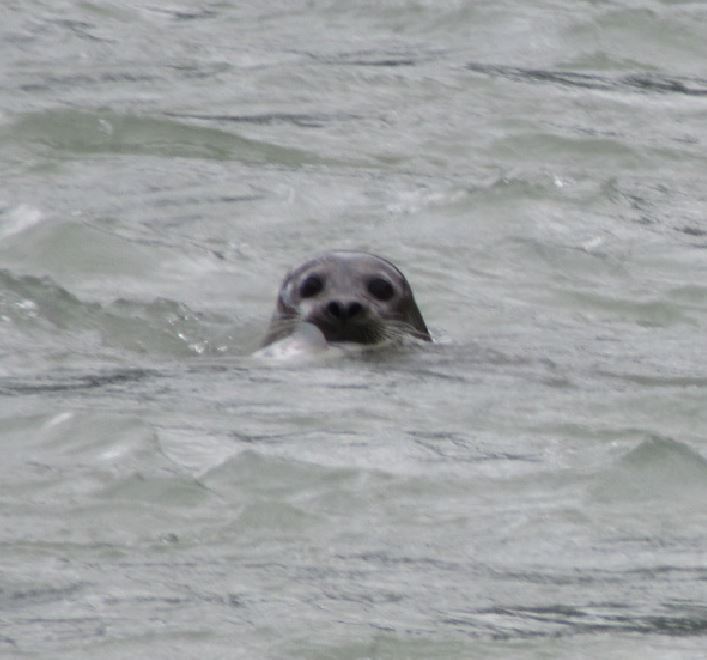
Frustratingly, the seals were having much better luck fishing that I was.  Multiple times a seal would appear with a freshly caught salmon in its mouth.  As before, they would look to me to verify I was still a non-threat, but in doing so created the illusion that they were mocking me.  “Oh hey, is this what you’re looking for?  Yeah there’s a whole bunch down there.  And they’re delicious.”
seal w fish

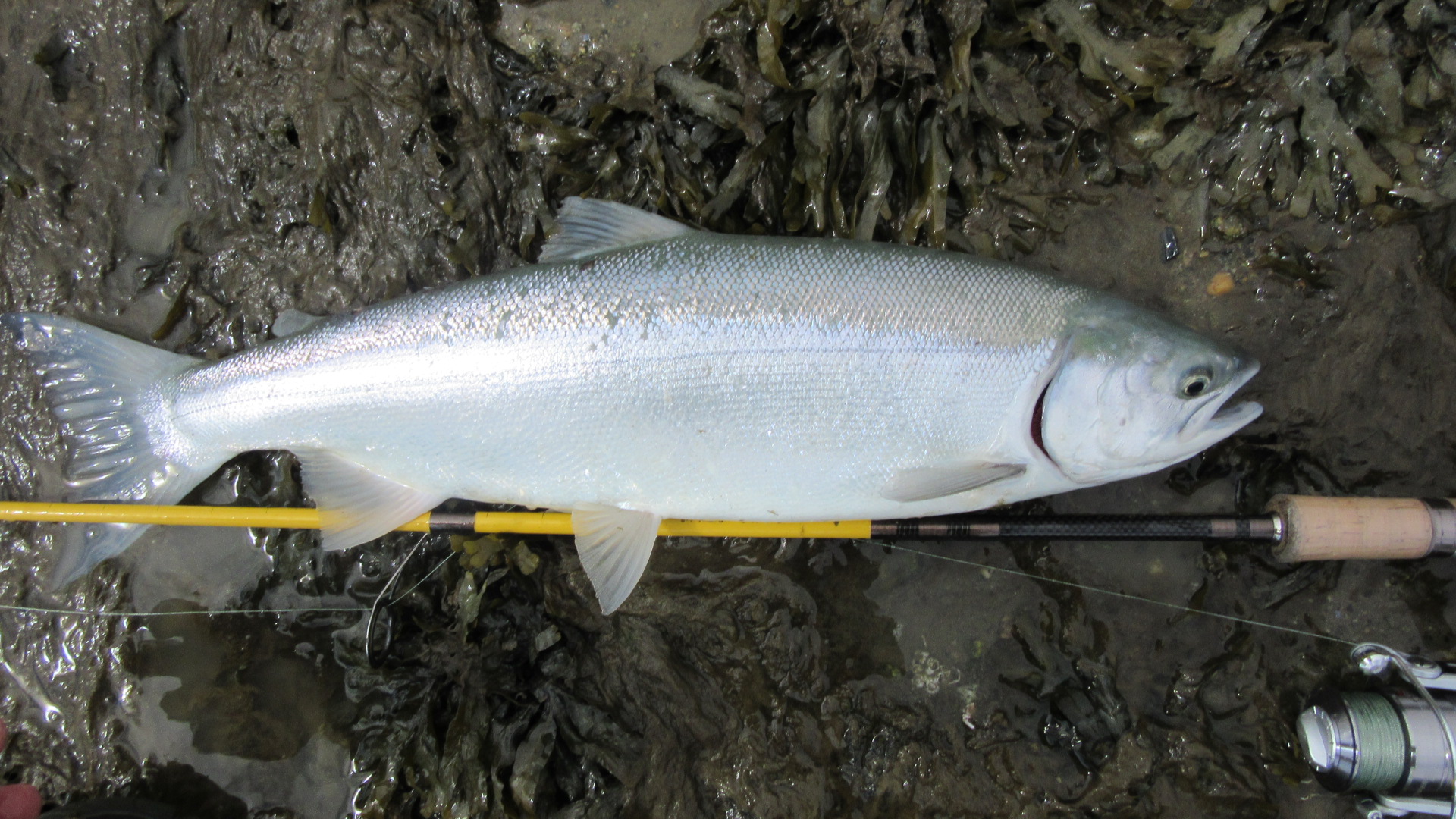
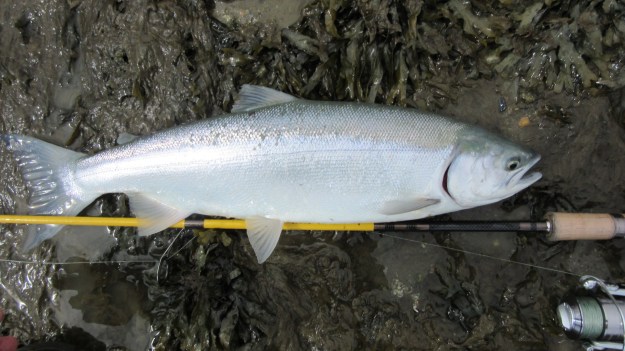
I eventually caught this female Sockeye Salmon.  But the seals definitely out-fished me.
Talk about a unique experience.  Fishing along side a dozen seals with massive, cloud-draped, avalanche-scarred mountains above me.  Alaska is pretty awesome.
IMG_0478

Ferry Tales

I’ve taken ferry rides a few times in my life.  Both crossings of Lake Michigan.  The long ride to Isle Royale from the U.P.  A hour or so across the mouth of Puget Sound.  It’s always a fun departure from the normal modes of transport.

For the last month and a half, my life has revolved around ferry schedules as we move from island to island via the Alaska Marine Highway.  The voyages all have stupendous scenery as the ships travel across wide sounds and through narrow channels.  Sometimes the land is so close it looks like you could jump to the shore from the boat.  Other times, fog and rain make it impossible to tell what direction you are going.

IMG_0122

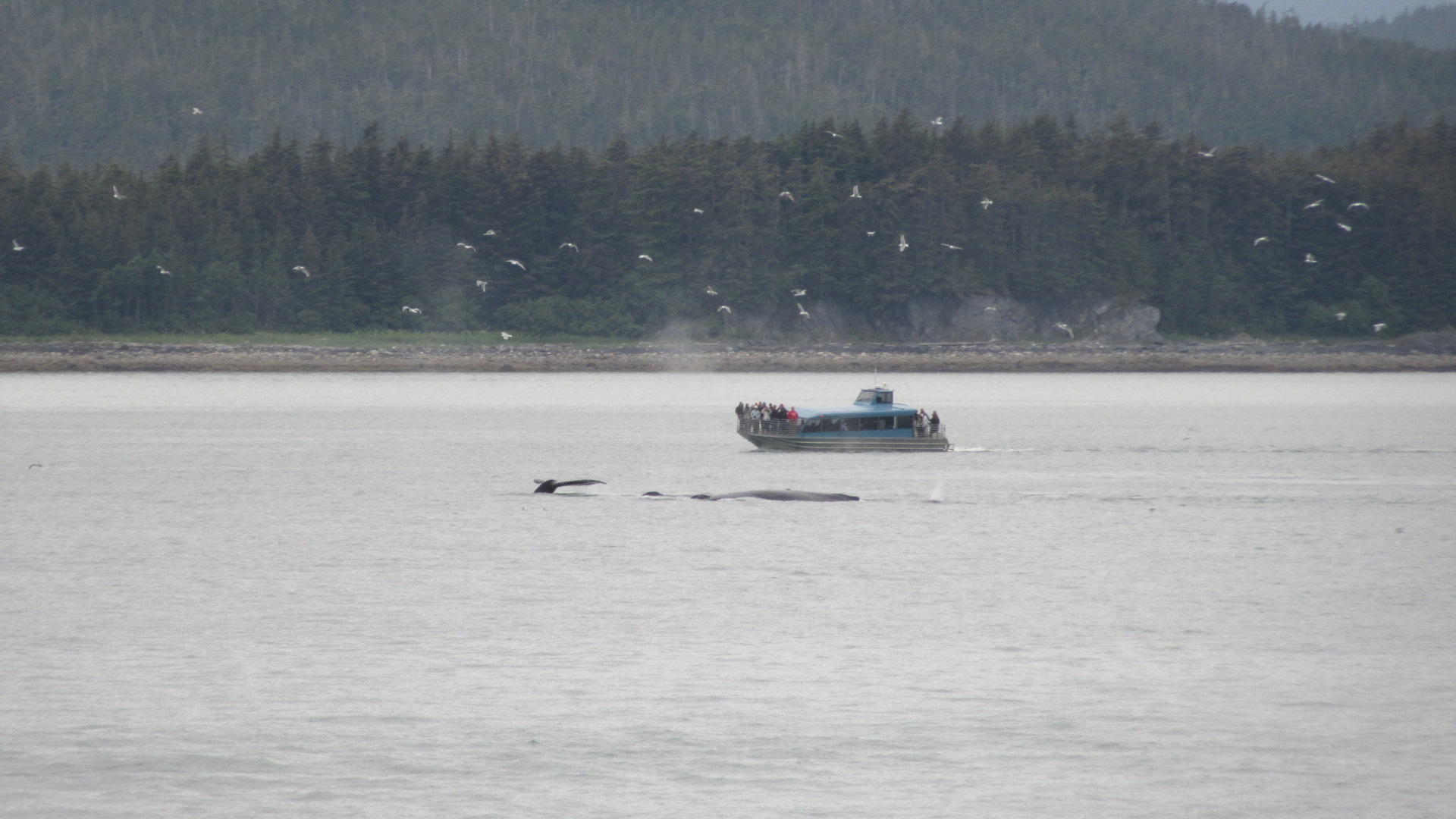
There’s always plenty of wildlife to see.  Lots of wading birds, water fowl, terns, gulls, eagles… Every so often you catch a glimpse of an otter or a seal.  Whale sightings are virtually guaranteed in the summer.  A half hour out of Juneau on one trip, an armada of sightseeing boats drew my attention and soon the water’s surface erupted from the exhale of one of Earth’s largest animals.  With the boat and the people in the background, you start to get a sense of how huge a whale really is.

IMG_0386

The Alaska Marine Highway was set up not long after statehood as a way to provide regular, affordable service between the communities scattered among the archipelago of islands in southeast Alaska.  Many of the ships are the same ones that debuted along with the system.  They’ve got big ships to make the long hauls up and down the coast, smaller ships to make daily runs between closer towns and a couple fast ones for trips between more populous cities.  All of them are named after glaciers in Alaska.

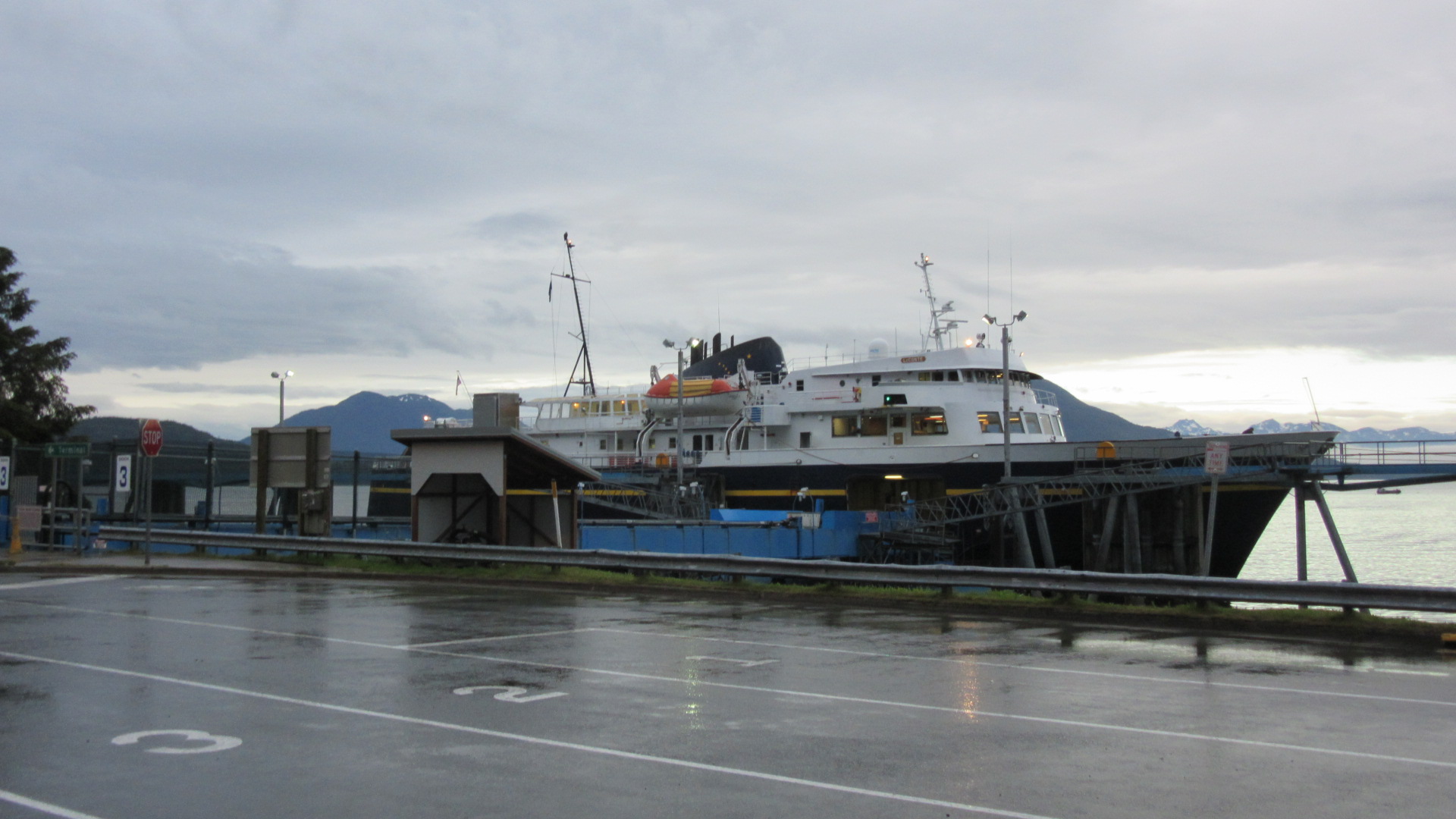
This one is the M/V LeConte and it was actually built in Wisconsin; Sturgeon Bay to be specific.

IMG_0358

Alaska is truly an international travel destination.  People come from all over the world to see the fjords, mountains, wildlife and glaciers and absorb the local culture.  This part of America is actually closer to places in Europe than it is places in the United States as the crow (or the Airbus) flies.  It’s a much shorter trip to Alaska from Hamburg or Oslo than it is from Atlanta or Miami.  One evening, I shared the ferry’s lounge (bar) with half a dozen Germans, two French speakers and an Aussie.  It was rather funny watching that Aussie chat up a grad student from Montana on her way to gather data on bears for the summer.

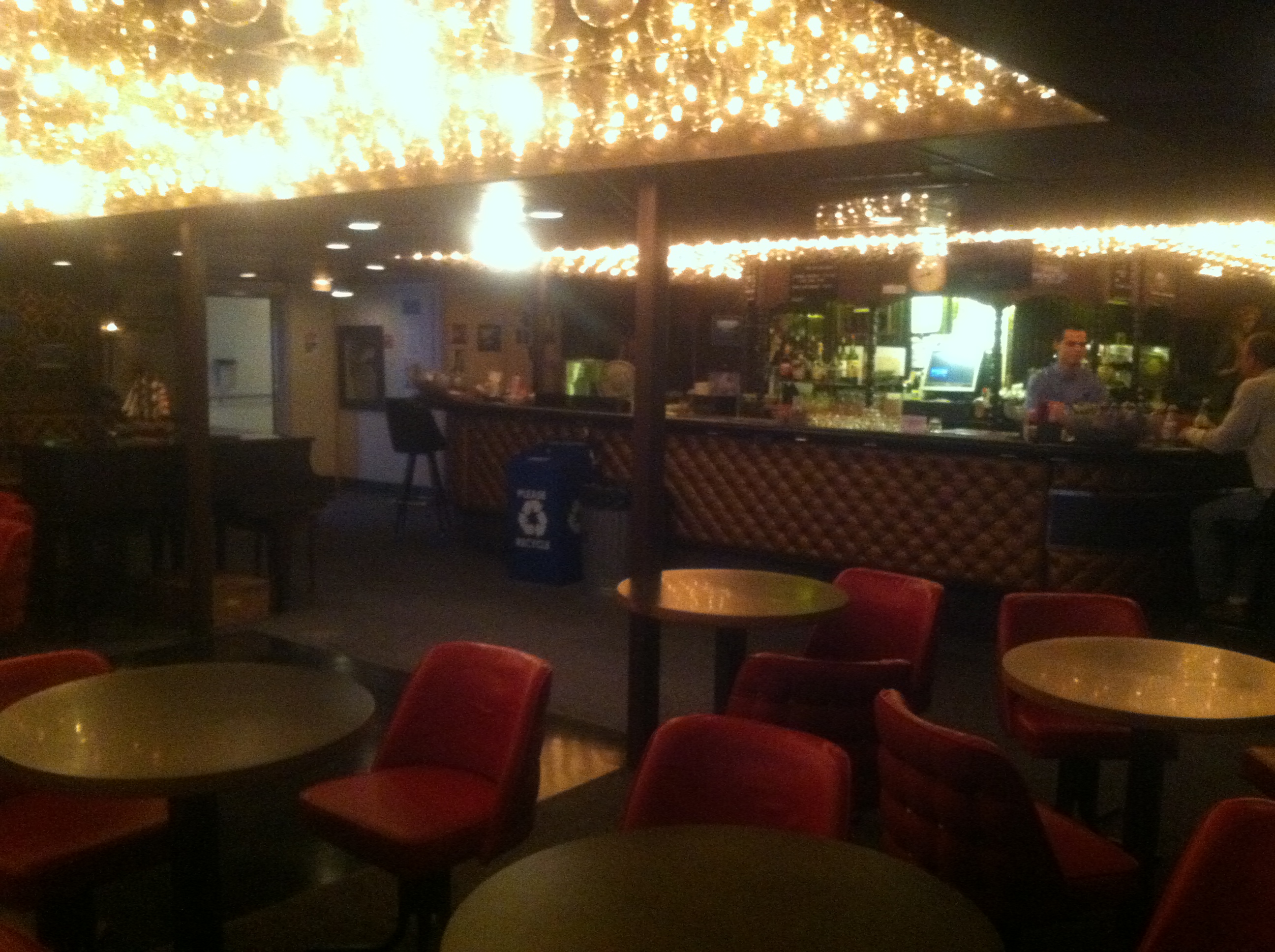
Any ferry ride of at least a couple hours will have food available.  Comes in handy when you need to catch an early ferry and couldn’t stop for a bite beforehand.  Only the largest of the ferries have a dedicated lounge with a full bar.  They do a good job of stocking local brews from Juneau.  The decor can be quite “vintage”.  The best example being the bar on the M/V Columbia.

IMG_0437

Funky.