As the largest of the salmon species, the Chinook or King Salmon is a prized catch for anglers the world over. Alaskans call them Kings and in recent decades, have taken measures to ensure they will continue to test future anglers. Stocking programs, closely monitored catch limits and protection of vital spawning habitat are some of the important steps they have taken to keep the population viable in the long term.
A few miles south of its only town, Mitkof Island, where I am currently staying, has a wonderful tidal estuary called Blind Slough. At high tide, it’s a long, narrow, saltwater bay extending miles inland. At low tide, it’s a rocky, freshwater river with riffles and pools. It’s an ideal place for salmon to acclimate to freshwater before proceeding upstream to spawn. Further inland, the Alaska Department of Fish & Game operates a fish hatchery to supplement natural populations.
The tide was low when I visited Blind Slough with my tackle. The area around the access point was being used by other anglers or was too shallow, so I started trekking downstream. A few riffles later, there was a long, wide pool that looked okay. That’s when I started to see them jumping.
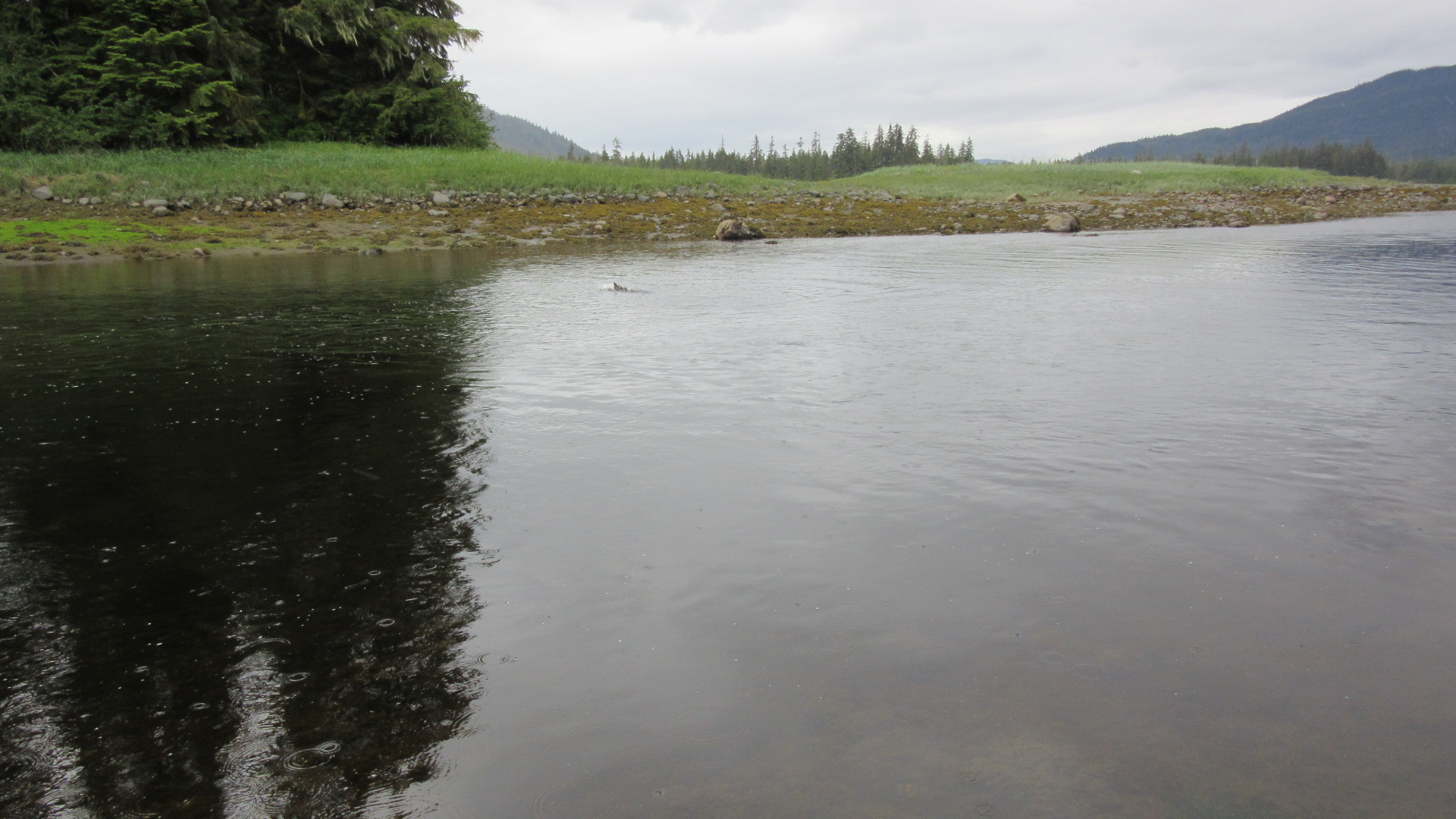
this, every minute or so
Fish that swim up rivers from the ocean to spawn can often be observed leaping out of the water where it doesn’t seem necessary. If you ask why, you’ll get a jokey answer more often than not. The most plausible explanation, though, is related to the fact that fish use different combinations of muscle movements for rapid bursts of speed than they do for swimming at a leisurely pace. They’ve spent years mostly doing the latter in the ocean and now that they need to swim against strong currents and leap over obstacles, the fish need to build up the strength in their ‘turbo’ muscles. Regardless of the reason, its a fantastic display to see large fish randomly erupting out of the water. And a little frustrating when they don’t care about your lure.
Generally speaking, salmon do not feed once they enter freshwater during their spawning runs. This can make it frustratingly difficult to catch them in rivers; especially when you can see so many of them scooting around and leaping about you. A common tactic is to use flashy lures like spinners and spoons to goad them into aggression strikes. As they work their way upstream, the salmon are constantly jockeying for position; especially the males. There’s a lot of pushing and shoving and assertions of dominance. It’s the reason the male salmon develop the hooked jaw; it’s a weapon to use against other males. The fish see the flash of the lure and snap at it as a way to say, “Hey, back off, dude.”
This is the tactic I was using in Blind Slough. I had some initial success with this nice coastal cutthroat trout. They’re a lot like steelhead in that they are a sea-faring version of an inland trout species.
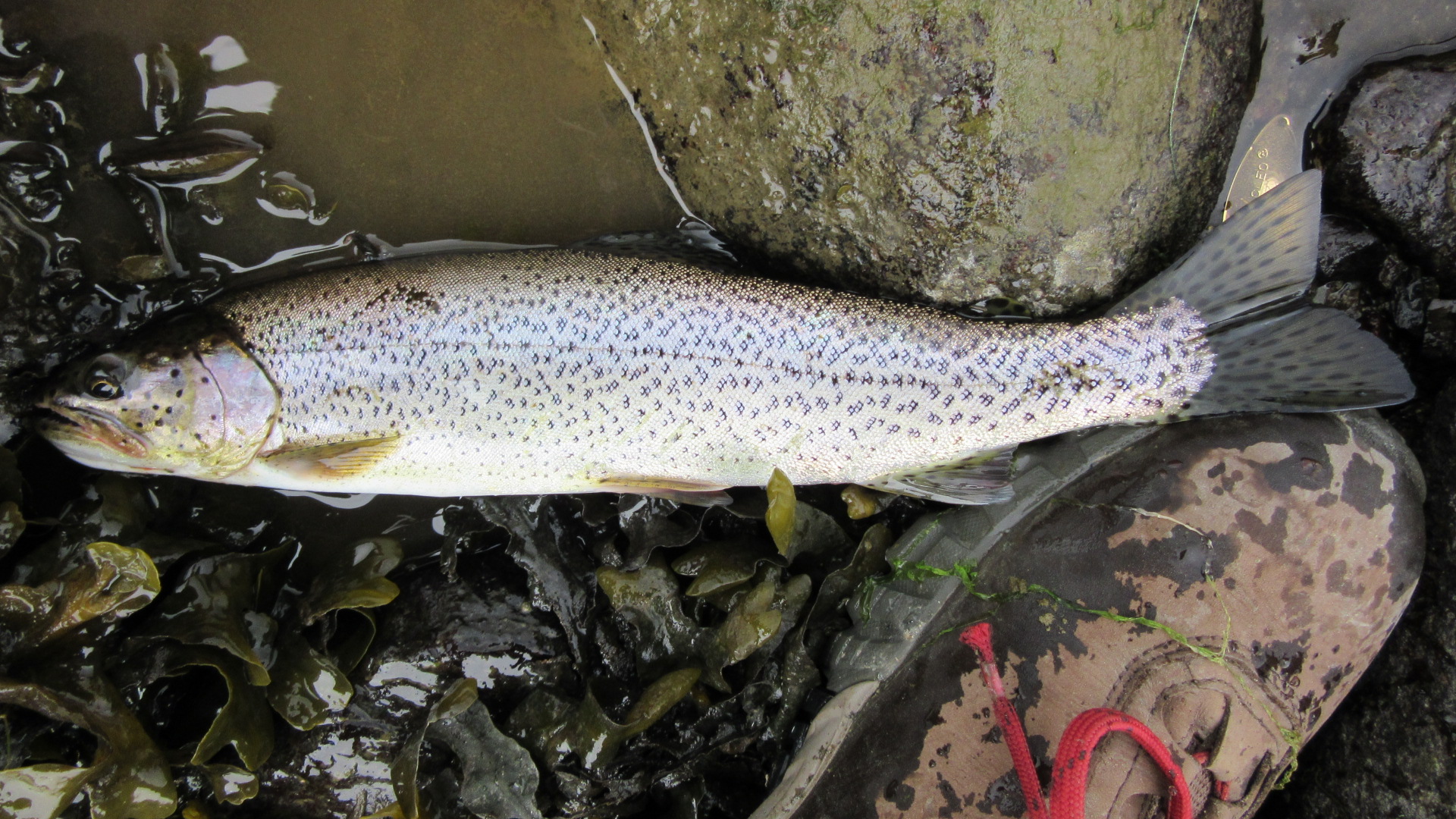
After that it was a lot of casting without any catching. Meanwhile, fish of all sizes were breaching right in front of me. I was starting to entertain the idea of packing it in, so of course that’s when I finally hooked into a salmon.
And it was a big one. After bumping into rocks and weeds all afternoon, I instantly knew this was a fish. The rod arced and the battle was on. First, he took off against the current to my left. Several other fish leaped out of the water as the one I hooked streaked toward them. The line scraped some algae off a rock and as the fish broke the surface, the green goop was flung from the line. It was my first look at my opponent. It was at least as big as any that I had seen leaping throughout the day. And I could make out the hook in it’s upper jaw, indicating it was a big male.
A few moments later, that bad boy took off downstream peeling line from my reel while I held on for dear life. When that big run was over, I tightened the drag a little and started to work the fish back toward me. There was a lot of weight to try and pull against the current and I was ready to start walking down the rocky bank when the fish started coming back toward me. I quickly reeled in to keep tension on the line. It wasn’t long before the fish turned away and gave a brief surge toward the sea. The tighter drag countered this move and he started slowly getting closer to the bank some 40 yards downstream.
Time to move. In a heroic display of coordination, I moved along the bank across slippery rocks and the shallow water between them while holding tension on the line. Getting slack in the line after such a long fight might allow the hook an opportunity to slip out. Once I was even with the fish, it was pretty much over. I drew him into the shallow rocky bank and breathed easy. I got him.
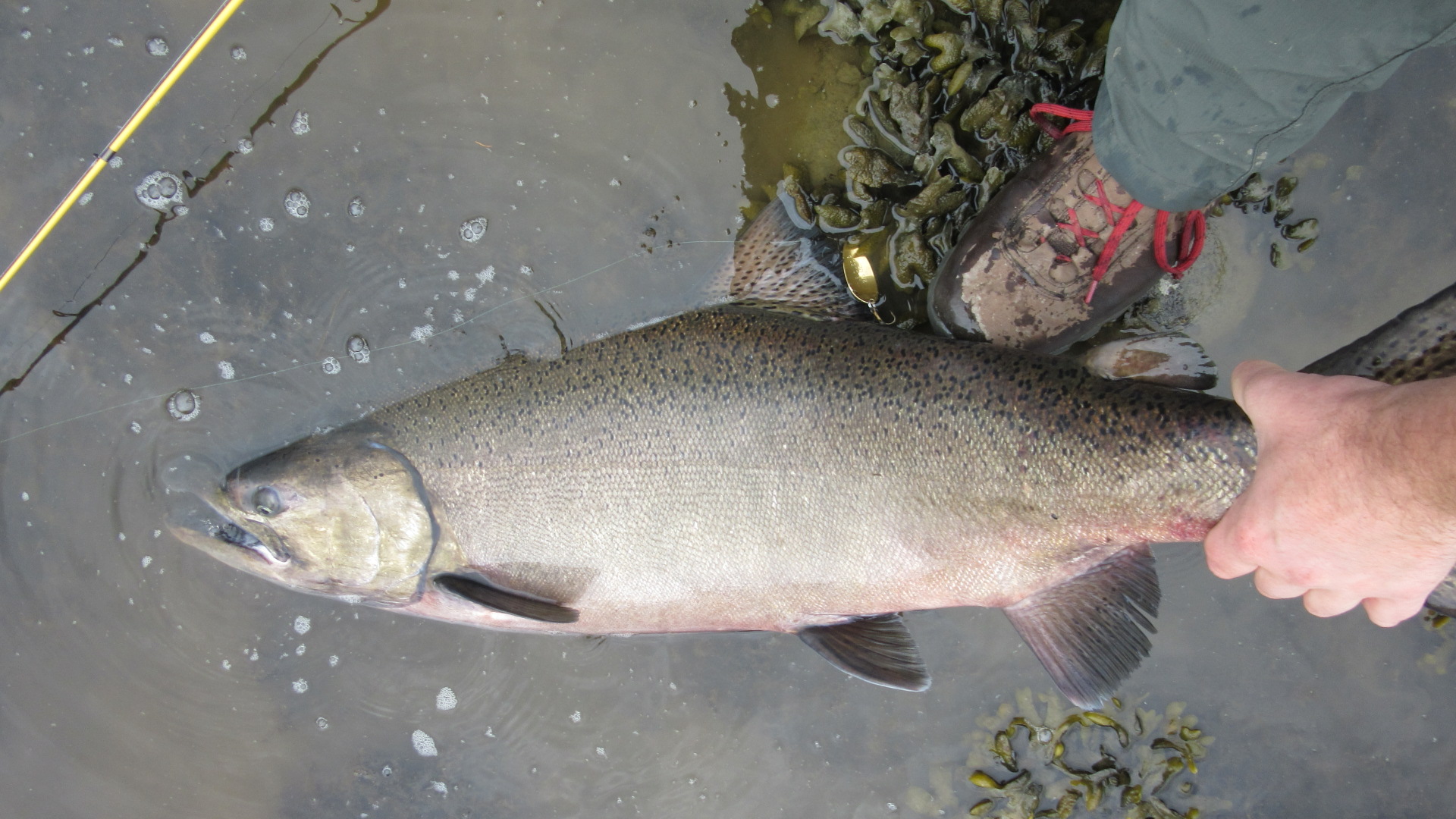
I had no accurate measuring device, but this King Salmon was around 40 inches, I figure, and had to weigh like 30 pounds. Compare my boot (size 13) to the fish in both images. Especially this second one since I’m holding up the tail in the first one.
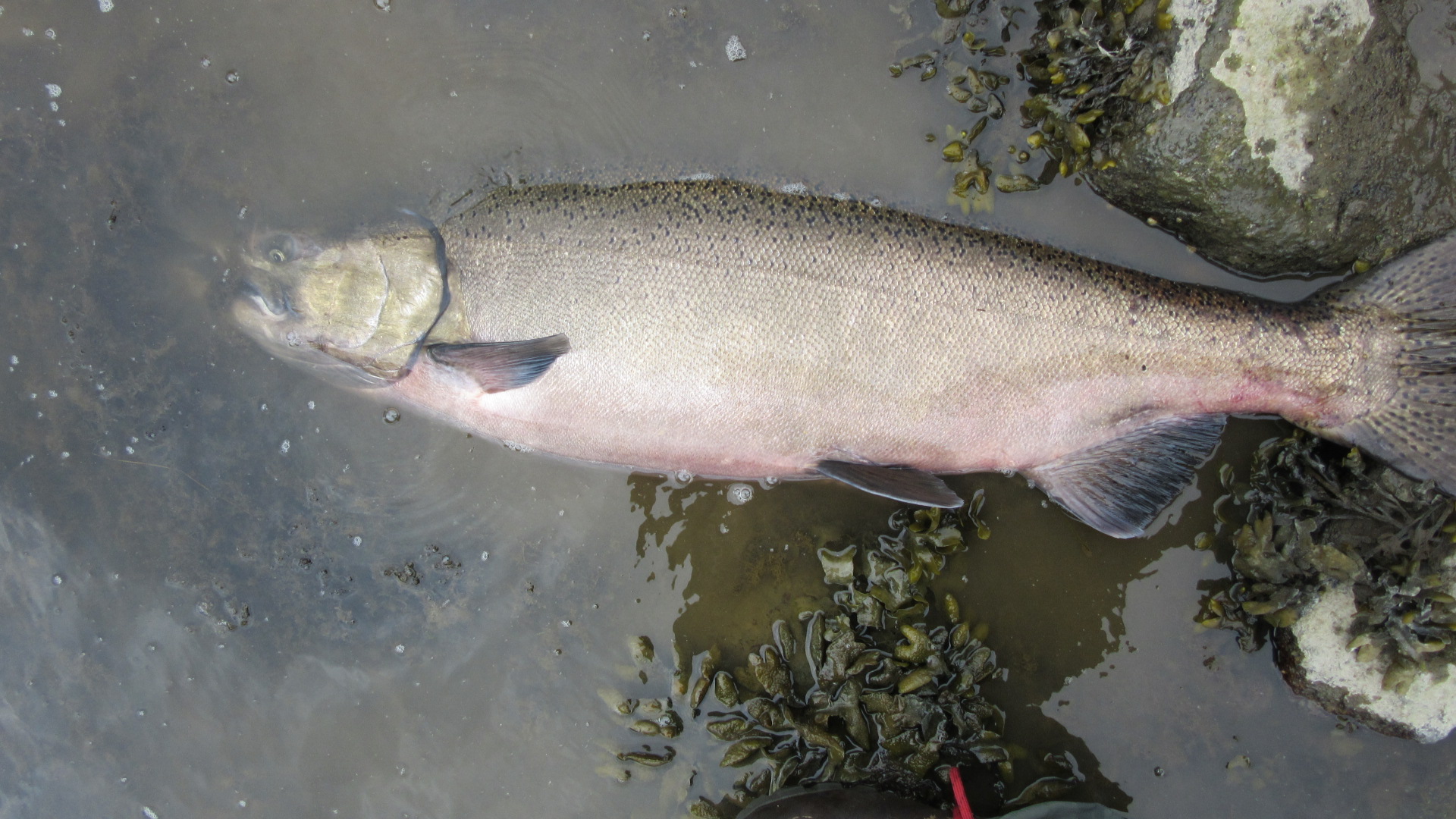
Long before I landed the fish, I was worried that I had snagged it. Snagging is when you hit the fish with your lure as you’re retrieving rather than the fish biting it. It can happen when you’re trying to catch large fish in relatively confined areas. Doing this intentionally is illegal in most places as it is an unfair advantage to the angler and can lead to over harvest in addition to wounding fish that don’t get caught. There are certain places in Alaska where snagging is legal for a limited time. But Blind Slough is not one of those places. If you do this accidentally, the fish must be released.
As it turns out, that is exactly what happened with this big King. In the first image, the lure is still hooked into the fish behind the dorsal fin. I could tell long before I landed it, too. When they get hooked in the middle like this one is, they tend to go sideways once they tire and it makes them really heavy on the end of the line. Any thoughts about having my next several meals taken care of faded with the realization that he was foul hooked.
This King of the Salmon would have to be returned to the water. Once he was unhooked and photographed, I pointed him towards deeper water and held him upright until he was ready to go. It was a really awesome fight and I was thrilled to examine one of these beasts up close. But I will always feel like this catch is tainted because of the snagging. It’s an asterisk that means I didn’t outwit this animal with a clever rouse. It was the fishing equivalent of hitting it with your car. Technically you got ’em, but “how” matters. It’s less impressive. I need to catch another one. This time, hooking it the right way. You better believe I’m gonna try!
 Triplemultiplex.com
Awesome catch. Hope you catch one the right way next time. Keep it up.
Excellent Story. Bummer you didn’t get to keep him. I can only imagine how good those meals would’ve been. Get ’em next time!
Nice fish!! Keep writing, your updates are fun to read.
Entertaining fish story – equal or exceeding the caliber of those found in “Field & Stream” or similar publications!