Monthly Archives: June 2014

Ice, Ice, Baby.

I took a hike to Mendenhall Glacier the other day.  As a person who is very interested in the geology of glaciers, it was a really amazing experience.  I know a considerable amount about glaciers and can identify the landforms they leave behind with relative ease.  Living in the upper Midwest means I’ve been surrounded by moraines and drumlins and eskers and all sorts of outwash features my entire life.  Now I finally get to come face to face with a glacier.

The hike was very rugged at times and there was even a rope involved at one point.  It was much more a ‘user maintained’ facility once it branched from the main trail for that valley.

The closer I got to the wall of ice, the younger the vegetation became.  Mendenhall Glacier has been in steady retreat since the 1950’s and land that has been buried for centuries or millenia is slowly being exposed.  This new land is at first sterile and devoid of life.  But as time passes and seeds have time to find thier way into places with enough nutrients to support growth, everything starts getting greener.  Close to the ice, the land looks like a construction site.  Grasses and small shrubs fill the gaps between in exposed bedrock a few hundred yards down valley.  The brush gets very dense where the soils have had time to develop.  They slowly give way to conifer forests where the trees are larger the further you are from the ice.  It’s a wonderful display of forest succession.

Then there was the main event.

IMG_0330

The expanse of solid ice is remarkable.  It awed me to think I was standing on a thousand winters’ worth of snow.  Though it filters the visual spectrum to make it appear blue, the ice is actually clear.  As you walk the surface, it crackles like small bubble wrap.  Scattered around are oblong holes that vary in size from “oh, neat” to “holy crap!”  I didn’t venture far on the ice for lack of appropriate gear and the very real danger of crevasses.  Unlike falling through the ice on a lake where there is water immediately below the surface, breaking through on a glacier might mean a tumble of hundreds of feet.
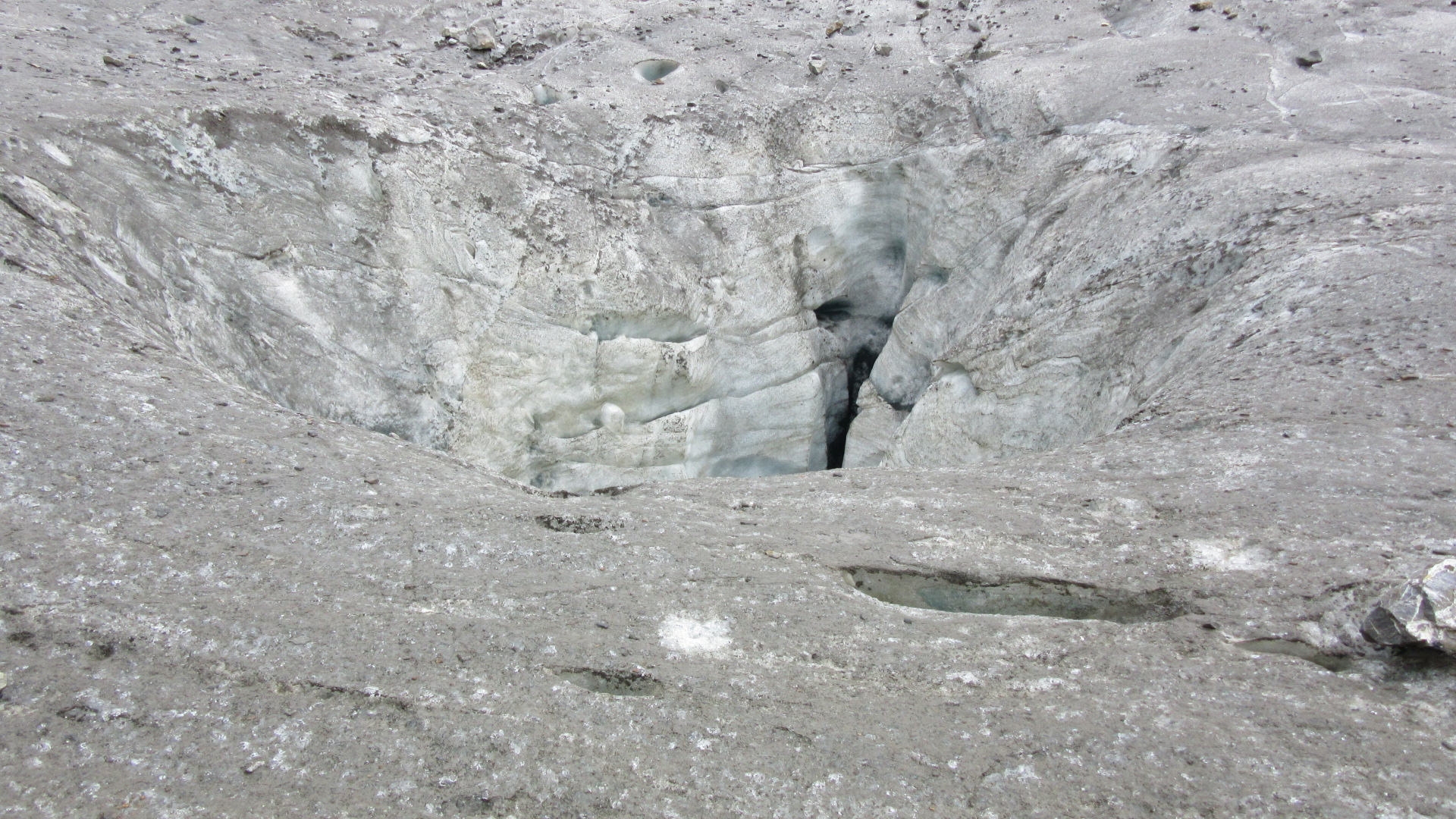
IMG_0332

You’ll notice the surface is generally very dirty. The big rocks are obvious, but there’s also a thin veneer of mud over most places. All of this stuff was once inside the ice, but that ice has melted leaving this debris behind.  Imagine all of those rocks and all that dirt randomly distributed in a vertical space extending another 300 feet above you.  It’s a large-scale version of what we see every spring as piles of roadside snow melt away and start looking dirty as the sand mixed with it remains.

A short distance up-ice is a magnificent ice cave.  Here a tributary stream flows from the side of the valley and plunges beneath the ice.  For 60 or 70 yards, a person can easily walk in and watch this tributary join other meltwater beneath an opening in the glacier.
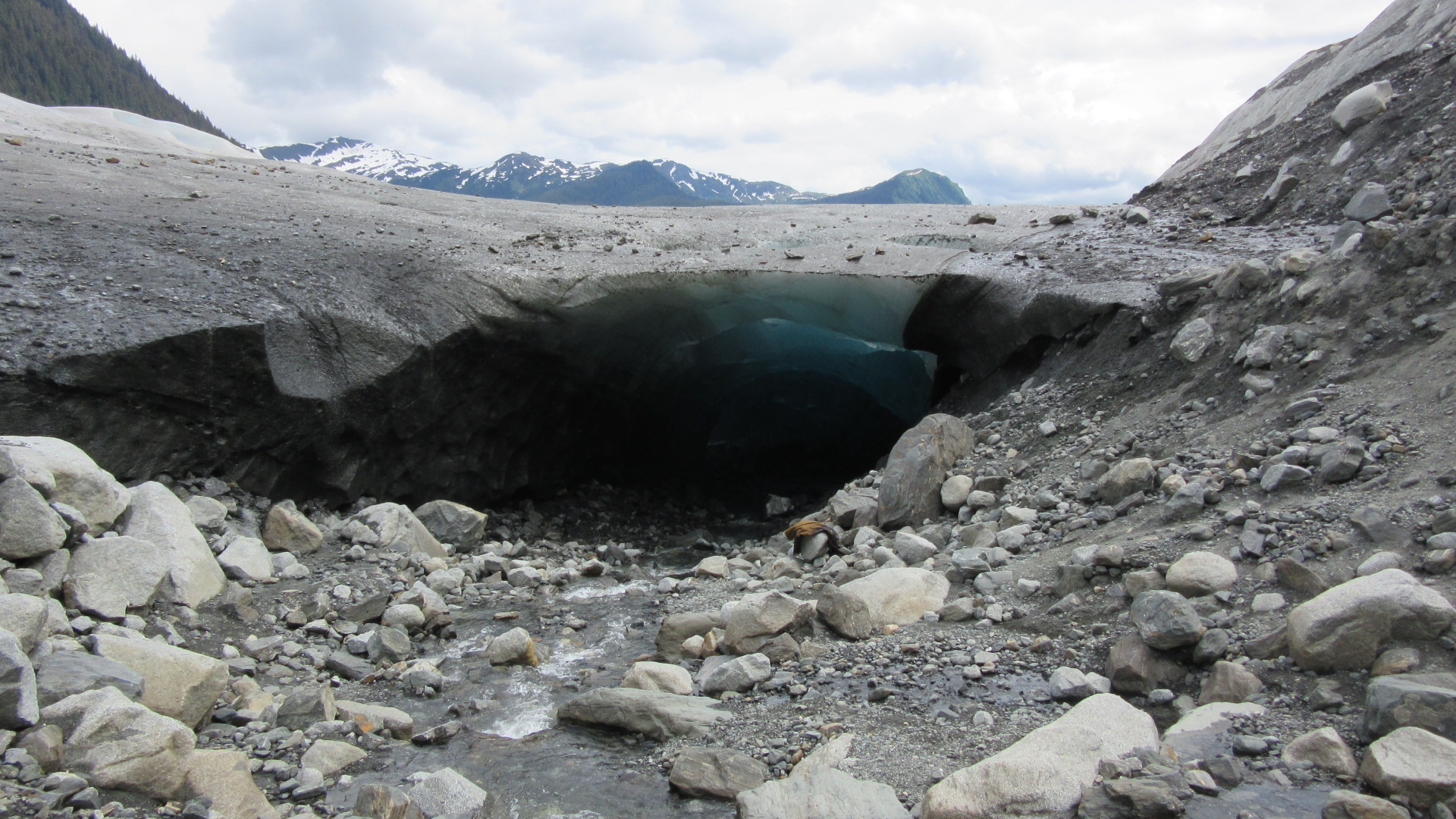
IMG_0350

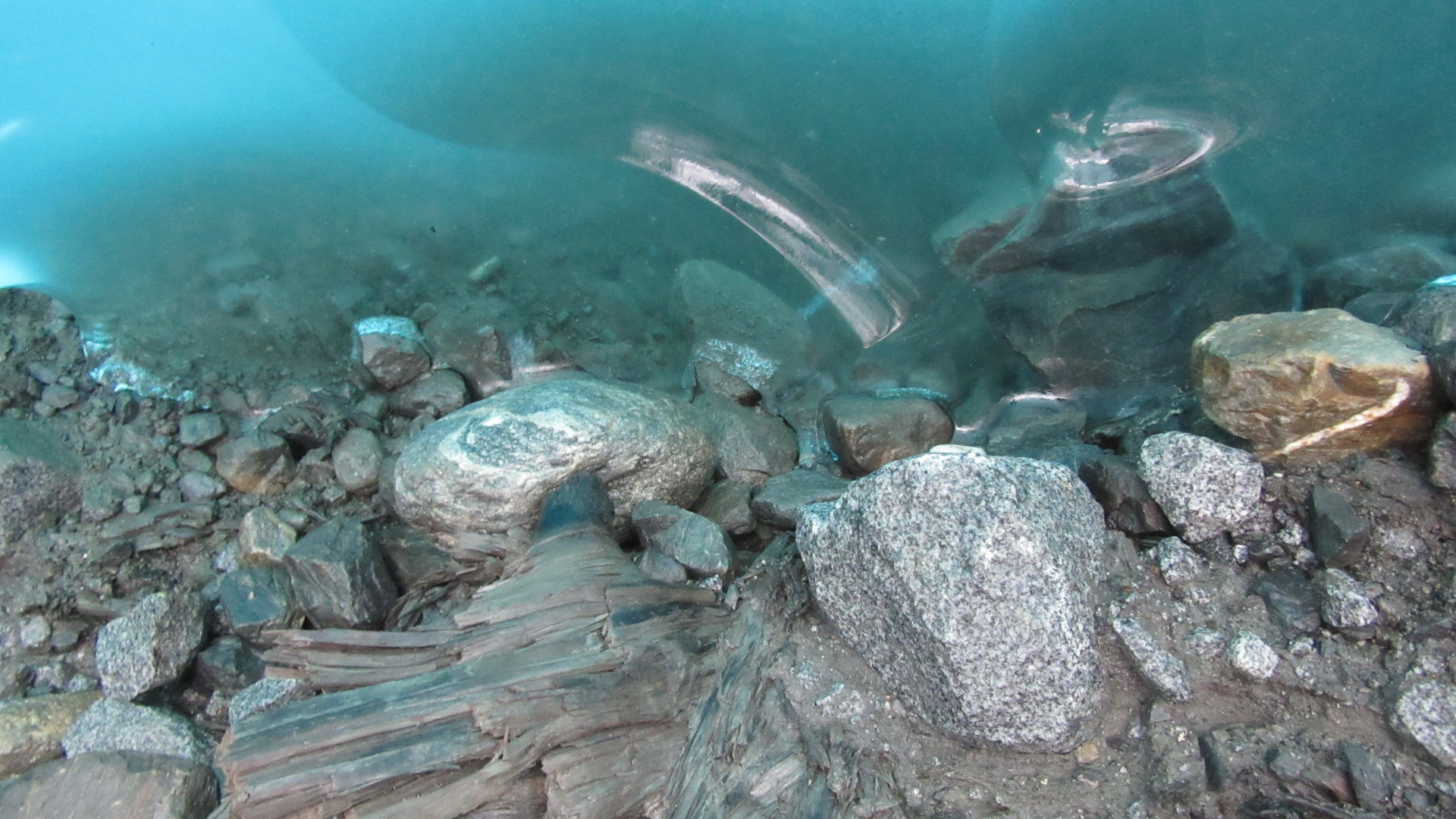
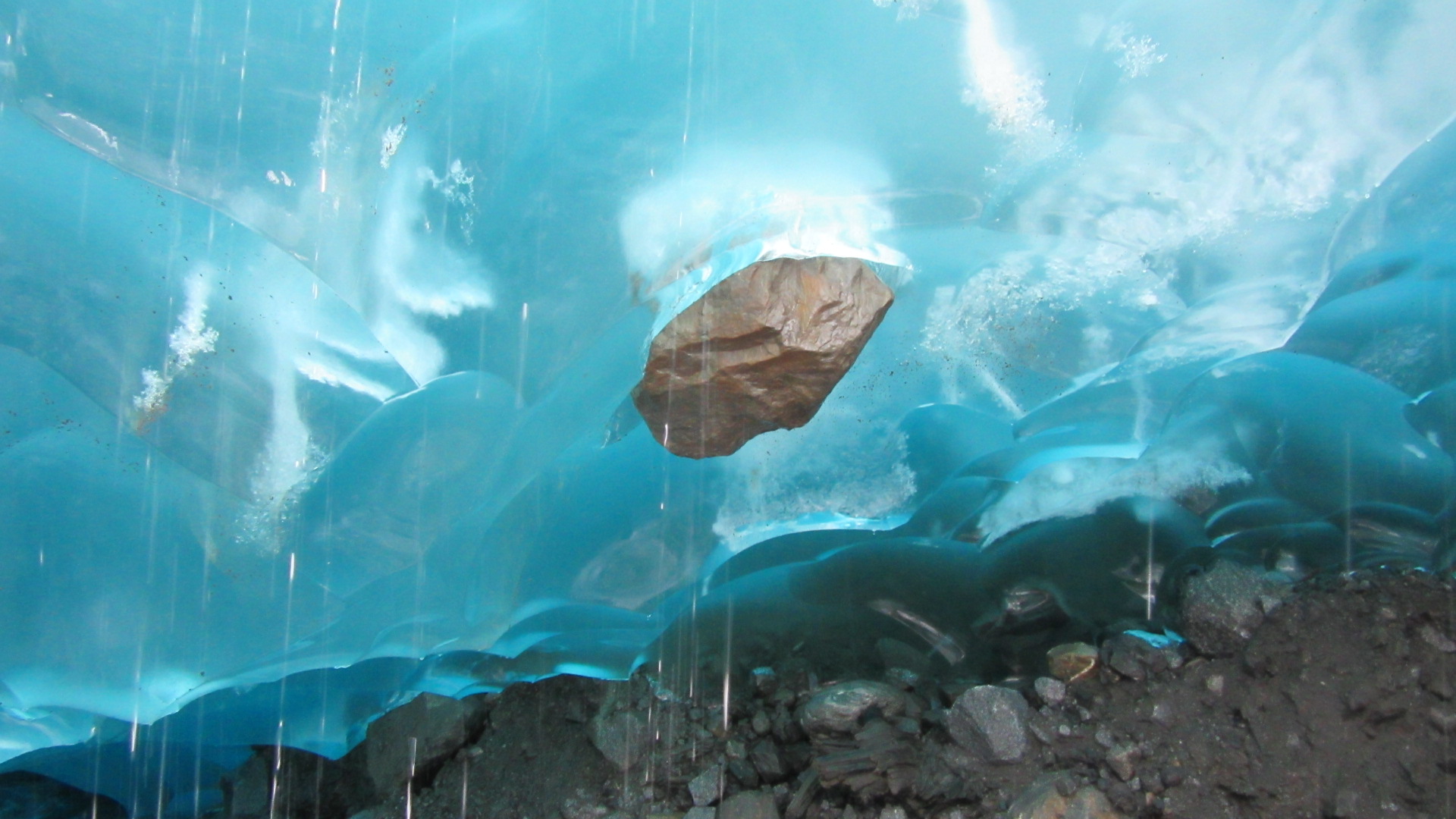
I have to nerd out for a bit and talk about eskers.  An esker, for those who haven’t done any hiking in the Kettle Moraine, is a long, narrow ridge made of sand, gravel and cobble that is formed by water flowing underneath a glacier.  This ice cave demonstrates exactly how they form.  This stream of water is currently walled in by ice on either side, so as it flows, sediment is accumulating inside.  When the ice melts away, the water will flow someplace else and leave behind this narrow line of gravel and rock.  Next time you stand on an esker, imagine this sight around you because that’s exactly what it would have looked like during the late Pleistocene.
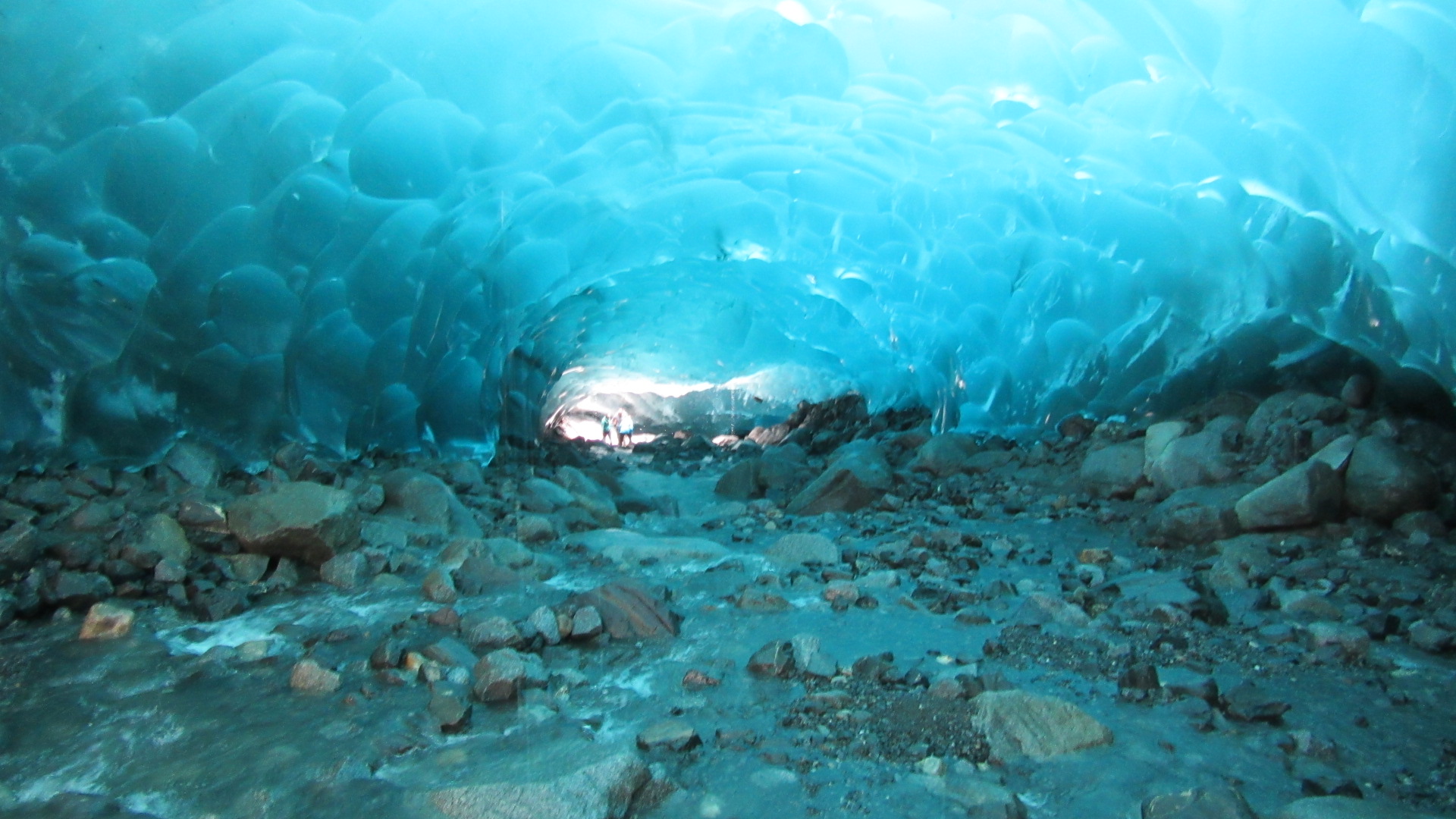
IMG_0334

I can nerd out further and mention this particular location is not going to preserve an esker.  The land is far too steep and the accumulated sediment will erode away not long after the ice retreats from here.  But if this was flat ground, an esker would indeed remain.

Being inside the ice means you can see all of the debris that the glacier is transporting.  Everything from flecks of dust to giant boulders.  It demonstrates how glaciers move material.  It’s not so much an enormous bulldozer as it is an enormous conveyor belt.  The ice grabs onto these rocks and drags them along with it.  The material is released where ever the ice that holds it melts.
IMG_0343

IMG_0349

Up close, the ice looks more like frozen smoke.  It’s very smooth where it’s melting and it is extremely hard.  Glacial ice forms as layer after layer of snow builds up and compresses into ice as air is squeezed from it by the weight of the snow and ice above it.  Again we see this on a small scale every winter in the pile of snow next to your driveway.  By the time March rolls around, the base of that pile is solid ice.  Simply add a lot more snow and a lot more time to get a glacier.

There is so very much more I could talk about when it comes to glaciers and how fantastic it was for an Earth Sciences nerd to be snooping around on one.  Suffice to say I enjoyed myself a lot and it was well worth the difficult hike to reach it.
The Journey

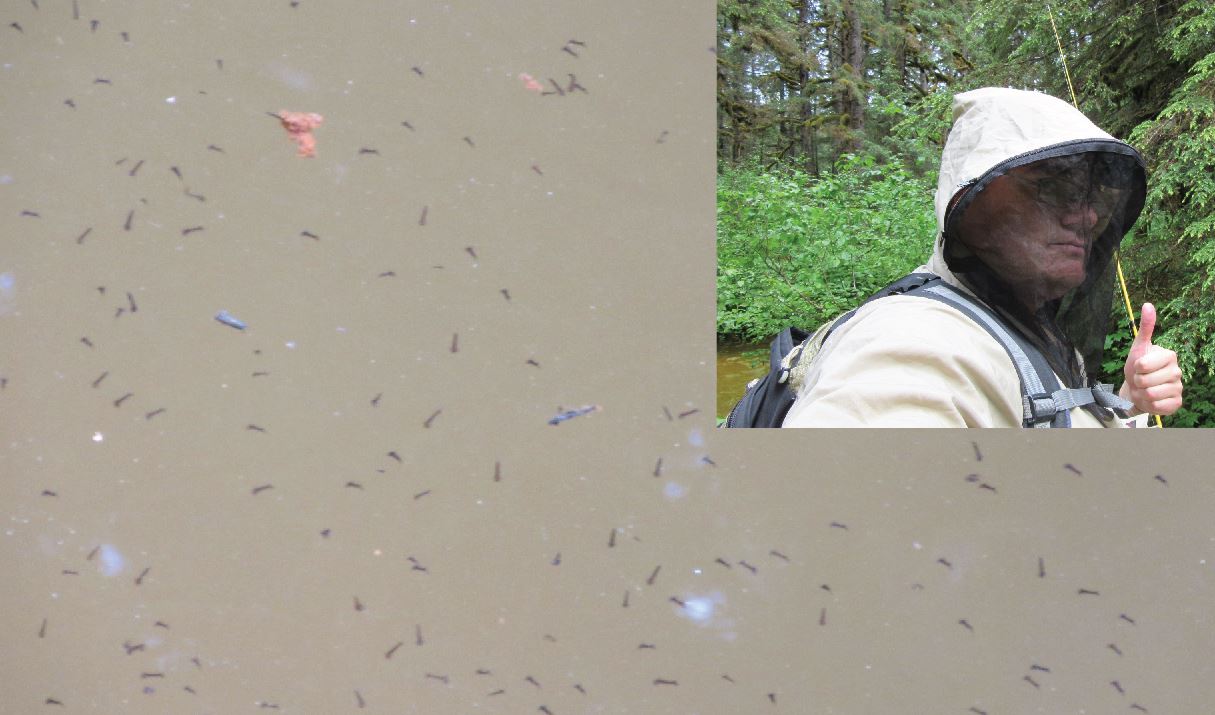
There’s an old saying; “It’s the journey, not the destination.”  Basically, it’s shorthand for suggesting people enjoy the stuff they encounter while working towards a goal because it may turn out to be more valuable or interesting than the goal itself.  I think it is extremely relevant to fishing.  The goal may be to catch a specific species or a certain size fish or maybe just catch anything at all.  But it’s not going to happen every time.  Sometimes you are going to return without so much as a bite.  It’s part of fishing (and part of life.)  Sometimes you get skunked. Sometimes you break stuff.  Sometimes you get chewed up by bugs.

bug shirt

bug shirt

But you know where you never catch fish?  Sitting in front of a screen.
When you get out there, you might see a little corner of the world you never have.  You may encounter wildlife doing something you haven’t seen before.  Even if you’re going to the same ol’ fishin’ hole, you’re seeing it at a different moment from the last time you were there.  You can witness the subtle changes that happen across the seasons and over the years.  You’re in the great outdoors, surrounded by the natural systems your very existence is dependant on.  Fishing in particular makes you acutely aware of how connected the air and the water and the land are to each other.

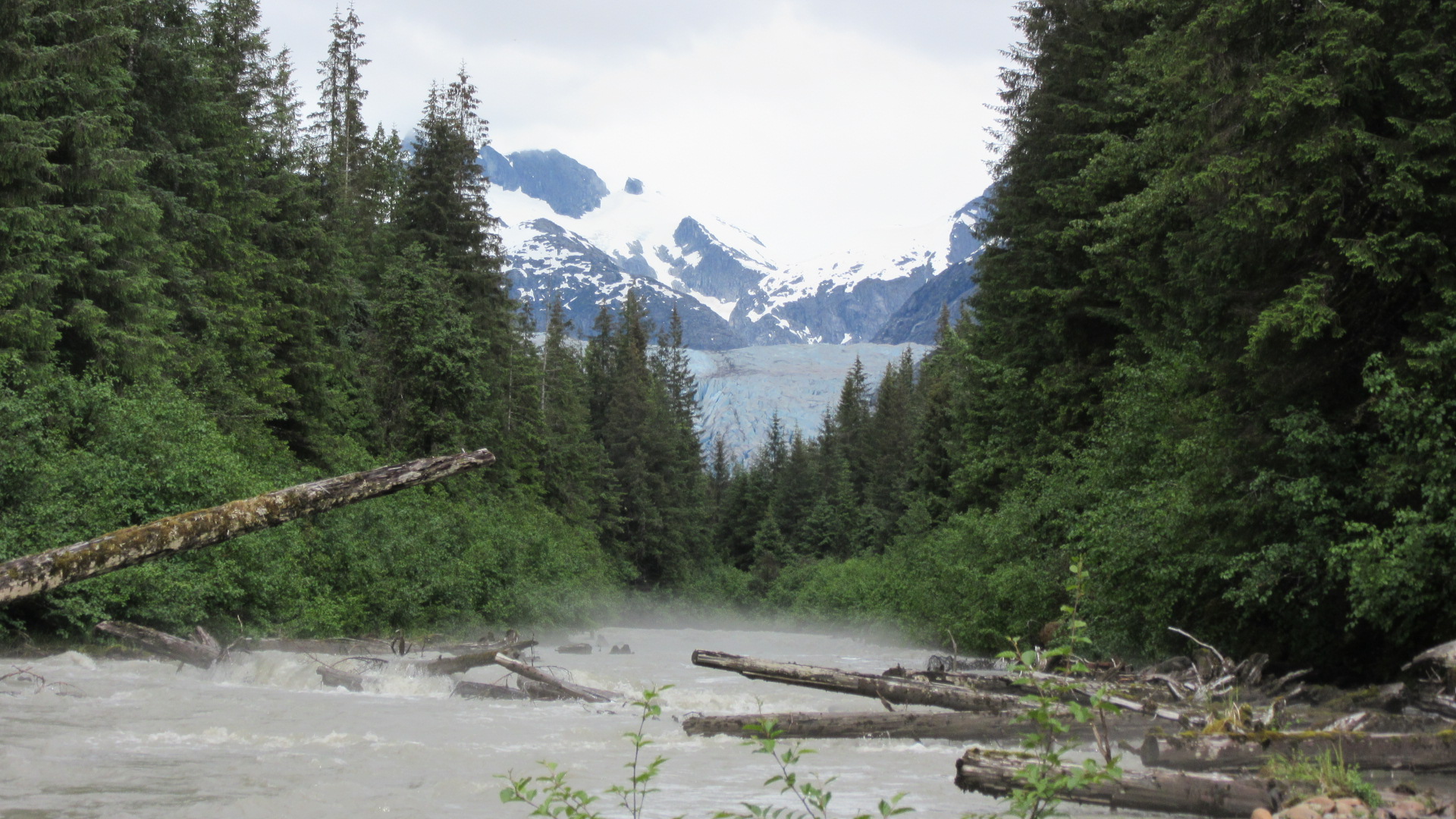
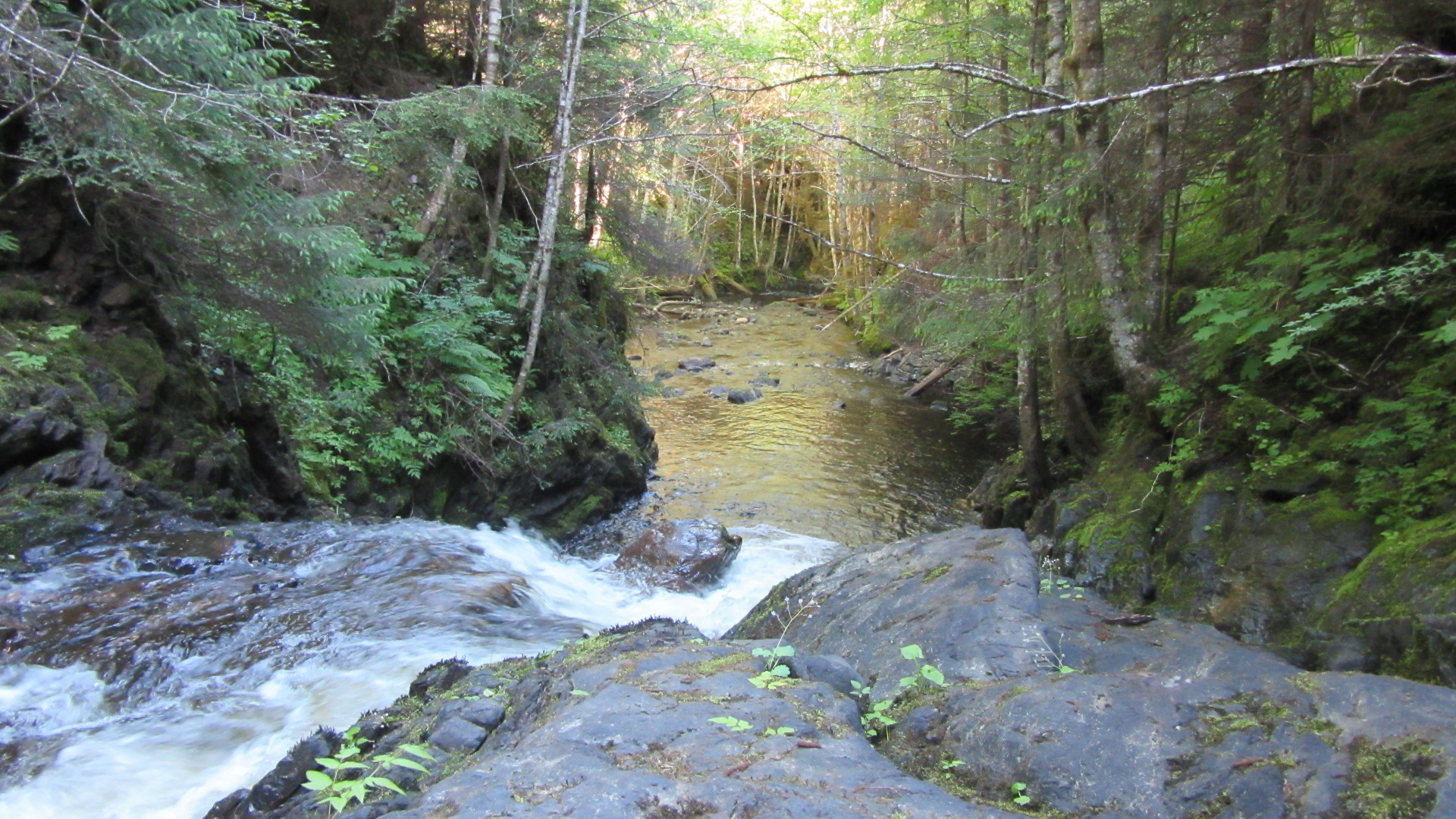
I am currently in the state capital of Juneau.  We had a piece of equipment break down and are currently waiting on a replacement part, so I’ve got time for fishing, exploration and being a tourist.  On Wednesday, the morning’s rain was breaking up midday and I was intrigued by something I read in the fishing regulations.  There is a stream in the area that is only open to fishing on Wednesdays and Saturdays in the month of June.  It’s a tributary to a river that flows out of a glacier and it’s about a three mile trek to get there.  If nothing else, I figured it would be a cool hike.

That part was sure right.

Cool.

Cool.

That glacier is another three miles up valley.

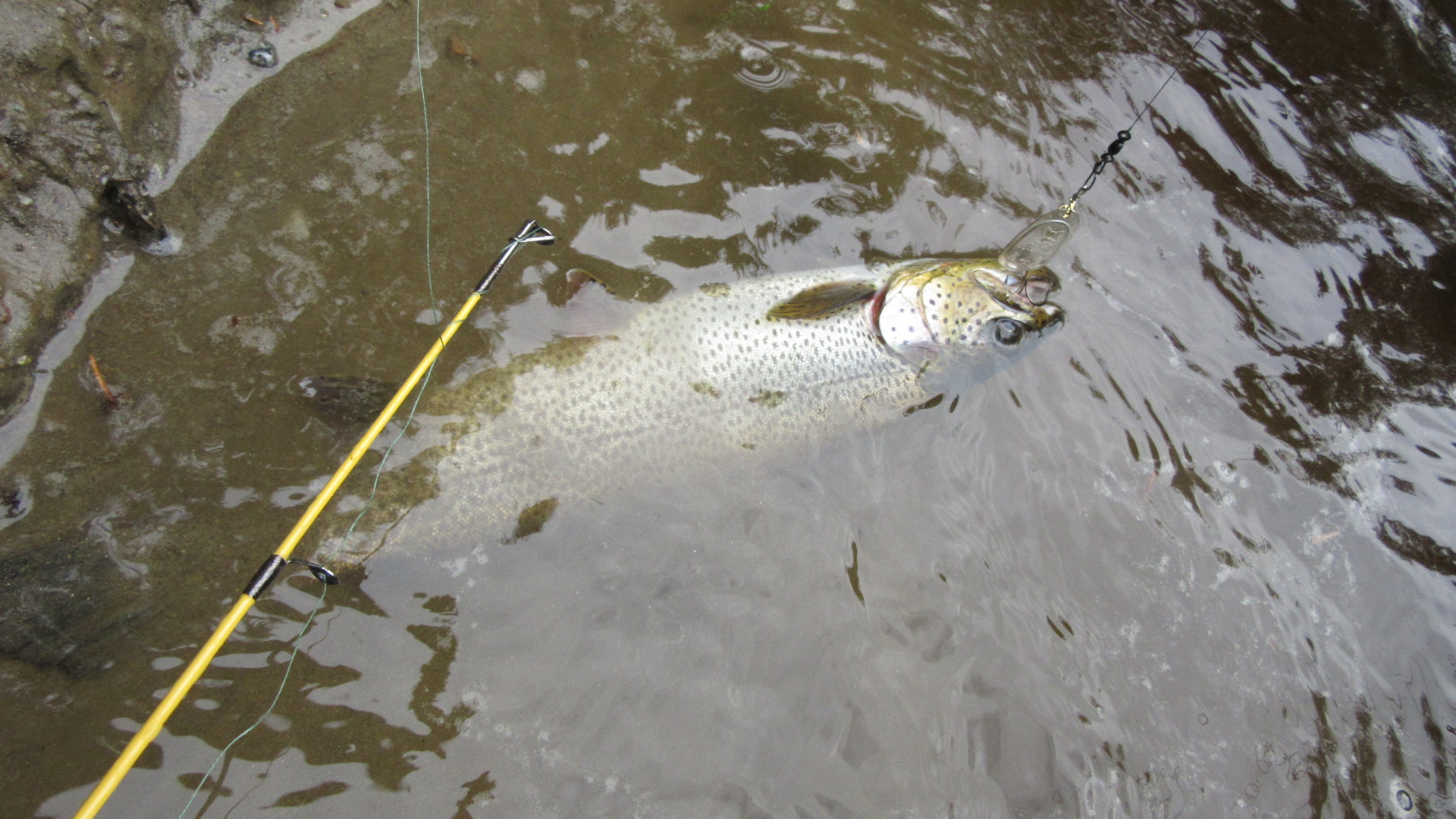
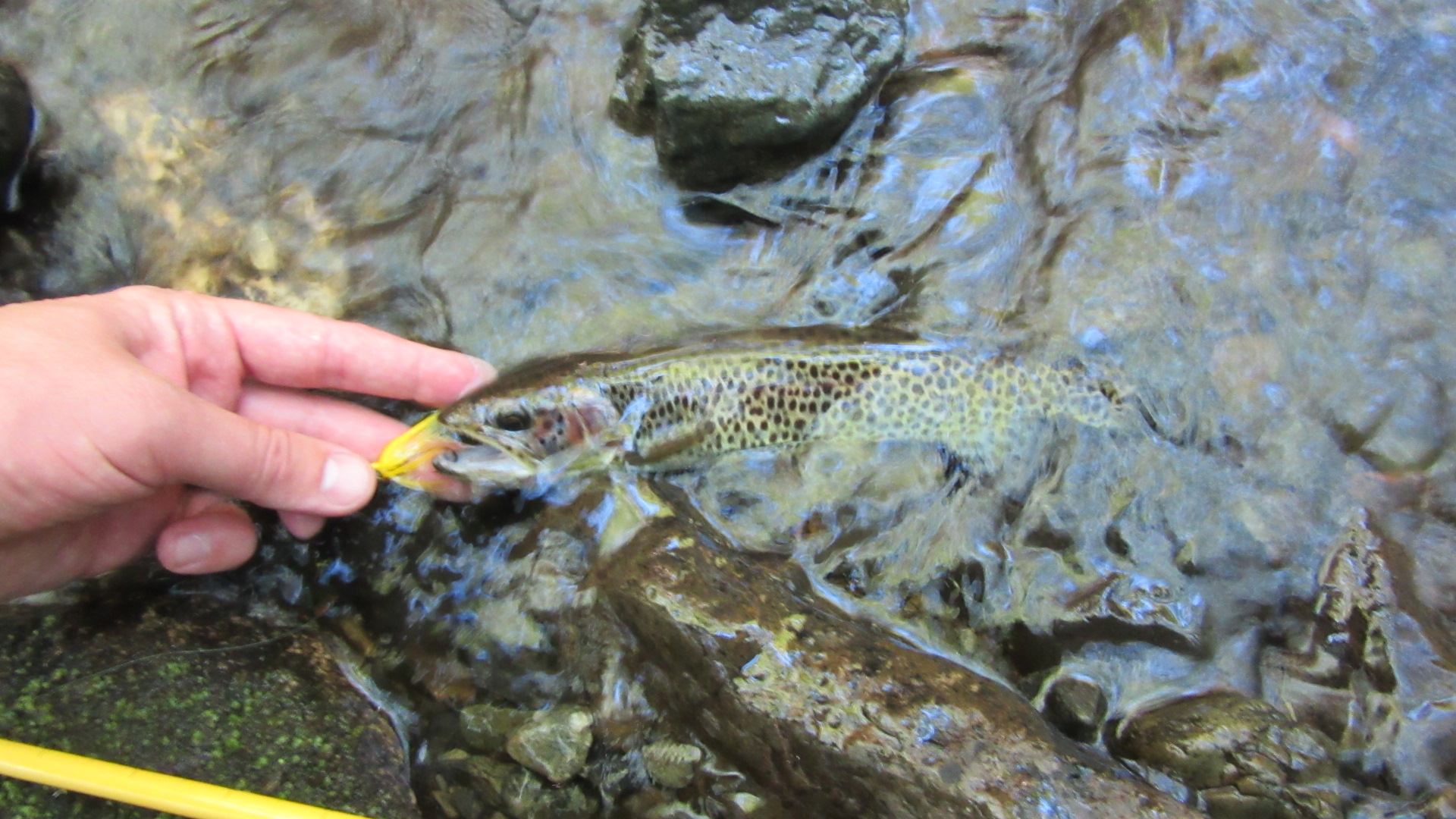
All told, I put about seven miles on my boots and by the end, I was feeling sore and tired.  I got rained on a little, my feet were starting to get wet, I was pestered by mosquitoes and didn’t really get all that much fishing in.  The streams were too high and it was difficult negotiating the brush alongside them.  I ran into other anglers, some of whom were stinking up the area with thier stupid cigarettes.  I didn’t get out of the woods until after 8pm.  All this work and effort and what did I have to show for it?  Just this 15 inch cutthroat trout I released.

15" cutthroat from Windfall Creek

15″ cutthroat from Windfall Creek

Beautiful as it is, was it really worth all that effort?  Maybe not if we only judge this expedition based on the goal of catching fish.  But when we take into consideration the journey I took trying to reach that goal, we come away with a much different answer.  A vigorous hike into a place I have never before been; some cool wildlife and geology sights along the way.  The unquantifiable satisfaction that comes from enjoying something that most people want nothing to do with.

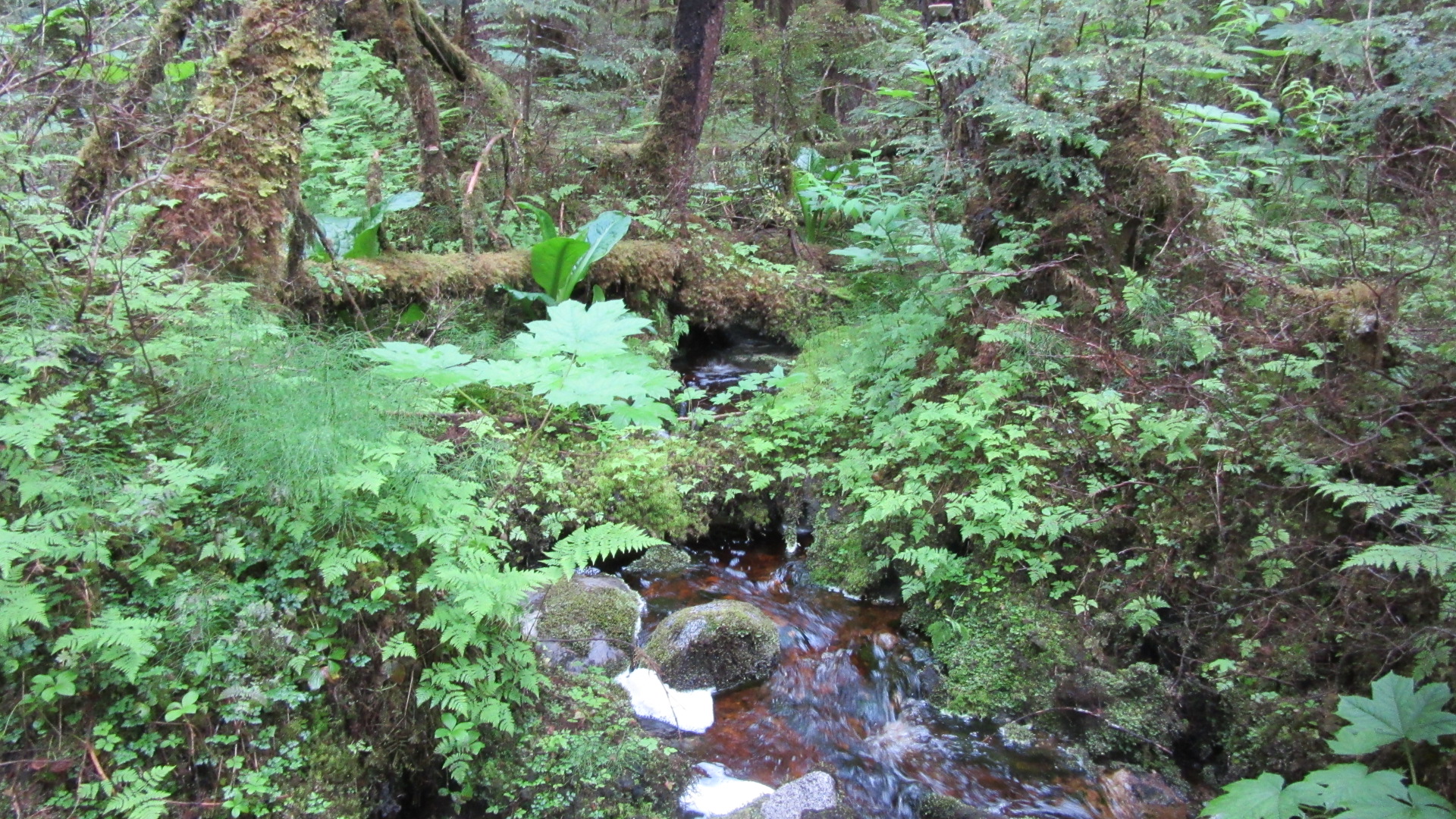
Catching fish is only part of the experience.  Near the end of my return trip, I gave my legs a rest and took a drink of water.  It was dead calm beneath the thick canopy and the woods were echoing with the calls of 3 or 4 types of bird.  The calls punctuated the background drone of the nearby river rushing over fallen timber and gravel bars and the foreground drone of a small trickle of water dumping over some roots.  Every so often, a woodpecker rattled the trunk of tree nearby.  I had to sit a moment longer to absorb the sounds and smells of the forest.  Marvelous.

visual for that soundscape

visual for that sound scape

I’m going to have to get a closer look at one of these glaciers.  That’ll be my next hike.

Chinook: King of the Salmon

As the largest of the salmon species, the Chinook or King Salmon is a prized catch for anglers the world over.  Alaskans call them Kings and in recent decades, have taken measures to ensure they will continue to test future anglers.  Stocking programs, closely monitored catch limits and protection of vital spawning habitat are some of the important steps they have taken to keep the population viable in the long term.

A few miles south of its only town, Mitkof Island, where I am currently staying, has a wonderful tidal estuary called Blind Slough.  At high tide, it’s a long, narrow, saltwater bay extending miles inland.  At low tide, it’s a rocky, freshwater river with riffles and pools.  It’s an ideal place for salmon to acclimate to freshwater before proceeding upstream to spawn.  Further inland, the Alaska Department of Fish & Game operates a fish hatchery to supplement natural populations.

The tide was low when I visited Blind Slough with my tackle.  The area around the access point was being used by other anglers or was too shallow, so I started trekking downstream.  A few riffles later, there was a long, wide pool that looked okay.  That’s when I started to see them jumping.

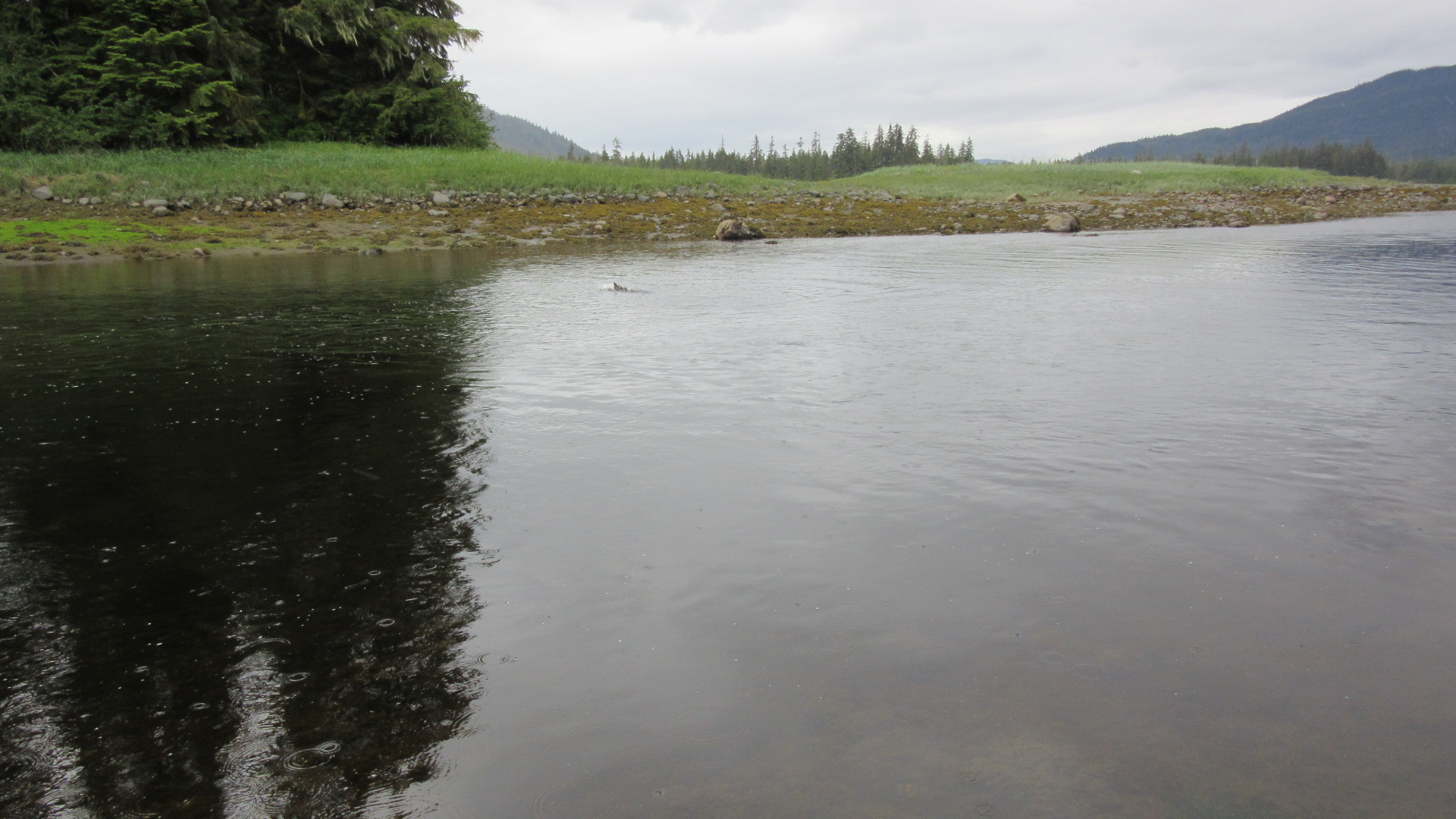
this, every minute or so

this, every minute or so

Fish that swim up rivers from the ocean to spawn can often be observed leaping out of the water where it doesn’t seem necessary.  If you ask why, you’ll get a jokey answer more often than not.  The most plausible explanation, though, is related to the fact that fish use different combinations of muscle movements for rapid bursts of speed than they do for swimming at a leisurely pace.  They’ve spent years mostly doing the latter in the ocean and now that they need to swim against strong currents and leap over obstacles, the fish need to build up the strength in their ‘turbo’ muscles.  Regardless of the reason, its a fantastic display to see large fish randomly erupting out of the water.  And a little frustrating when they don’t care about your lure.

Generally speaking, salmon do not feed once they enter freshwater during their spawning runs.  This can make it frustratingly difficult to catch them in rivers; especially when you can see so many of them scooting around and leaping about you.  A common tactic is to use flashy lures like spinners and spoons to goad them into aggression strikes.  As they work their way upstream, the salmon are constantly jockeying for position; especially the males.  There’s a lot of pushing and shoving and assertions of dominance.  It’s the reason the male salmon develop the hooked jaw; it’s a weapon to use against other males.  The fish see the flash of the lure and snap at it as a way to say, “Hey, back off, dude.”

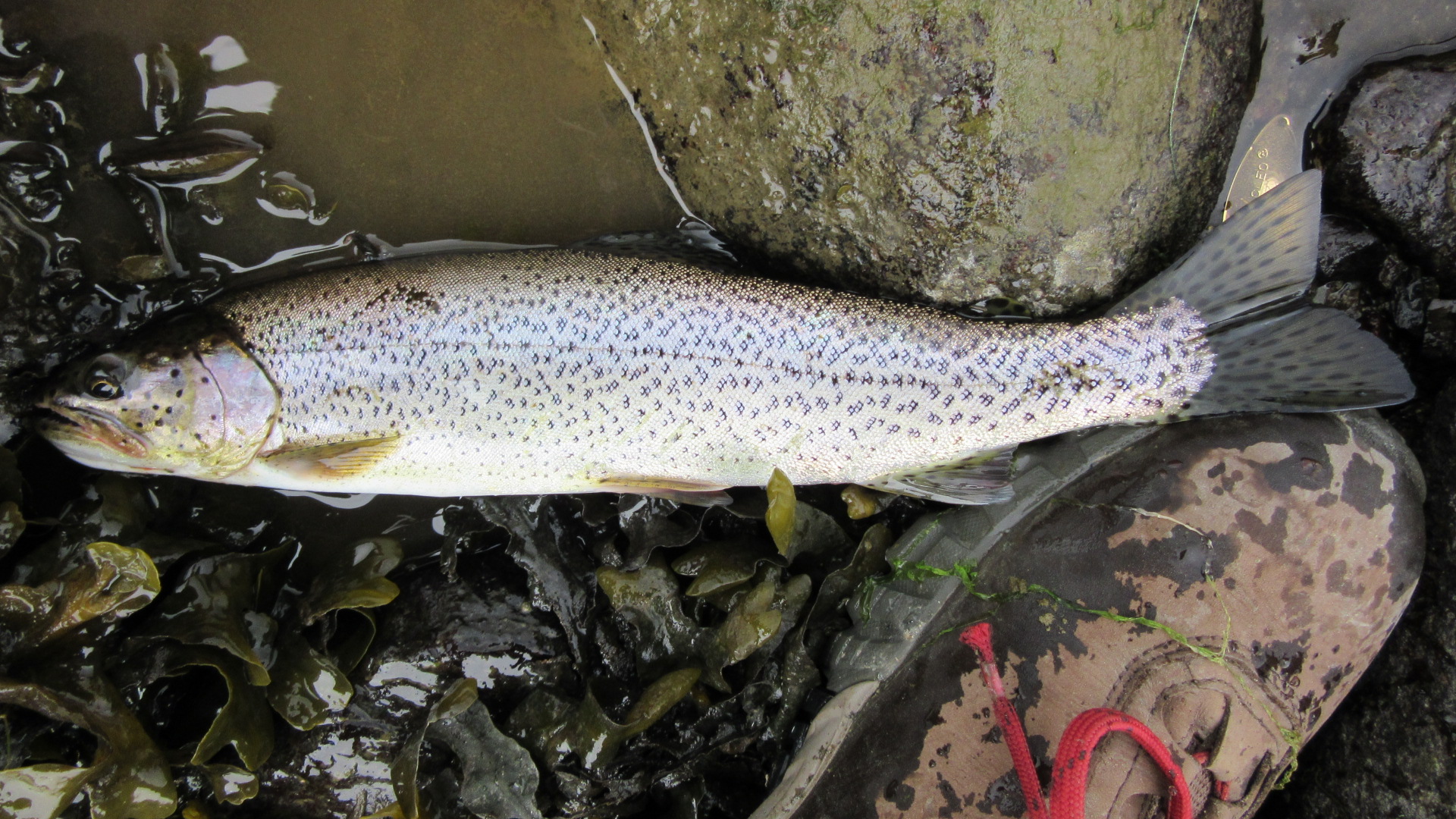
This is the tactic I was using in Blind Slough.  I had some initial success with this nice coastal cutthroat trout.  They’re a lot like steelhead in that they are a sea-faring version of an inland trout species.

IMG_0237

After that it was a lot of casting without any catching.  Meanwhile, fish of all sizes were breaching right in front of me.  I was starting to entertain the idea of packing it in, so of course that’s when I finally hooked into a salmon.

And it was a big one.  After bumping into rocks and weeds all afternoon, I instantly knew this was a fish.  The rod arced and the battle was on.  First, he took off against the current to my left.  Several other fish leaped out of the water as the one I hooked streaked toward them.  The line scraped some algae off a rock and as the fish broke the surface, the green goop was flung from the line.  It was my first look at my opponent.  It was at least as big as any that I had seen leaping throughout the day.  And I could make out the hook in it’s upper jaw, indicating it was a big male.

A few moments later, that bad boy took off downstream peeling line from my reel while I held on for dear life.  When that big run was over, I tightened the drag a little and started to work the fish back toward me.  There was a lot of weight to try and pull against the current and I was ready to start walking down the rocky bank when the fish started coming back toward me.  I quickly reeled in to keep tension on the line.  It wasn’t long before the fish turned away and gave a brief surge toward the sea.  The tighter drag countered this move and he started slowly getting closer to the bank some 40 yards downstream.

Time to move.  In a heroic display of coordination, I moved along the bank across slippery rocks and the shallow water between them while holding tension on the line.  Getting slack in the line after such a long fight might allow the hook an opportunity to slip out.  Once I was even with the fish, it was pretty much over.  I drew him into the shallow rocky bank and breathed easy.  I got him.

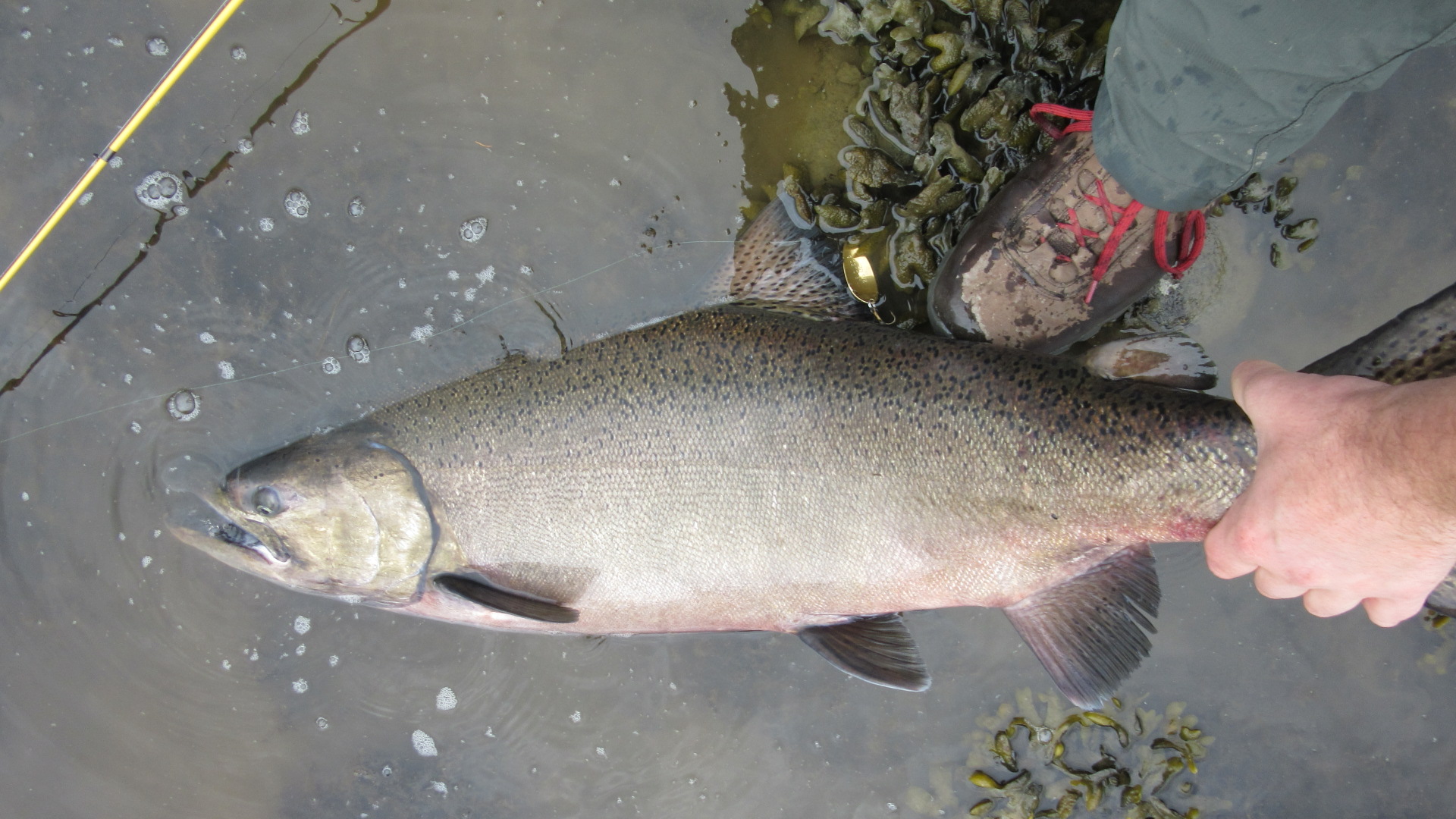
IMG_0241

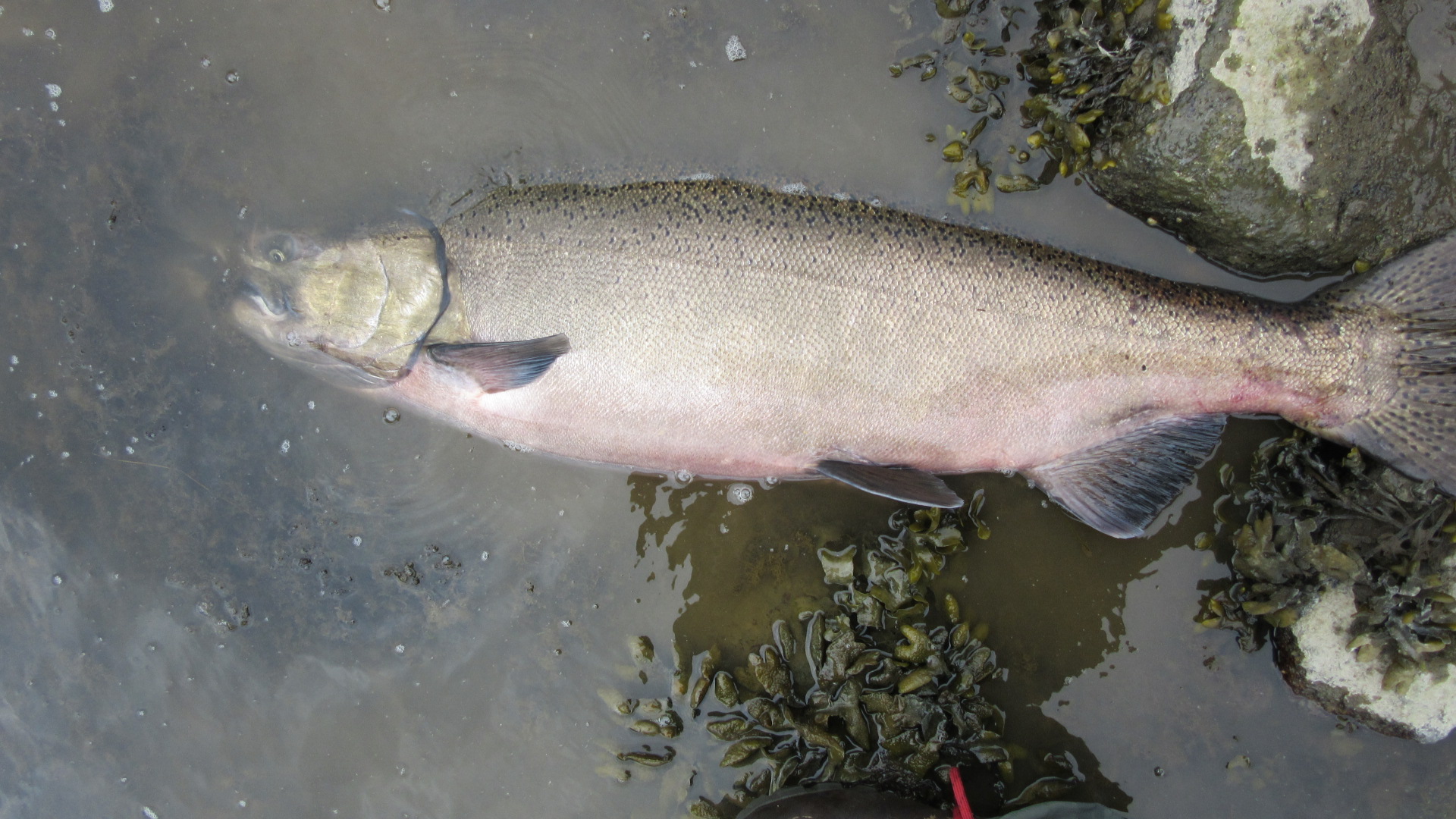
I had no accurate measuring device, but this King Salmon was around 40 inches, I figure, and had to weigh like 30 pounds.  Compare my boot (size 13) to the fish in both images.  Especially this second one since I’m holding up the tail in the first one.

IMG_0242

Long before I landed the fish, I was worried that I had snagged it.  Snagging is when you hit the fish with your lure as you’re retrieving rather than the fish biting it.  It can happen when you’re trying to catch large fish in relatively confined areas.  Doing this intentionally is illegal in most places as it is an unfair advantage to the angler and can lead to over harvest in addition to wounding fish that don’t get caught.  There are certain places in Alaska where snagging is legal for a limited time.  But Blind Slough is not one of those places.  If you do this accidentally, the fish must be released.

As it turns out, that is exactly what happened with this big King.  In the first image, the lure is still hooked into the fish behind the dorsal fin.  I could tell long before I landed it, too.  When they get hooked in the middle like this one is, they tend to go sideways once they tire and it makes them really heavy on the end of the line.  Any thoughts about having my next several meals taken care of faded with the realization that he was foul hooked.

This King of the Salmon would have to be returned to the water.  Once he was unhooked and photographed, I pointed him towards deeper water and held him upright until he was ready to go.  It was a really awesome fight and I was thrilled to examine one of these beasts up close.  But I will always feel like this catch is tainted because of the snagging.  It’s an asterisk that means I didn’t outwit this animal with a clever rouse.  It was the fishing equivalent of hitting it with your car.  Technically you got ’em, but “how” matters.  It’s less impressive.  I need to catch another one.  This time, hooking it the right way.  You better believe I’m gonna try!

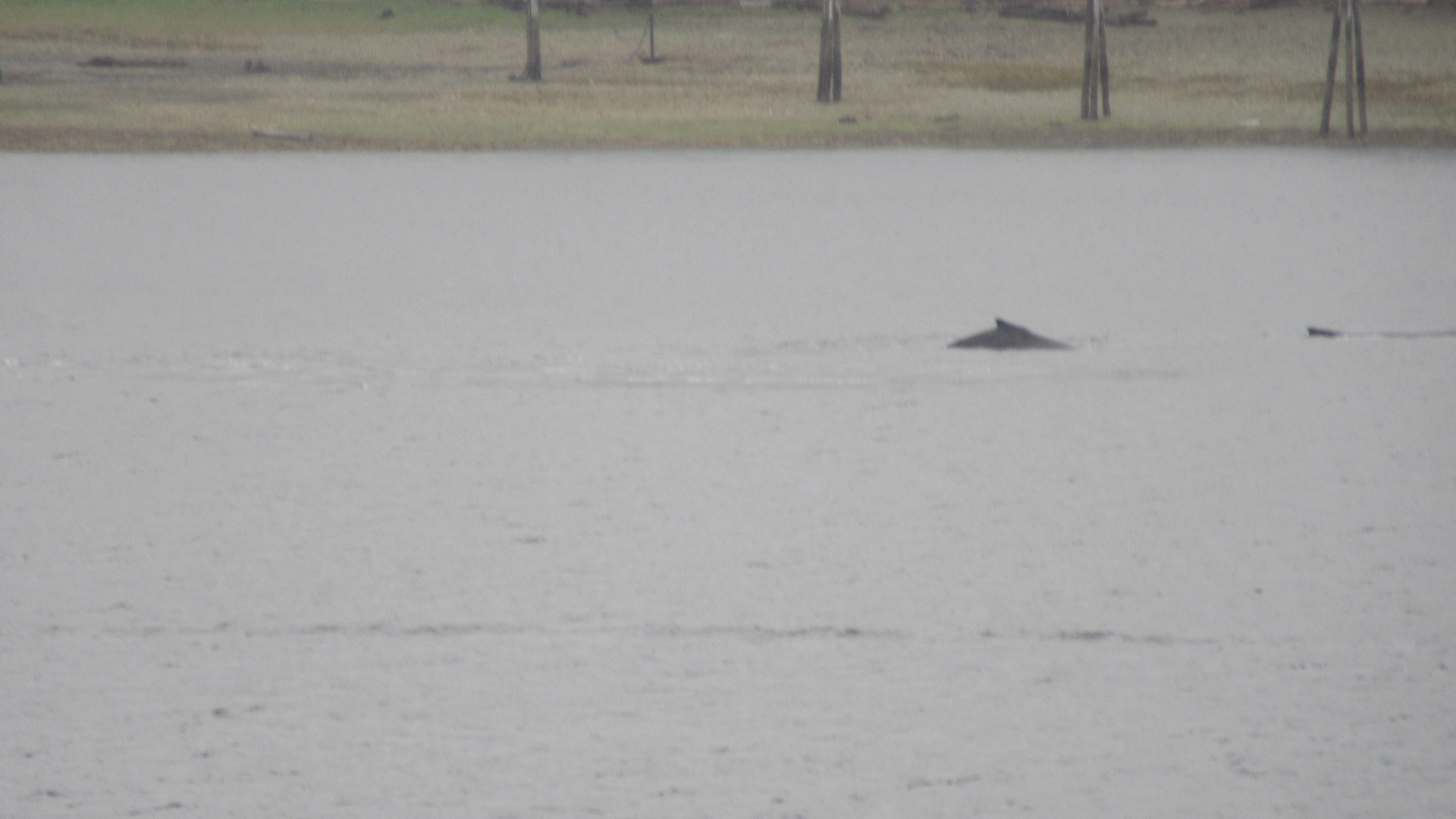
Thar She Blows!

IMG_0186

My second whale sighting came a couple days ago.  This time, the camera was ready.  These two humpbacks were northbound in the Tongass Narrows just a few minutes outside of Ketchikan.

Best I could do with the inclement weather and distance involved.  The wake in the foreground is from a cruise ship which meant our ferry was further from the whales than it might have otherwise been.  But I’ve got a lot of boat rides remaining, so I’m sure there will be more chances.

Let Them Eat Kake

Kake is a tiny town on the northwestern coast of Kupreanof Island.  With very few roads, we had all of our work done by early afternoon.  I decided to fill my time on one of the streams I noted earlier along a road into the island’s interior.

Jenny Creek is comparable in volume to the Spirit River, up in my neck of the woods.  But its morphology is more similar to something you might see tumbling toward Lake Superior; bedrock outcrops, steep gradients and small waterfalls all surrounded by moss-draped forest.  The water was a bit low and long, shallow riffles connected the deeper pools.  Though it was mid-afternoon, the steepness of the valley and the dense forest made for low light levels.  While respectable by Midwest standards, this forest was clearly second growth.  Stumps and remnant logs 8 feet and more across were scattered among younger trees already 3-4 feet in diameter.

The first couple of pools yielded nothing.  But a little further downstream, a sudden tug on the line meant something found my 1/8 oz yellow spinner interesting.  It was this 10 inch cutthroat trout.

IMG_0137

It was the first of half a dozen small cutts.  For a time I thought some of them were rainbow trout because the parr markings on the smaller ones accentuated the irrendescence behind the spots.  But after further review, they were all cutthroats.  I kept none as there is an 11 inch size limit and that 10-incher was the largest of the lot.

I fished my way downstream for almost 2 hours until I came upon this 10-12 foot waterfall.  Not wanting to Bear Grylls my way down the “slippy” rocks, I started my return trek back upstream to the bridge.

IMG_0142

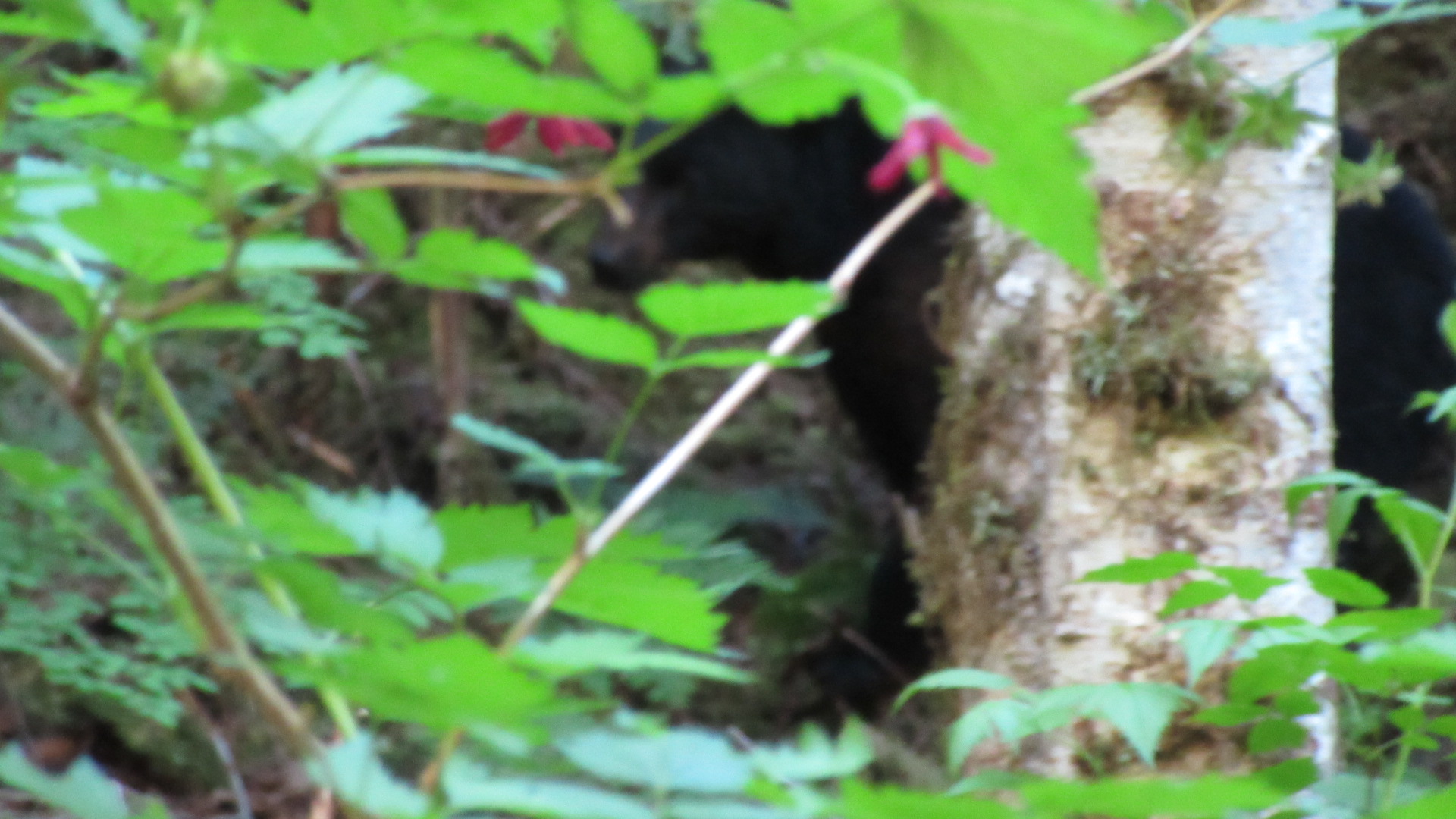
I was very much aware I was in the woods in bear country.  We saw a small black bear on the edge of town earlier that day and I passed another on my way to go fishing.  Bears have good hearing and an excellent sense of smell, but their vision is relatively poor.  As such, when hiking in bear country it’s adviseable to make a lot of noise so as not to surprise one.  An occasional shout of “Heeyyy bear!” is good.  So is singing out loud.  Anything that pitches your voice through a range of octaves is best as it makes it more likely you will be heard over the normal sounds of nature; especially along a stream.  Black bears are generally timid around humans, but around garbage dumps and other sloppy human activity, they might need encouragement to skeedattle.  In the woods, I’ve only ever seen them running away from me.

I’m a little over half way back to the road, when I hear a twig snap up ahead a little on the same side of the stream as me.  This gets my attention and I listen for anything else.  Another snap; this time a little closer.  Instantly I give a loud whistle and kick some rocks around, just in case.  Sure enough, about 30 yards away, an adult black bear appears at the base of the valley slope among the brush.  It was a heck of a lot closer than I was comfortable with.  I found it remarkable how well it was hidden by the vegetation; if that bear had been standing still instead of walking toward me, it would have been impossible to see.  I shouted at the bear, “Go on, get outta here!” and he scrambled up the steep slope several dozen yards before stopping to look at me.  Another word of encouragement and the bear disappeared into the dense forest.  I continued my hike back to the road on the other side of the stream.

IMG_0145

It was an exhilerating experience.  The twinge of danger and subsequent fight or flight decision was very raw and primitive.  The relization that it was ‘just’ a black bear is darkly humorous to me.  “Phew, the probability of mauling dropped from ‘slightly possible’ to ‘extremely unlikely’; what a relief!”
It’s been a long time since I’ve seen a bear while hiking in the woods.  It’s a much different experience when you are in their element, rather than spotting one from a car.  There’s always a tiny rush of fear because these creatures have the hardware to mess you up, but not usually the desire.  So when they immediately high-tail it away from you, the relief is very satisfying.  “Okay, we understand each other, bear.  You go that way; I’m going this way.”

Deadliest Cash

Ten years ago, the Discovery Channel debuted a unique (at the time) type of reality show about dudes fishing for crab on the Bering Sea.  This was back when there was still good stuff on the Discovery Channel, so I was quickly roped in by it.  Unlike all of the subsequent would-be imitators across basic cable, there was something compelling about the people featured on the show.  They do a fantastic job editing together character arcs for some of the fishermen involved over the years that has held my attention for a decade.

I’m not the only one who has enjoyed the program since it quickly became Discovery’s highest rated show.  Then they made the mistake of trying to make the entire network look like that and it eventually lead to its precipitous slide into the mostly terrible garbage that pollutes my former favorite cable channel.  But Deadliest Catch still holds up.

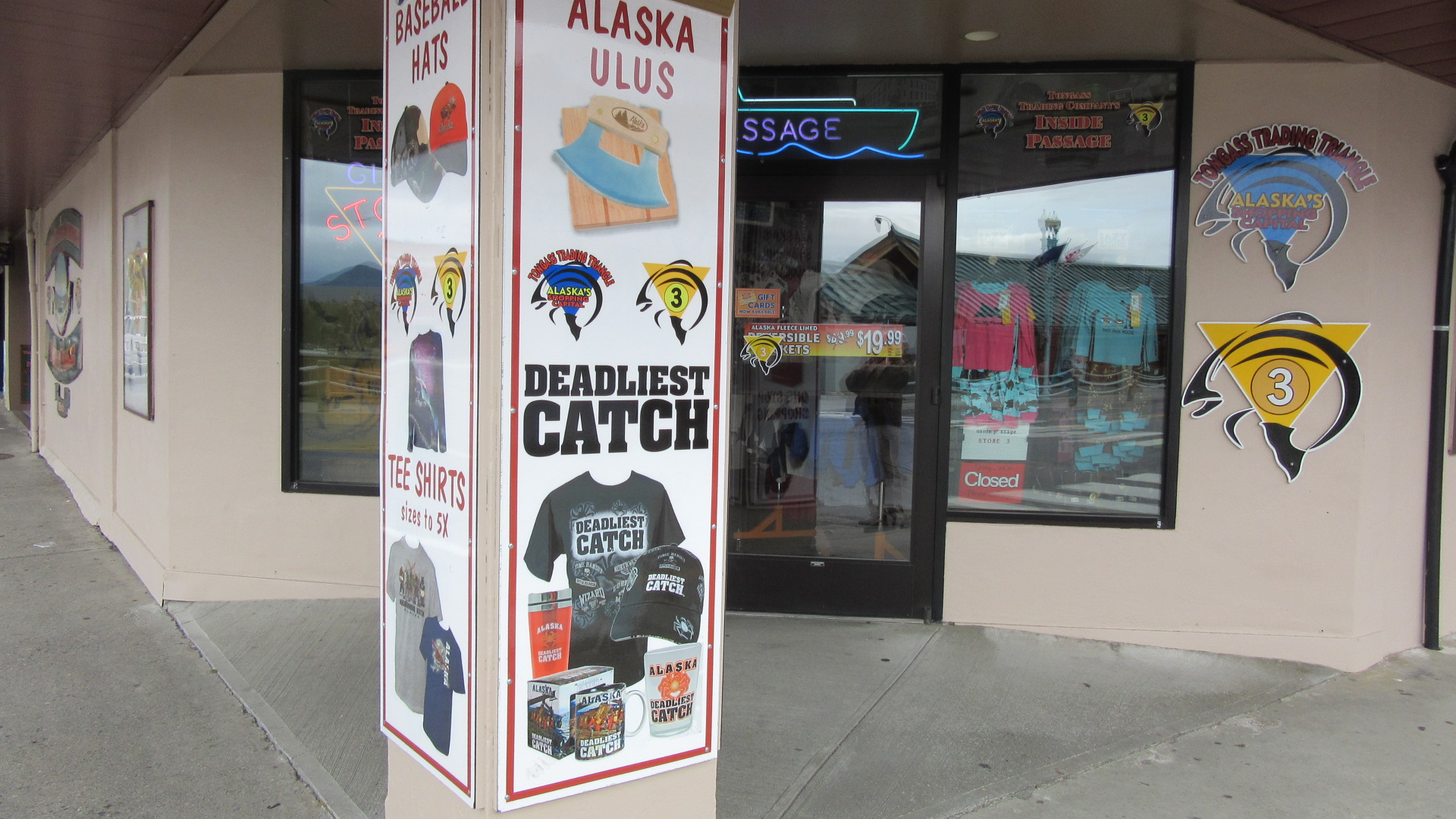
Deadliest Catch merchandise is a mainstay of all the gift shops that line the waterfront of Ketchikan and I’m sure every other port of call in Alaska.

as seen on TV

as seen on TV

Yesterday, one of the boats that has been featured on the show steamed by.  The Tongass Narrows in front of Ketchikan make up part of the “Inside Passage”; a navigable path for ships large and small among the islands between Puget Sound and the Gulf of Alaska that is protected from the open ocean and is the preferred route for most vessels.

F/V Kodiak

This is the F/V Kodiak which was on the show when it was captained by the big dude with the large beard and long, white hair.  He’s running some other boat on the current season.

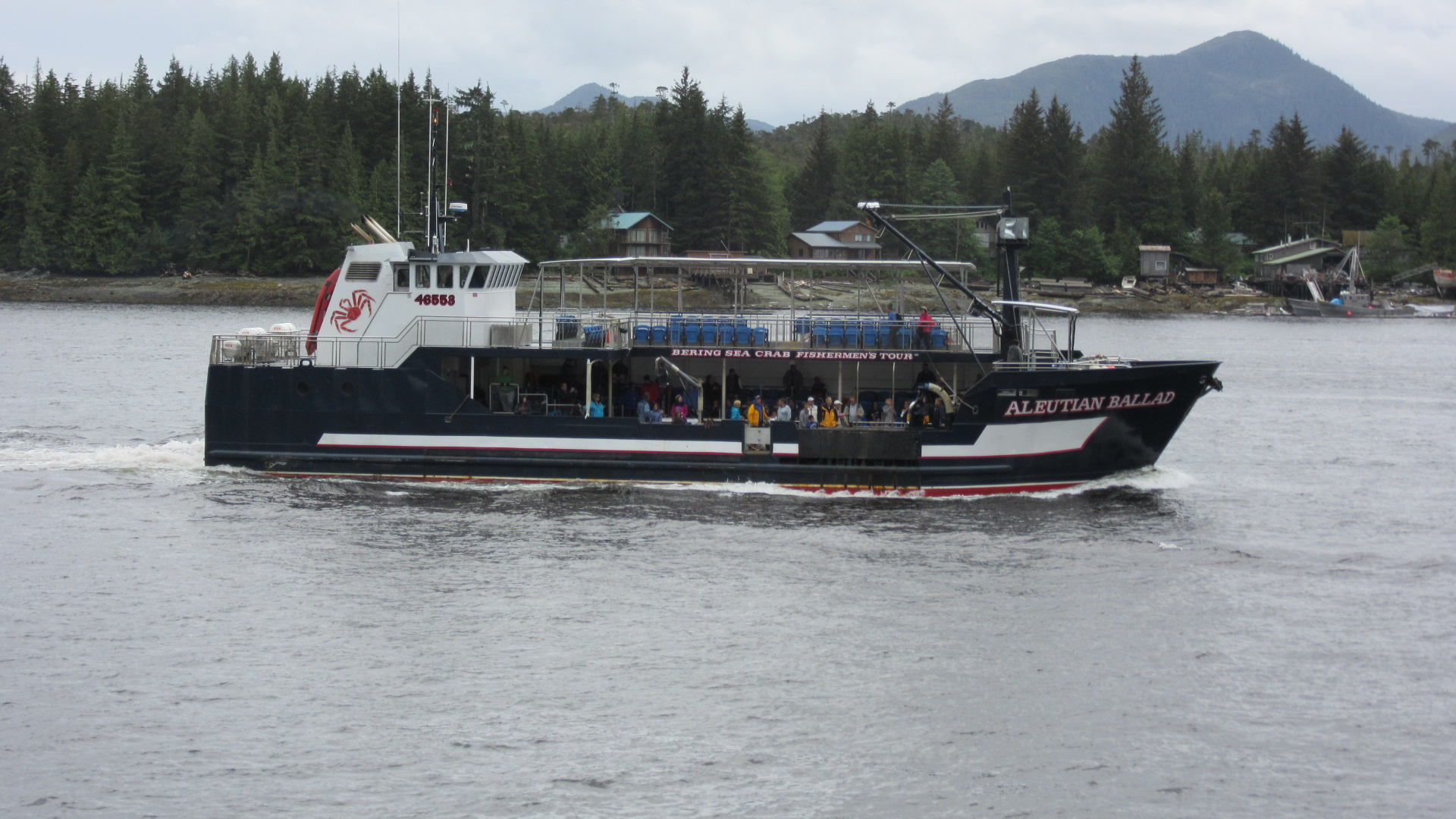
A different Deadliest Catch alumni is quite obviously no longer in the commercial fishing game.  The F/V Aleutian Ballad was on a couple early seasons of Deadliest Catch.  These days, it capitalizes on the popularity of the show by taking visitors out on guided tours.

F/V Aleutian Ballad

Yes, that’s two levels of stadium seating that have been installed to accommodate tourists.  Seems like a humble second life for a ship where men used to risk their lives in pursuit of high-end seafood.

Speaking of which, I have the gear and licenses I need to start plying the local waters for my own not-so-deadly catch.  Because of the amount of stuff we needed to fly up with for the job, and because of my distrust of the airlines to properly handle any of my fishing rods, I’ve elected to buy new gear up here.  Also none of my stuff was at the same time sturdy and portable enough to bring along.  With another rain day in the forecast for tomorrow, I plan to test out the new equipment on some area waters.

The Tourists

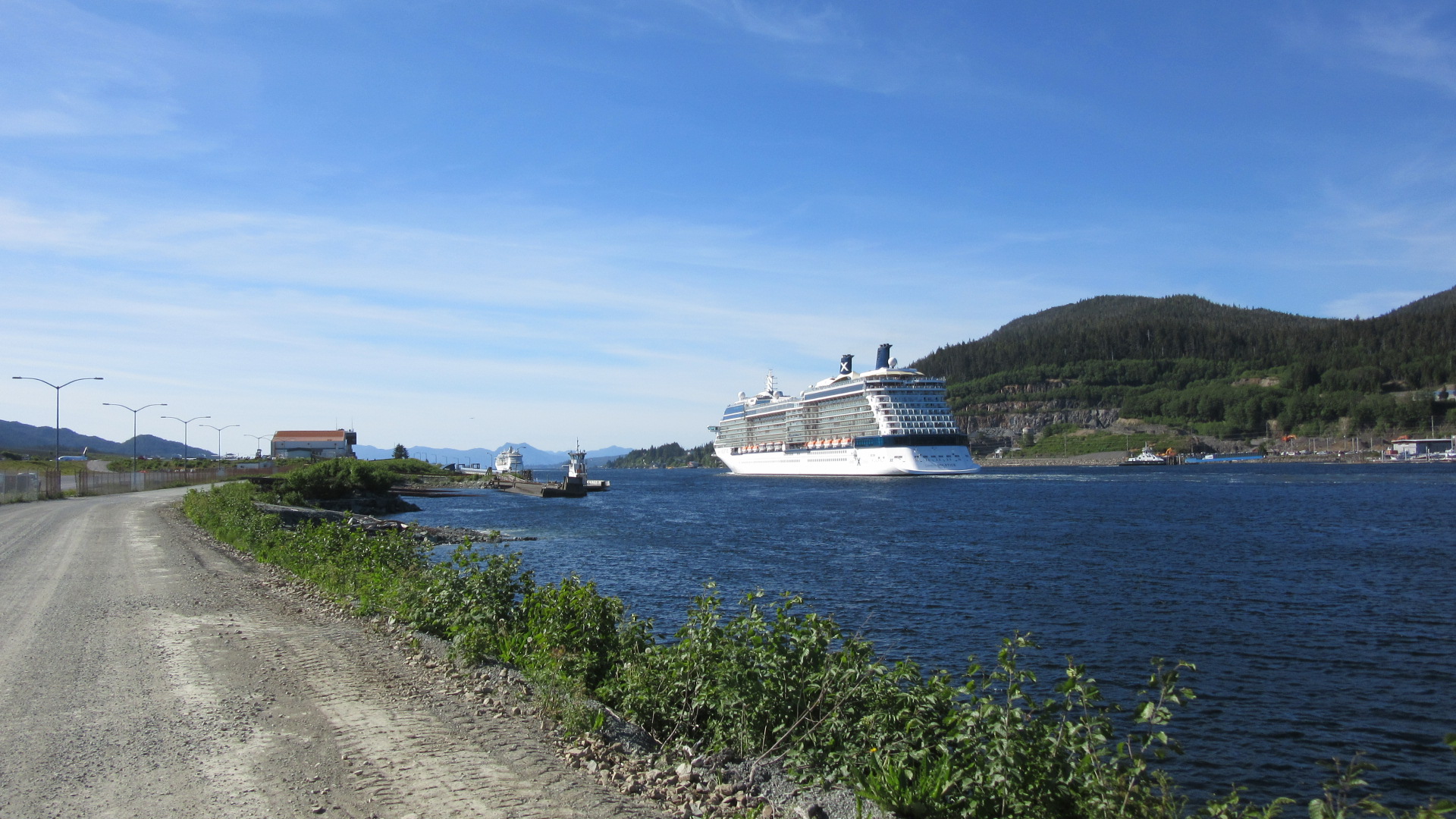
Ketchikan often reminds me of some of the major vacation towns in northern Wisconsin.  Similar to Minocqua, Hayward, Eagle River or my own home town, it started life as a base of operations for extraction industries; timber and fisheries.  But as time passed and those resources were over-exploited and then closely regulated, a wholesale shift occurred toward tourism.  The only differences being how long ago it happened and how the tourist get there.  The transition to a tourism based economy happened within my lifetime.  And instead of the tourists streaming up Highway 51, the tourists pour off of the 2-4 cruise ships that are docked here at any given time over the summer.

If you have ever been on a cruise ship anywhere in the world, you have an idea of the size of the ones that park themselves bow-to-stern here in Ketchikan.  The Tongass Narrows (the waterway between Ketchikan and its neighboring island) are no wider than the Mississippi River is in the upper Midwest so these large ships are even more impressive in this context.

IMG_0090

Among the locals I’ve talked to, there is a bit of nostalgia for days of Ketchikan as a major fishing port and lumber town.  But at the same time, they cannot deny the immense and vital revenue stream that comes with these cruise ships.  It’s basically the reason this town exists nowadays.  Still there’s always a bit of melancholy about a place that now has to cater to those with disposable income.  It’s the downside to living in a beautiful place.  Other people want to come and gawk at it, take pictures of its quaintness, pick up a T-shirt and an embossed shot glass as proof that they once visited someplace cool.  It’s a balance between the pride such attention fosters and the resentment of dealing with people who have expectations about a place based on a brochure or a website.  You’ll have that any where tourists congregate.

There is a townie bar near where I am staying and I have had the opportunity to get some older dudes to start talking about this and that.  It’s one of the more interesting aspects of traveling so much.  You invariably get to talking to some local about whatever if you post up at the right bar.  I feel like people open up a little more about their town when you tell them you’re there for work instead of leisure.  There is less obligation to impress and you get more straight talk about what’s good and what’s bad.

Ketchikan

Now that the internet is working, I can start posting from Alaska.

In just one day, I’ve already seen a couple of seals, four giant cruise ships and even a glimpse of a whale.

Ketchikan’s airport is on a separate island from the city requiring a short ferry crossing.  While waiting for that ferry today, this small whale randomly popped up for a gulp of air.  Small is a relative term; it was still at least 20 feet.  I have no idea what species it was, but it was still really cool.  The whale didn’t make another appearance before the ferry started loading, so I didn’t get any pictures of it.

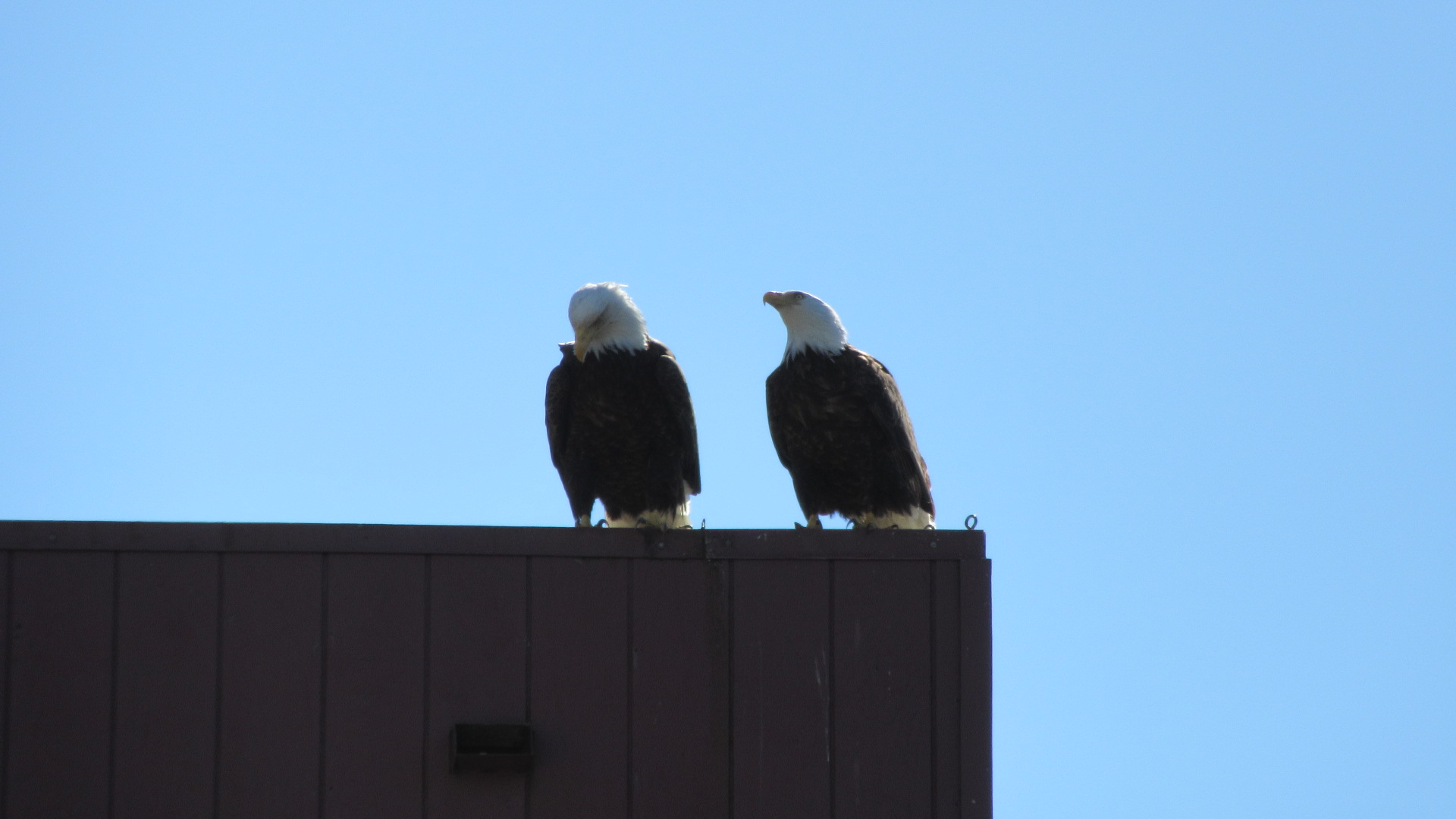
Instead, here’s your standard Alaska picture of eagles sitting around on something man made.

Two Eagles

That’s our hotel underneath them.  It’s a decent spot; a four story building right next to the water.  I got myself a new camera before this project and already I’m getting better shots of more distant subjects like these two baldies.  Good purchase.